Driving in France: The Essential Guide to Rules, Kit, and Fines
French roads are excellent but the Code de la Route has strict rules that catch out foreign drivers. From mandatory safety kit to speed limits that drop in the rain — here is everything you need to know before you turn the key.
Planning a road trip through France or just driving through the beautiful countryside of the Vendée? While French roads are generally excellent, the local Code de la Route (Highway Code) has a few strict regulations that can catch out unsuspecting drivers. Here is the essential guide to what you legally need before you set off.
1. What You Legally Must Carry in Your Car
French police conduct regular roadside checks, and failing to produce the correct paperwork or safety kit can result in hefty on-the-spot fines.
Mandatory Paperwork
Always ensure the following documents are in the vehicle:
- A full, valid driving licence
- Your passport (serving as proof of identity)
- The vehicle's original V5C registration logbook (or vehicle hire paperwork)
- A valid motor insurance certificate
Mandatory Safety Kit
French law states you must carry specific safety items — and where you store them matters:
- Reflective Hi-Vis Jackets: One for every occupant. Crucially, these must be kept inside the passenger cabin (glovebox or door pockets), not in the boot. If you break down, put them on before exiting the vehicle.
- Warning Triangle: To be placed at least 30 metres behind the car on standard roads.
- Headlamp Beam Deflectors: If you are driving a right-hand drive car, you must apply stickers to your headlights to avoid dazzling oncoming traffic.
- UK Identifier Sticker: A rear UK sticker must be displayed unless your registration plate already incorporates the UK flag and identifier.
- Crit'Air Sticker: Required if you plan to drive through low-emission zones (ZFEs) in major cities such as Paris, Lyon, or Bordeaux.
2. Speed Limits and Local Road Rules
France enforces variable speed limits based on weather conditions — when it rains, the limits drop automatically.
| Road Type | Dry Weather | Wet Weather |
|---|---|---|
| Autoroutes (Toll Motorways) | 130 km/h | 110 km/h |
| Dual Carriageways | 110 km/h | 100 km/h |
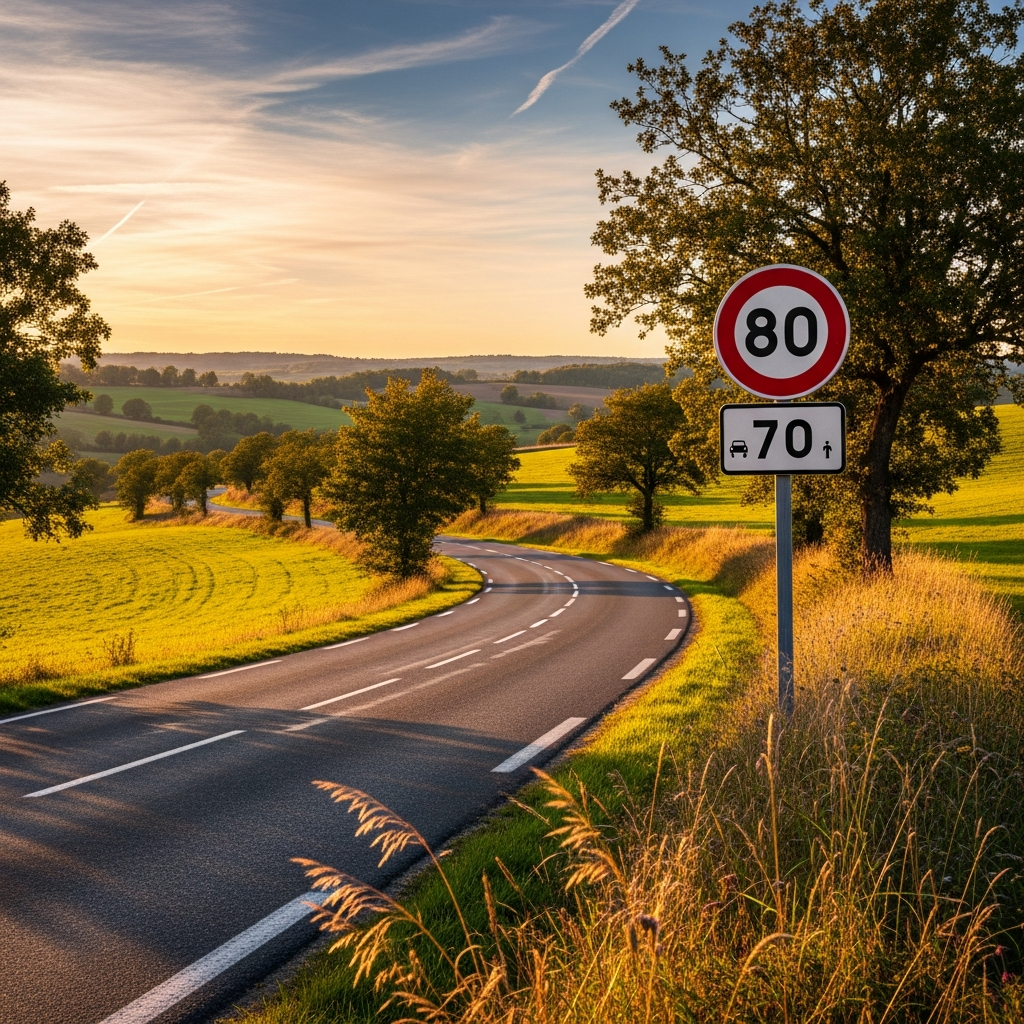
| Secondary / Rural Roads | 80–90 km/h | 70 km/h |
| Built-Up Areas | 50 km/h | 50 km/h |
Note on secondary roads: While the national default was dropped to 80 km/h, individual departments can revert specific stretches to 90 km/h. Keep a sharp eye on local signs.
Critical Rules of the Road
- Priorité à Droite (Priority to the Right): The golden rule that trips up most foreign drivers. At unmarked junctions or rural intersections, traffic coming from the right has priority. Unless you see a yellow diamond sign (indicating you are on a priority road), always yield to the right.
- Flux-Free Tolls (Péage Flux Libre): Many major motorways are transitioning to barrier-free electronic tolling. If you pass under an electronic gantry without an in-car tag, you must pay online or at a terminal within 72 hours to avoid a fine.
3. Strict Offences and Heavy Penalties
Certain everyday driving habits from other countries are strictly outlawed in France:
- Mobile Phones and Headphones: It is entirely illegal to use a handheld phone or wear any form of headphones, earpieces, or Bluetooth headsets while driving — even if you are stationary in a traffic jam.
- Speed Camera Detectors: You cannot use or possess any device capable of detecting speed cameras. If your satnav or GPS app has camera alerts, disable them. Apps in France are restricted to showing broad "danger zones" rather than exact camera positions.
- Drink Driving: France has a low blood alcohol limit of 0.5 g/l for experienced drivers. For novice drivers (licensed for less than 3 years), the limit is practically zero tolerance at 0.2 g/l.
Common Traffic Fines
| Offence | Standard Fine | Notes |
|---|---|---|
| Speeding (< 20 km/h over) | €68–€135 | Fines scale rapidly for higher speeds |
| Speeding (> 40 km/h over) | On-the-spot fine | Immediate licence confiscation |
| No seatbelt / mobile phone use | €135 | Reduced to €90 if paid within 15 days |
| Missing safety kit (vest/triangle) | €135 | Per missing item |
| Possession of a radar detector | Up to €1,500 | Device (and possibly vehicle) confiscated |
| Drink driving (> 0.8 g/l) | Up to €4,500 | Up to 2 years in prison and vehicle immobilisation |
A final tip for foreign drivers: If you are pulled over for an infraction, be prepared to pay the fixed penalty immediately on the spot in euros (cash or card). Staying aware of local limits, respecting the priorité à droite, and keeping your safety gear in the cabin will ensure your driving experience in France is nothing short of fantastic.