Expat community campsites in France: your complete guide
Discover how an expat community campsite in France offers a welcoming lifestyle, shared facilities, and connections for expatriates. Explore how this...
Expat community campsites in France: your complete guide
An expat community campsite in France is a residential and operational environment where expatriates live, socialise, and run campsite facilities together. It is not simply a place to pitch a tent. Think of it as a ready-made social network, a business framework, and a slice of French rural lifestyle all in one. For British expats especially, these communities offer something genuinely rare: a soft landing in a foreign country, surrounded by people who understand the journey.
What makes this arrangement work so well is the combination of shared amenities, organised activities, and an intentional sense of belonging. Sites like Camping Les Prairies du Lac in the Vendée illustrate the model clearly, offering heated pools, community events, and a welcoming atmosphere that draws both families and retirees. Caravansinfrance.com specialises in connecting buyers with pre-owned mobile homes at exactly this kind of site, making the transition into French campsite life as straightforward as possible.
Key features you will typically find in an expat campsite community:
- Shared facilities such as pools, communal kitchens, and recreation areas
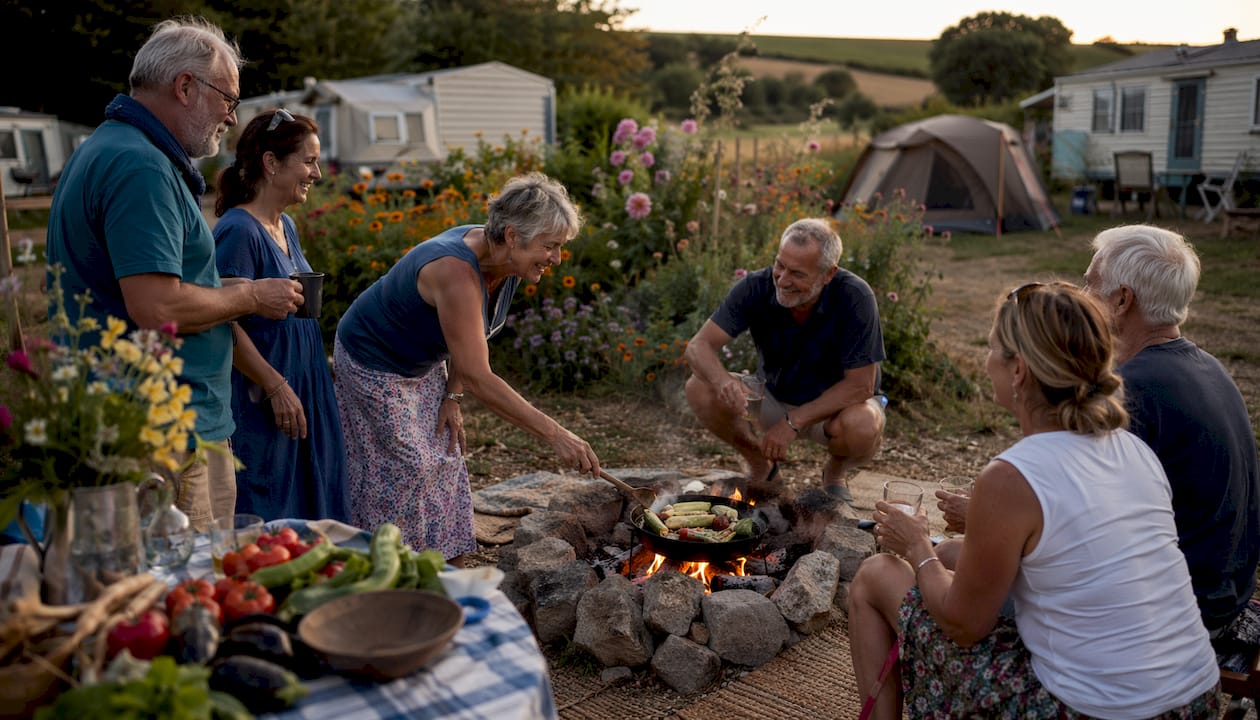
- Organised social events including markets, shared meals, and seasonal fêtes
- Cowork-camping spaces for remote workers and digital nomads
- Multilingual signage and services, often in English and French
- Year-round security and Wi-Fi connectivity
- A mix of permanent residents and seasonal visitors, creating a layered community
Which French regions have the strongest expat campsite communities?
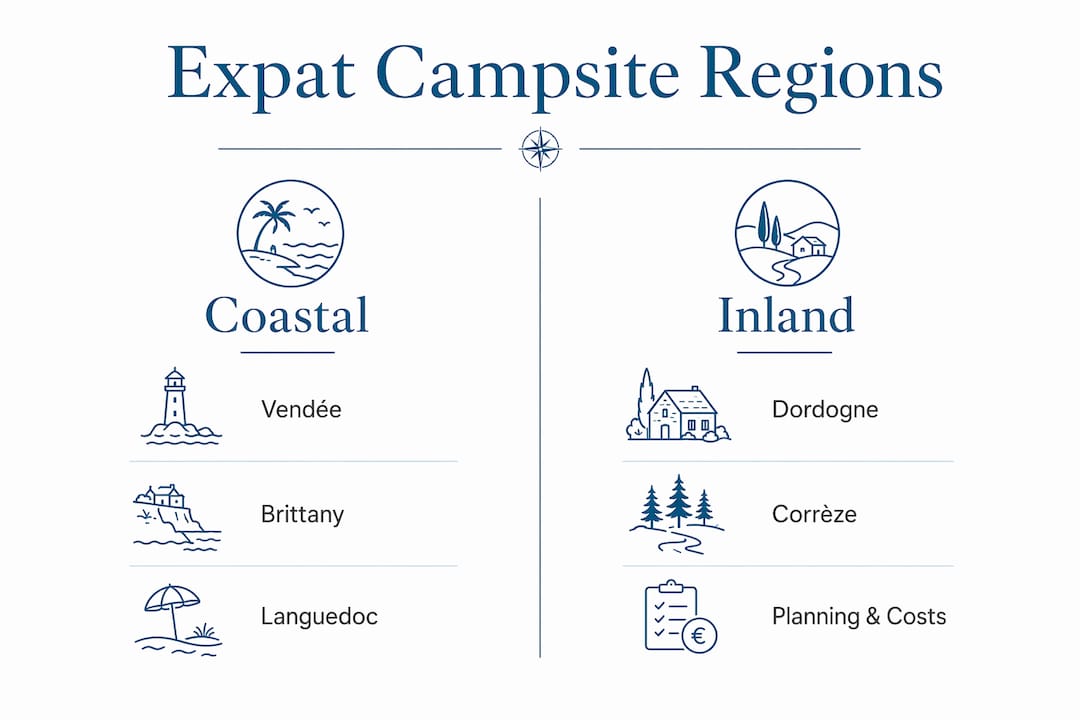
France offers a wide spread of regions where expat campsite communities have taken root, each with its own character, climate, and appeal.
1. Vendée
The Vendée sits on France’s Atlantic coast and enjoys one of the warmest microclimates in the country outside the Mediterranean south. Camping Les Prairies du Lac in Apremont is a 4-star campsite that exemplifies what a well-run expat-friendly site looks like: heated pools, organised activities, and a genuine community atmosphere. The region attracts British buyers in particular, partly because of its accessibility from UK ports and partly because of its relaxed, family-friendly pace.
2. Dordogne
The Dordogne draws the largest English-speaking community of any rural French region. Estate agents, healthcare professionals, and solicitors who speak English are more established here than almost anywhere else in rural France, which makes the administrative side of campsite ownership considerably less daunting for newcomers.
3. Brittany
Brittany suits expats who want dramatic coastline, strong local culture, and a year-round community. Campsite owners in Brittany report that guests from the Netherlands, Belgium, and the UK make up the bulk of their visitors, which means English is genuinely useful as a working language. The region’s proximity to Saint-Malo and Mont-Saint-Michel also keeps tourist footfall healthy throughout the season.
4. Corrèze
Corrèze is quieter and less discovered than the Dordogne, which appeals to expats seeking a more authentic rural experience. The Massif des Monédières offers extraordinary scenery, and campsite businesses here typically run from may to september, with winters dedicated to land management and planning.
5. Languedoc
The Languedoc interior combines affordability with a Mediterranean climate. Summers are long and hot, which extends the viable camping season, and the region’s mix of vineyards, medieval villages, and coastal access makes it attractive to a broad range of visitors.
| Region | Climate | Expat community size | Key draw |
|---|---|---|---|
| Vendée | Atlantic, mild | Growing | Coastal microclimate, family sites |
| Dordogne | Temperate | Large, well-established | English-speaking infrastructure |
| Brittany | Oceanic | Moderate | Coastline, proximity to UK |
| Corrèze | Continental | Small, authentic | Wild scenery, lower costs |
| Languedoc | Mediterranean | Moderate | Long season, affordability |
How do you set up and run a campsite in France as an expat?
Getting a campsite off the ground in France involves more paperwork than most newcomers expect, but the process is manageable with the right preparation.
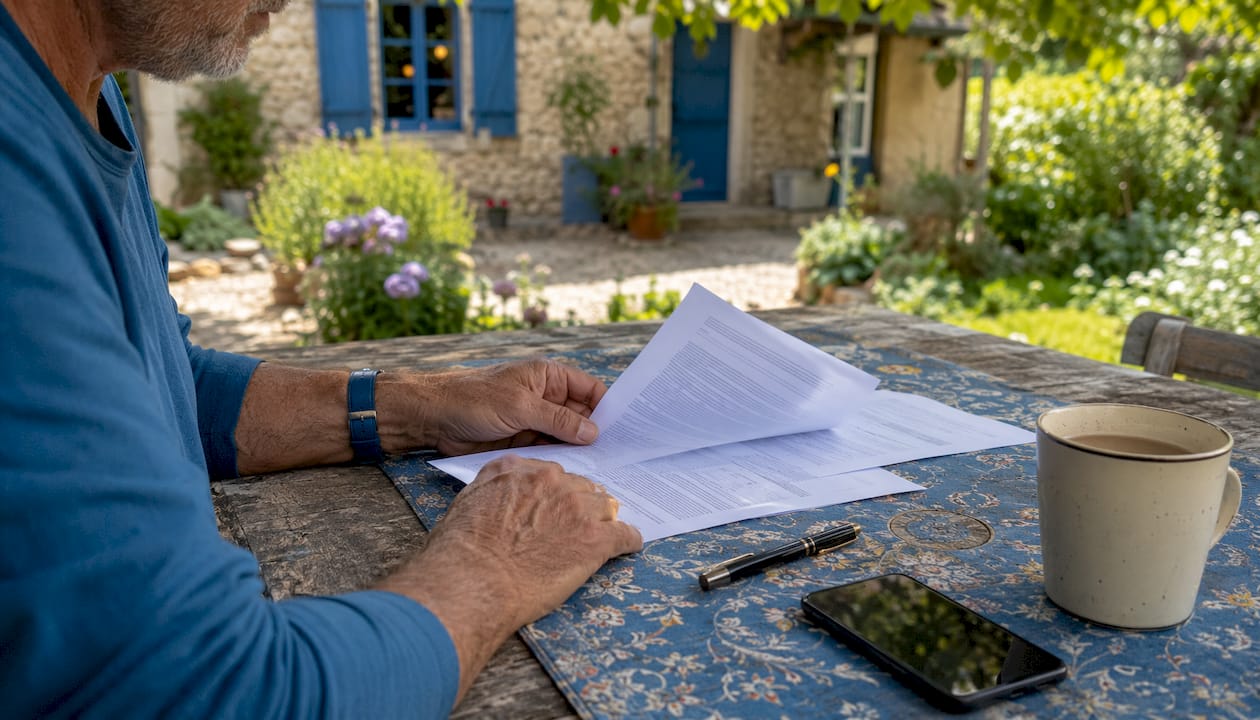
Legal structure. The most common starting point for expat operators is the micro-entreprise (sole trader) model. It is administratively simple and lets you handle your own accounts without an accountant. The trade-off is a flat-rate allowance for running costs, which means you cannot claim back many business expenses individually. A campsite is classified as a fourniture de logement (accommodation provider). Turnover limits apply: if your annual revenue exceeds €188,700 for two consecutive years, you must leave the micro-entreprise regime. VAT registration becomes compulsory if turnover exceeds €91,900 for two consecutive years, or immediately if it surpasses €101,000.
Planning permissions. Before you open a single pitch, you will need a permis d’aménagement (planning permission for site development) and a certificat de conformité des travaux (certificate confirming works meet approved plans). These are not quick processes. Engaging a local notaire or planning consultant early saves considerable time and frustration.
Operational essentials. A multilingual website with an integrated online booking system is not optional; it is the backbone of a modern campsite business. Direct bookings let you offer a personal service, allow guests to request specific pitches, and reduce commission costs. Maintaining that personal touch alongside automation is what keeps guests returning year after year.
Key steps for setting up:
- Register as a micro-entrepreneur with the French business registry (INPI)
- Apply for planning permissions through your local mairie
- Arrange public liability insurance and food hygiene certification if you plan events
- Build a bilingual website with direct booking capability
- Set up a maintenance fund; sites require ongoing investment in infrastructure
Pro Tip: Start learning French before you arrive, not after. Basic conversational French handles most supplier and guest interactions, and your confidence grows quickly once you are immersed. Hayley Gibbon of Le Ranch in Corrèze began with near-zero French and now conducts business conversations fluently.
What does daily life actually look like in an expat campsite community?
The French rural lifestyle has a rhythm that takes some adjusting to, and campsite life amplifies it. Shops in rural areas frequently close for 2–3 hours at lunchtime, deliveries take longer than you are used to, and the working week bends around local festivals and market days rather than the other way around.
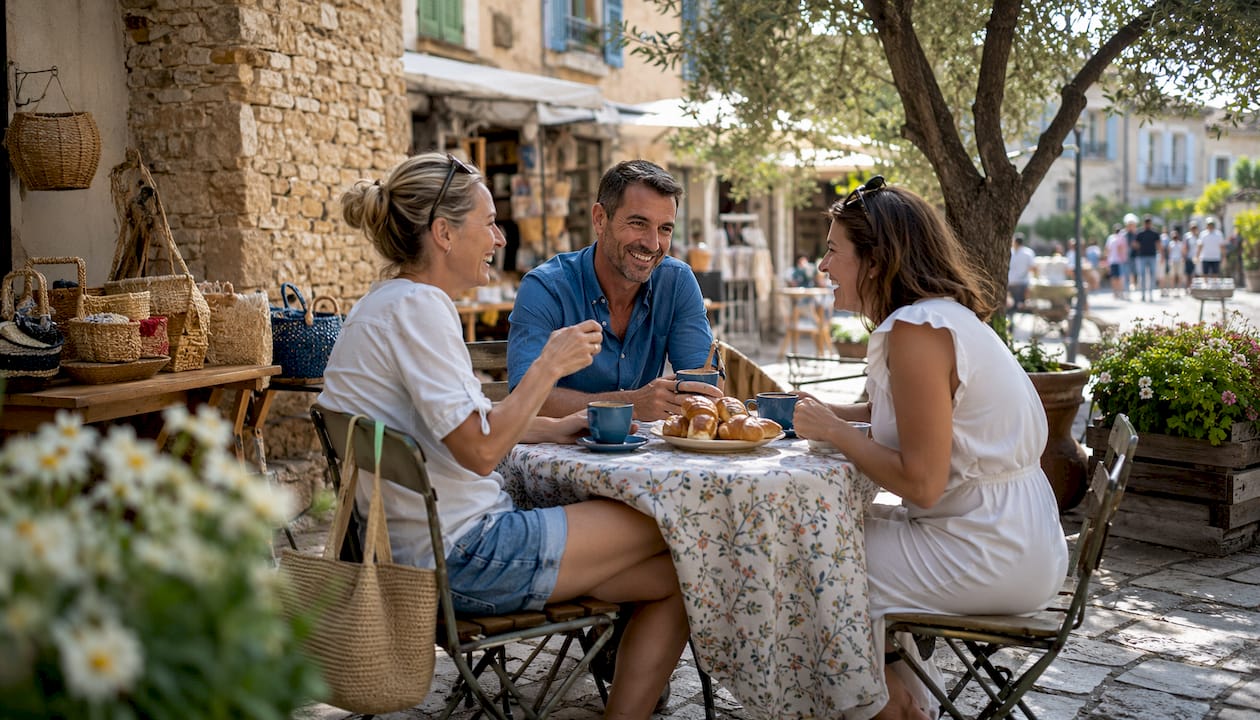
Social life in these communities tends to organise itself around shared events: the weekly market, the fête de village, communal barbecues, and seasonal celebrations. These are not optional extras. Attending village association meetings and local markets is genuinely how you build a place for yourself in a French community, and integration is measured in years, not months. Showing up consistently matters far more than any single grand gesture.
For remote workers and retirees, cowork-camping spaces and organised winter activities like yoga sessions provide structure during the quieter months. Seasonality shapes everything: the peak season runs from may to september, intensely busy, while autumn and winter shift the focus to maintenance, marketing, and community building.
Lifestyle aspects that shape expat campsite living:
- The slower pace of rural France rewards patience and punishes impatience
- Community events are the primary social infrastructure, not pubs or restaurants
- Seasonal rhythms dictate both business intensity and social energy
- Language skills directly affect how welcome you feel and how smoothly admin runs
- Neighbours become your most valuable resource for local knowledge
Experts advise combining a ‘people plan’ with a business plan to sustain motivation and avoid the isolation that can creep in during quiet winters. Social connections are as vital as financial planning for long-term wellbeing in this environment.
What ownership structures and legal requirements apply to expat campsite owners?
Expats have several ownership routes available when establishing a campsite in France. The micro-entreprise model suits smaller operations and solo operators, as covered above. For larger sites or those with partners, a société à responsabilité limitée (SARL) or a société par actions simplifiée (SAS) offers limited liability and more flexibility in sharing profits and responsibilities. Each structure carries different tax implications, so taking advice from a French expert-comptable (chartered accountant) before registering is advisable.
Post-Brexit, British nationals no longer benefit from EU freedom of movement, which affects residency rights. You will need either a visa de long séjour or a carte de séjour to live and work in France legally. Running a registered business in France generally supports your residency application, but the two processes are separate and run on different timescales. Understanding campsite property ownership types before committing to a purchase saves significant complications later.
The 28-day rule is another consideration worth knowing. In France, guests staying on a campsite pitch for more than 28 consecutive days may acquire certain tenancy rights, which affects how you manage long-stay bookings and seasonal residents.
Where can expat campsite owners find networks and support?
Building a support network is not a luxury; it is a practical necessity when you are navigating French bureaucracy in a second language. Several organisations and communities exist specifically for this purpose.
- Connexion France publishes practical guides for British expats running businesses in France, covering everything from tax changes to visa updates.
- Expats France (expatsfrance.com) hosts interviews and forums where campsite owners share operational experience directly.
- Local chambres de commerce (chambers of commerce) offer free or low-cost business advice and can point you towards regional grants and support schemes.
- Village associations and syndicats d’initiative (local tourism offices) connect you with the wider community and help promote your site to French visitors.
- Online groups on Facebook and forums dedicated to British expats in France provide informal but often highly practical peer support.
Building a local network is consistently cited by experienced operators as the single most effective way to navigate administrative challenges and integrate culturally.
What are the real financial costs of establishing a campsite in France?
The financial picture for campsite ownership is more complex than the purchase price alone suggests. Property costs vary enormously by region: rural Corrèze and the Languedoc interior offer significantly lower entry prices than the Dordogne or the Vendée coast. A site that already has basic infrastructure in place, as Hayley Gibbon found in Corrèze, reduces initial outlay but rarely eliminates the need for ongoing investment.
Key cost areas to budget for:
- Property purchase and legal fees: notaire fees in France typically run at around 7–8% of the purchase price for existing properties.
- Planning and permits: professional fees for permis d’aménagement applications and compliance certificates vary by project complexity.
- Infrastructure and maintenance: pools, glamping structures, and sanitation facilities require regular upkeep; experienced owners stress the importance of holding a maintenance reserve from day one.
- Website and booking systems: a bilingual site with integrated booking software is an ongoing operational cost, not a one-off.
- Insurance: public liability, property, and business interruption cover are all necessary.
Funding sources worth exploring include regional development grants through local conseils départementaux, EU rural development funds administered through French regional authorities, and bank loans from French institutions such as Crédit Agricole, which has long experience lending to agricultural and rural tourism businesses. If you are considering a mobile home as your entry point rather than a full site purchase, understanding the process of negotiating a mobile home price in France gives you a realistic baseline before any negotiation begins. For those thinking about exit strategies down the line, it is also worth reviewing selling a mobile home in a park context early, so you understand the full financial cycle from the start.
Key takeaways
Expat campsite communities in France succeed when owners combine solid legal preparation, genuine community participation, and realistic financial planning from the outset.
| Point | Details |
|---|---|
| Micro-entreprise turnover limit | Revenue above €188,700 for two consecutive years requires leaving the micro-entreprise regime. |
| Integration takes time | Attending village markets and local association meetings is how social acceptance is built, measured in years. |
| Season shapes everything | Peak activity runs may to september; winters focus on maintenance, marketing, and administration. |
| People plan matters | Social connections are as vital as financial planning for long-term wellbeing and business motivation. |
| Vendée offers a strong entry point | Camping Les Prairies du Lac in Apremont combines a 4-star community environment with a warm Atlantic microclimate. |
Ready to experience French campsite community life for yourself? Caravansinfrance.com offers pre-owned mobile homes at Camping Les Prairies du Lac in the Vendée, giving you immediate access to heated pools, organised activities, and a warm, welcoming community. No complex legalities, no hidden fees, and no property taxes. Browse available mobile homes in Vendée and take the first step towards your place in the sun.