Navigating the French Healthcare System as a Tourist
Getting sick abroad is stressful, but France has a world-class healthcare system. Here is exactly what to do — from the local pharmacy to emergencies — if you need medical attention while holidaying in the Vendée.
Picture this: you are sipping a perfectly crafted café au lait at a sunlit terrace or exploring a quiet village when a sudden toothache, a nasty flu, or a clumsy trip over a cobblestone brings your holiday to a grinding halt.
Getting sick abroad is stressful, but if you happen to be in France, you are in safe, highly efficient hands. The French healthcare system is world-class, but navigating it as a tourist requires knowing a few local rules of the road.
1. The Local Pharmacy: Your First Line of Defence
If your ailment is minor — a mild cold, an upset stomach, a superficial cut, or an insect bite — head straight to the nearest pharmacy.
In France, pharmacies are not just shops that sell paracetamol; they are neighbourhood triage centres. French pharmacists undergo six years of rigorous medical training and are legally qualified to assess minor conditions, recommend over-the-counter medications, and advise whether you need to see a doctor.
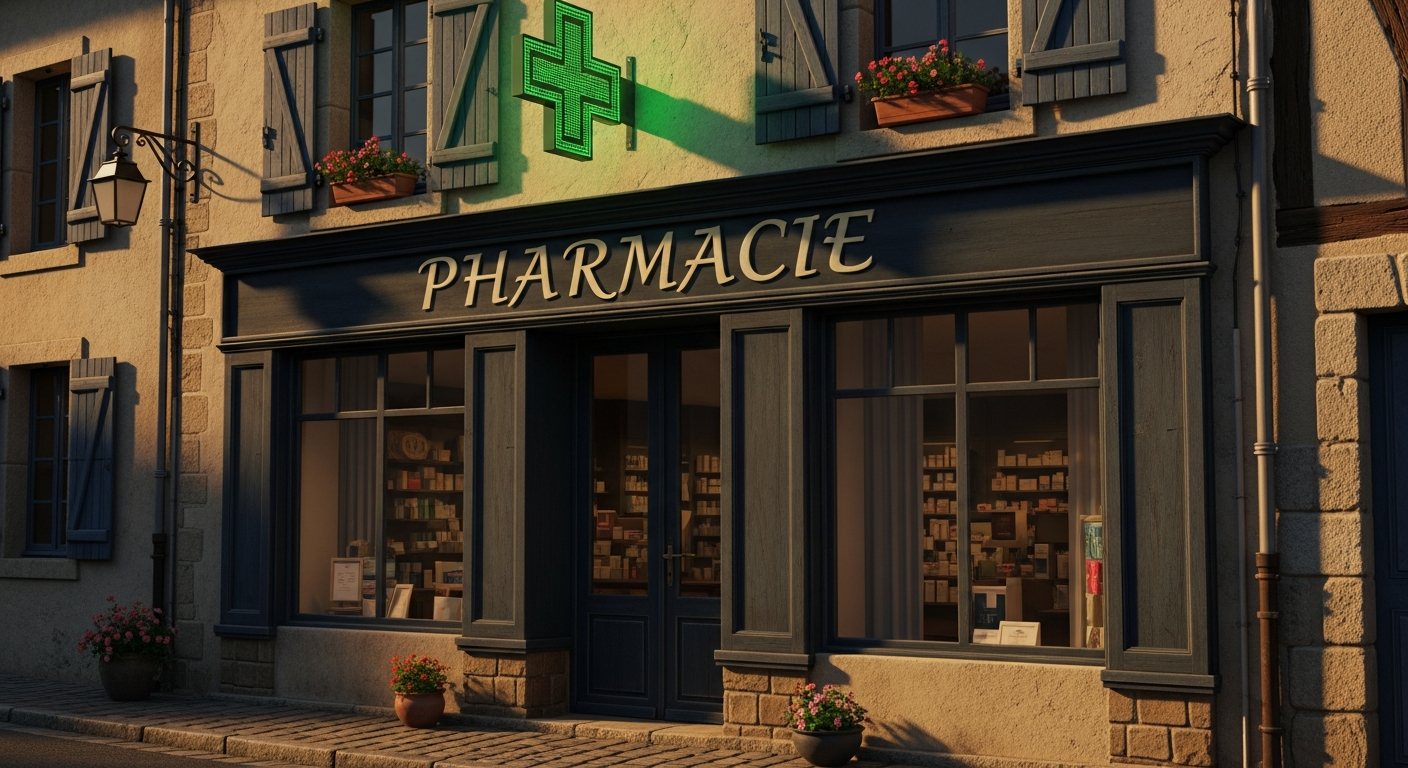
How to spot one: Look for the ubiquitous neon green cross. If it is lit up, the pharmacy is open. For Sundays and late nights, every region has a designated pharmacie de garde (on-duty pharmacy). The address of the nearest open one is usually posted on the window of any closed pharmacy, or your accommodation host can help.
2. Seeing a General Practitioner (Médecin Généraliste)
If a pharmacist tells you that you need a doctor, or if you know you need a prescription, you will want to see a médecin généraliste. The best way to book is via Doctolib — a free website and app used across France that lets you search by location, filter for English-speaking doctors, and book a slot within minutes.
What to expect at the clinic:
- The cost: A standard consultation with a state-contracted GP (Secteur 1) has a fixed baseline rate of €26.50.
- The payment: You pay the doctor directly at the end of the appointment. Most accept card, but carry some cash just in case.
- The paperwork: Because you do not have a French health insurance card (Carte Vitale), the doctor will give you a brown paper form called a Feuille de Soins (Care Sheet). This is essential for claiming reimbursement from your travel insurance later — keep it safe.
3. Picking Up Prescriptions
When you take your prescription (ordonnance) to the pharmacy, you pay for the medicines upfront. The pharmacist will stamp your ordonnance and print small barcoded stickers (vignettes) onto your Feuille de Soins — all of which you will need for your insurance claim.
4. In an Emergency: Who to Call
For genuine medical emergencies, France uses a structured system with specific numbers:
| Number | Service | When to use |
|---|---|---|
| 15 | SAMU | Serious emergencies requiring an ambulance |
| 18 | Sapeurs-Pompiers | Fire brigade — also trained first-responders for accidents |
| 112 | General European emergency | Works from any phone including foreign SIMs |
| 3624 | SOS Médecins | 24/7 doctor home-visit service — too ill to travel but not life-threatening |
For urgent but non-ambulance situations (suspected broken bone, deep cut needing stitches), go directly to the nearest hospital emergency room, clearly labelled Urgences.
5. How to Get Your Money Back
Unless you are an EU citizen with a European Health Insurance Card (EHIC) or a UK citizen with a Global Health Insurance Card (GHIC), the French state will not cover your costs directly. You will claim reimbursement through your private travel insurance.
Your insurance claims checklist:
- Feuille de Soins — fully signed and stamped by the doctor or pharmacist
- Ordonnance — a copy of the written prescription
- Detailed receipts — itemised factures showing exactly what you paid
Most travel insurers require original physical documents, so file them away safely in your travel wallet. Getting sick on holiday is never ideal, but knowing how the local system works keeps a minor health hiccup from turning into a logistical nightmare.