Packing for a mobile home holiday in France: your guide
Discover essential tips for packing for your mobile home holiday in France. Ensure a smooth, enjoyable trip with our complete checklist!
Packing for a mobile home holiday in France: your guide
Bring your passports, a type E travel adaptor, bed linen (unless you’ve pre-booked a pack), and a top-up of cleaning supplies beyond the welcome kit. That covers the essentials. Everything else on this page helps you pack smarter, travel lighter, and arrive at your mobile home in France ready to relax rather than scramble.
What to pack for a mobile home holiday in France
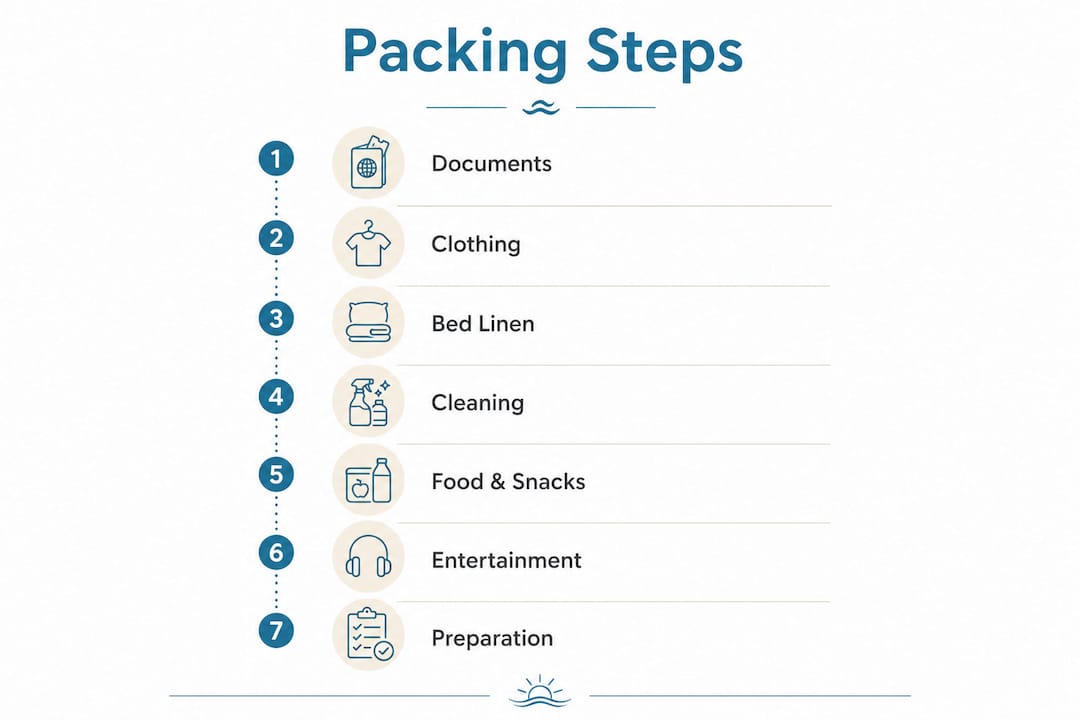
The checklist below covers every category you’ll need. Use it as your master reference before you zip up the car boot.
Documents and travel essentials
- Passports (valid for the duration of your trip)
- Driving licence and original vehicle registration document
- Travel insurance details and emergency contact numbers
- Breakdown cover information
- Booking confirmation and campsite arrival details
- GHIC cards (the post-Brexit replacement for the EHIC)
- Travel money and bank cards
Clothing and footwear
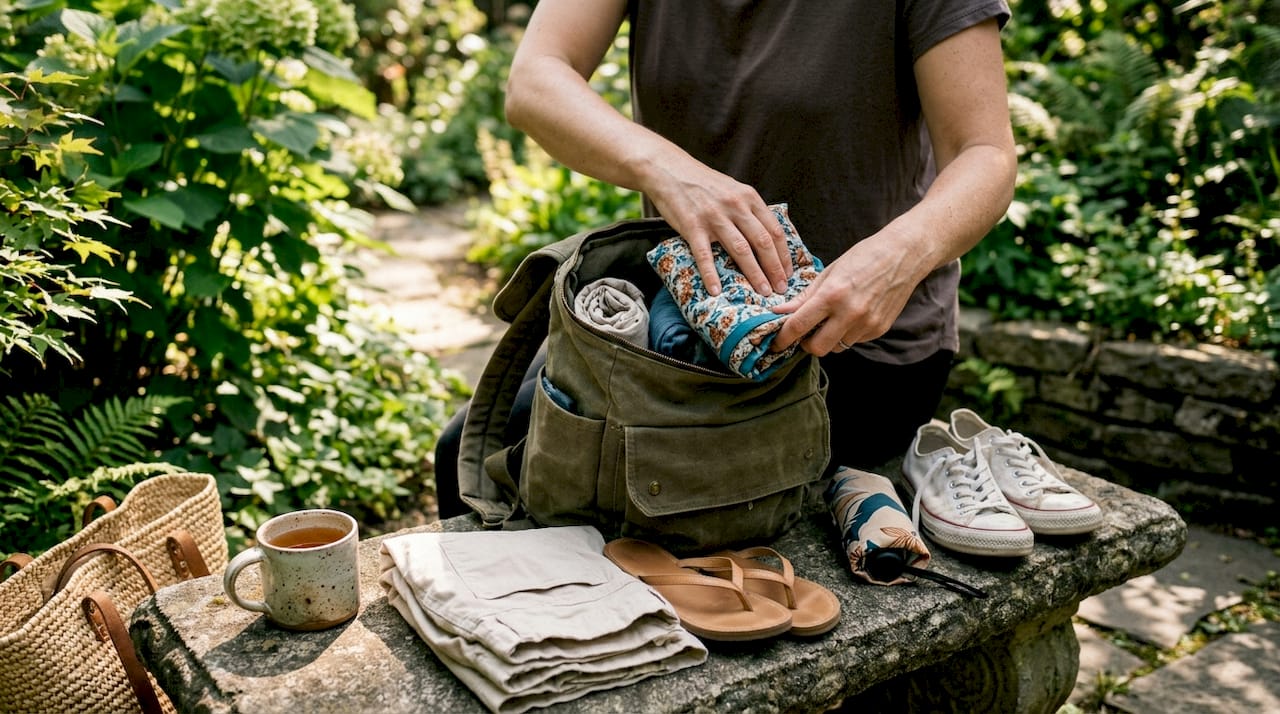
Pack for the weather you’ll actually have, not the weather you hope for. France in summer is warm, but evenings near the Atlantic coast can turn cool. Layers work far better than a suitcase full of outfits you never touch. Swimwear, shorts, and t-shirts cover most of the day; a light fleece or hoodie handles the evenings. Flat, comfortable shoes are worth their weight: you’ll walk the campsite far more than you expect. Flip-flops for poolside, trainers for day trips, and a waterproof jacket tucked in the bottom of the bag round things off. Layered casual clothing reduces overpacking and suits the relaxed pace of a mobile home holiday perfectly.
Bed linen and towels
Sheets, pillowcases, and bath towels are not usually included in the base rental price. Either bring your own or pre-book a linen pack when you make your reservation. Beach towels are worth packing if you’re driving; if you’re flying, a quick-dry microfibre set saves considerable luggage space.
Kitchen and cleaning supplies
- Tea towels (at least two)
- Washing-up liquid, sponge, and dishcloth
- Bin bags (small and large)
- Tin foil and cling film
- Food storage containers or zip-lock bags
- Cool bag or cool box with ice packs
- Surface cleaner and anti-bacterial wipes
- Hand soap
Health, safety, and first aid
- Paracetamol, ibuprofen, and any prescription medicines
- Antihistamines (tablets and liquid for children)
- Plasters, bite and sting relief cream
- Insect repellent (spray and plug-in variants for evenings)
- Sun cream and after-sun lotion
- Wet wipes
Tech and electrical
- Type E travel adaptor (French sockets use the two-round-pin format)
- Phone and tablet chargers
- Extension lead with a French plug for multiple devices
- Portable DVD player or loaded tablet for travel days and downtime
Entertainment and games
- Travel board games, playing cards, and Uno
- Colouring books and felt-tip pens for younger children
- Books or an e-reader
- Pool toys: goggles, armbands, dive sticks
- Bikes, scooters, or a football if travelling by car
| Category | Key items to pack | Usually provided |
|---|---|---|
| Documents | Passports, insurance, GHIC, breakdown cover | No |
| Bed linen | Sheets, pillowcases, bath towels | Rarely (check in advance) |
| Kitchen | Tea towels, washing-up liquid, foil, food containers | Crockery, pots, utensils |
| Cleaning | Bin bags, surface spray, sponge, anti-bac wipes | Starter kit lasts only one to two days |
| Health | First aid kit, medicines, sun cream, insect repellent | No |
| Tech | Type E adaptor, chargers, extension lead | No |
| Entertainment | Travel games, books, pool toys, bikes | Varies by site |
| Clothing | Layers, swimwear, flat shoes, waterproof jacket | No |
How to check equipment and inventory before you arrive
Read your rental agreement before you pack a single item. Under the French rental decree of 22 October 2008, campsites are legally required to provide a detailed description of the accommodation, including all equipment and rental terms. That document tells you exactly what’s in the mobile home and what you need to bring yourself.
- Check for: cooking utensils, crockery, pillows, blankets, and outdoor furniture
- Confirm whether bed linen, towels, and a bath mat are included or available as paid extras
- Ask about welcome starter kits and what they contain
- Enquire about baby and toddler equipment (high chairs, travel cots, bed rails) if relevant
- Contact the campsite directly if anything on the inventory is unclear
Most mobile homes come well equipped with a gas hob, fridge-freezer, microwave, pots, pans, crockery, and outdoor furniture. What they rarely include is linen, towels, and enough cleaning supplies to last your whole stay. Knowing this in advance means you pack precisely what’s missing rather than duplicating what’s already there.
What’s the deal with bed linen and towels?
Bed linen and towels are almost always excluded from the standard rental price. The good news is that most sites let you pre-book a linen pack, which typically includes a fitted sheet, top sheet, and pillowcase per person. Towel packs (bath-towel sized) are usually available separately, as are larger pool towels.
- Pre-book linen and towel packs when you make your reservation to guarantee availability
- If driving, bringing your own sheets and towels costs nothing extra and gives you full flexibility
- If flying, pre-booked packs save significant luggage weight and space
- Hand towels are rarely included in rental packs, so pack your own
- Beach towels are worth bringing regardless; campsite pool towel hire can add up over a week
- A bath mat is almost never provided, so add one to your list
Pro Tip: Check whether your accommodation includes a baby bath, high chair, or travel cot if you’re travelling with a toddler. Pre-booking these in advance means they’re waiting for you on arrival, saving you from lugging bulky items across the Channel.
Essential cleaning and kitchen items to pack
The welcome kit provided on arrival at most mobile home sites typically contains one toilet roll, a sponge, some washing-up liquid, a cleaning cloth, and a bin bag. That starter kit lasts roughly one to two days, so plan to bring your own supplies for the rest of the stay.
- Extra washing-up liquid, sponges, and dishcloths
- Tea towels (two or three; they get damp quickly)
- Bin bags in two sizes
- Surface cleaner and anti-bacterial wipes
- Tin foil, cling film, and food bags for packed lunches
- A cool bag with reusable ice packs for day trips
- Matches or a lighter for the barbecue
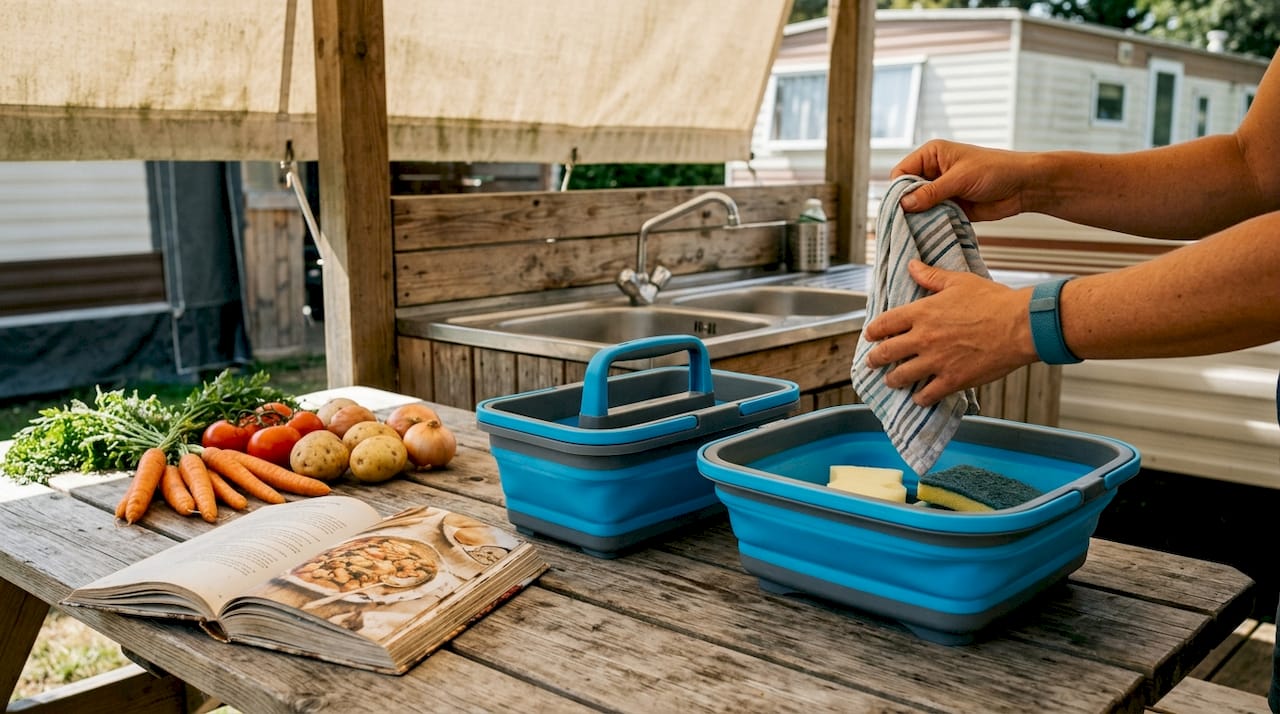
Collapsible items such as a foldable washing-up bowl or a collapsible laundry basket save a surprising amount of space in the car and in the mobile home’s limited storage. Campsite shops do stock basics, but they tend to carry a narrow range at higher prices than a supermarket. Bringing familiar brands from home also means you’re not hunting for the right product on your first evening.
Entertainment and games for the whole family
A mobile home holiday in France rarely leaves you bored, but having a few activities to hand makes a real difference on rainy afternoons or quiet evenings on the decking.
- Travel board games: Uno, Travel Monopoly, and Tension pack flat and keep all ages entertained
- Playing cards and a crib board take up almost no space
- Colouring books, felt-tip pens, and activity journals for younger children
- Books or a loaded Kindle for adults
- A tablet or portable DVD player for travel days and wind-down evenings
- Pool toys: goggles, dive sticks, armbands, and a small inflatable
- A football or volleyball for the campsite grounds
- Bikes, scooters, and helmets if you’re travelling by car
Campsite programmes typically include pétanque, sports competitions, and kids’ clubs, so you won’t need to fill every hour yourself. Insect repellent deserves a mention here too: mobile home windows often have mosquito screens, but doors rarely do, making a plug-in repellent or citronella sticks genuinely useful for comfortable evenings outdoors.
How to use onsite facilities to pack less
French mobile home sites are well set up, and using what’s already there lets you travel lighter.
- Laundry: Most sites have coin-operated or card-payment machines. A wash costs around €7 and a dryer around €5, each taking roughly half an hour. Bring a small travel washing line and pegs for swimwear and towels between machine loads.
- Storage: An over-door organiser hung on the bathroom door keeps sun cream, toiletries, chargers, and children’s bits tidy without cluttering the limited surfaces.
- Baby equipment: High chairs, travel cots, and bed rails can usually be hired or pre-booked through the site, saving you from packing bulky items.
- Campsite shop: Good for fresh bread, croissants, and last-minute essentials, though a nearby supermarket will offer more choice at lower prices.
- Outdoor furniture: Loungers, patio tables, drying racks, and barbecue equipment are typically provided, so there’s no need to bring your own.
Embracing local shopping also lightens the load. A quick trip to a French supermarket on your first full day means you can travel with just a cool bag of basics rather than a boot full of groceries.
UK traveller essentials: documents, vehicle kit, and expert tips
Mandatory documents
- Passports (valid for the full trip duration)
- Driving licence
- Original vehicle registration document (V5C)
- Motor insurance certificate
- Breakdown cover details
- Travel insurance documents
- Booking confirmations and campsite contact details
- GHIC cards for all travellers
French vehicle kit requirements
UK drivers travelling to France must carry a specific set of items in the car. Reflective high-visibility jackets for every passenger must be kept inside the vehicle, not in the boot, so they’re accessible immediately after stopping. You’ll also need a warning triangle and a breathalyser. Headlight beam deflectors are required to prevent dazzling oncoming drivers on the right-hand side of the road.
- High-visibility jacket for every passenger (inside the car, not the boot)
- Warning triangle
- Breathalyser
- Headlight beam deflectors
- UK sticker or number plate with GB identifier
Getting through the tolls
A toll badge such as Mango Mobilités lets you pass through French motorway express lanes without stopping, with fees billed automatically each month. If you’re making the drive from a Channel port to the Vendée, it saves a noticeable amount of time and removes the need to have euros ready at every péage.
Pro Tip: Pack fewer clothes than you think you need. On a mobile home holiday, children spend most of the day in swimwear, and adults rarely need more than a handful of casual outfits. Packing light leaves room in the car for the items that genuinely improve your stay: the cool bag, the bikes, and the games.
Food and snacks: what to bring and what to buy locally
Plan for your first evening and breakfast before you do anything else. Arriving after a long drive to find an empty fridge is easily avoided with a small supply of basics in a cool bag.
Good items to bring from home include pasta and a jar of sauce, breakfast cereal, tea and coffee, squash, snacks for the journey, and a bottle of wine to enjoy on the decking that first night. Butter, cheese, and ham travel well in a cool box and cover lunches on the road. Ice pops (unfrozen) are a favourite with children and take up almost no space.
Once you’re settled, a French supermarket is your best friend. Local produce is excellent and often cheaper than campsite shops, and you’ll find everything you need for a week of easy self-catering. Many sites also offer a morning bread and pastry service, so fresh croissants can become a daily ritual rather than a treat. Salt, pepper, olive oil, and ketchup are worth bringing from home since they’re the condiments you’ll reach for constantly and they pack easily into a small bag.
Non-perishable snacks such as cereal bars, crackers, and dried fruit are useful for day trips when you don’t want to head back to the mobile home for lunch. A reusable water bottle per person and a family-sized cool bag with a freezable block make a real difference on warm days out.
Key takeaways
A successful mobile home holiday in France comes down to reading your rental agreement first, packing what’s genuinely missing, and trusting the campsite to cover the rest.
| Point | Details |
|---|---|
| Read the rental agreement first | French law requires campsites to list all provided equipment, so check before packing anything. |
| Bed linen is rarely included | Pre-book a linen pack or bring your own sheets, pillowcases, and towels. |
| Top up the starter kit | The welcome cleaning kit lasts only one to two days; bring extra supplies for the full stay. |
| Carry the full vehicle kit | UK drivers must keep high-visibility jackets inside the car, not the boot, alongside a warning triangle and breathalyser. |
| Pack layers, not outfits | Mix-and-match casual clothing and swimwear cover almost every occasion on a French mobile home holiday. |
Thinking about making every summer feel this easy? Caravansinfrance specialises in pre-owned mobile homes in the Vendée, ready to move into at Camping Les Prairies du Lac. No hidden fees, no property taxes, and a warm coastal microclimate waiting for you each year. Browse the available homes and see what your French escape could look like.