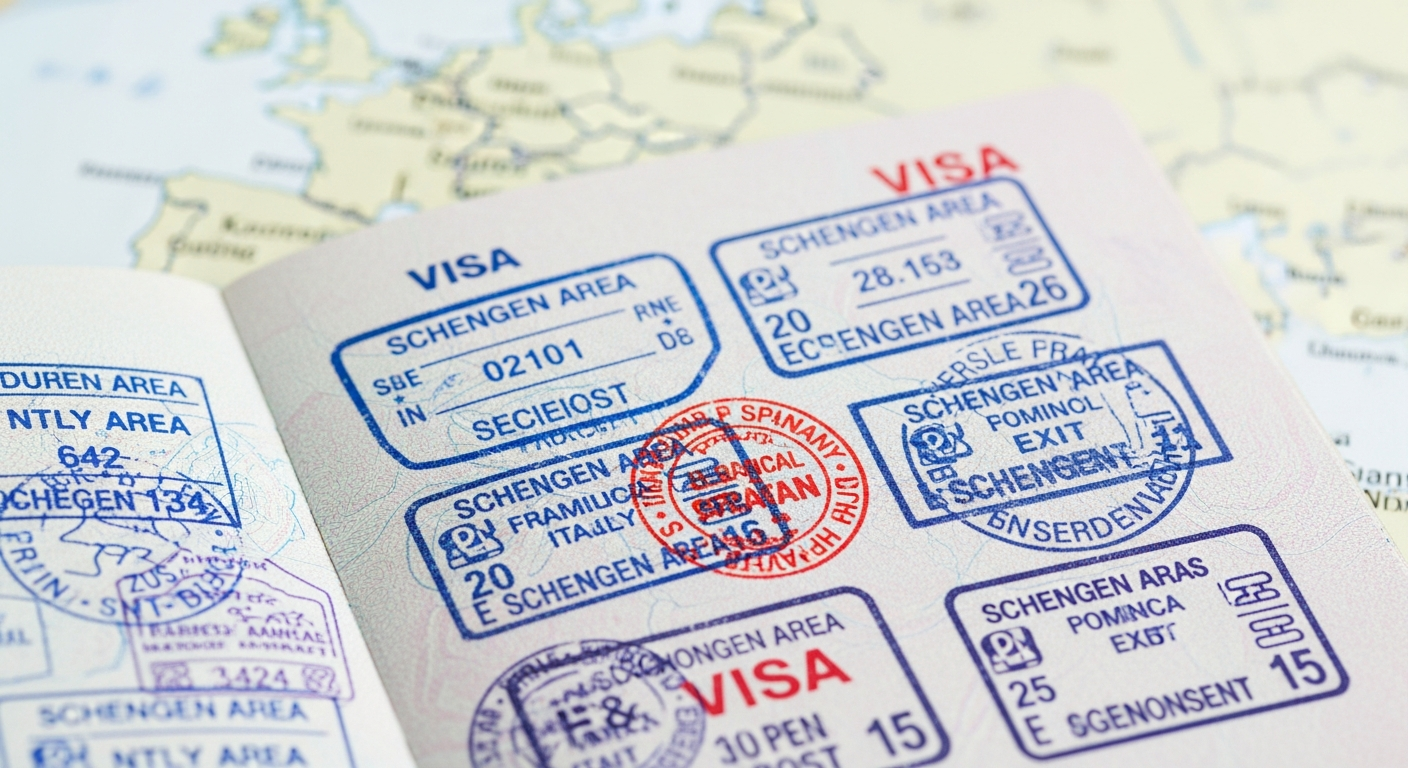
Navigating the Schengen 90-Day Rule: A Guide for Brits
Brexit changed the rules for British visitors to Europe. Here's a clear breakdown of the 90/180-day rule, how the rolling lookback calculation works, the new EES and ETIAS digital systems, and what happens if you overstay.
Ever since Brexit took full effect, popping over to the Continent isn't quite as spontaneous as it used to be. While British citizens don't need a full tourist visa just to holiday in Europe, stays are strictly bound by the Schengen Area's "90-day rule". The calculations can get a bit confusing, and with Europe's digital border systems now fully live, keeping track is no longer optional. This guide breaks down exactly how it works, completely simply.
The Golden Rule: 90 / 180 Days
As a British citizen, you can spend up to 90 days in the Schengen Area within any rolling 180-day window. The two biggest traps travellers fall into are thinking the clock resets if they leave the zone temporarily, or assuming it resets on the 1st of January. It does neither.
The "Rolling Lookback" Test
To find out if you are legally allowed to be in Europe today, imagine standing at the border control desk. The border officer looks backwards exactly 180 days from the current date.
- They count every single day you spent inside the Schengen zone during that past 180-day period.
- If that total number is 90 or fewer, you are perfectly within the law.
- If it hits 91, you are officially overstaying.
Important Day-Counting Rule: Both your entry day and your exit day count as full days inside the zone. For example, if you fly into France on a Friday night and fly back to the UK on Saturday morning, that counts as 2 days of your allowance — even though you were only there for a few hours.
Where Does This Apply?
The Schengen Area is a specific passport-free zone — it is not identical to the European Union. The rule applies across all 29 Schengen countries combined, meaning your days accumulate whether you are in France, Spain, or Germany.
| Schengen Countries (Clock Ticks) | Non-Schengen Europe (Clock Doesn't Tick) |
|---|---|
| Popular holiday spots: France, Spain, Italy, Portugal, Greece, Germany, Austria, etc. |
Ireland: Protected by a separate Common Travel Area arrangement with the UK. |
| Non-EU but Schengen members: Iceland, Norway, Switzerland, Liechtenstein. |
Cyprus: An EU member state, but currently not part of the Schengen zone. |
If you spend 45 days in France and then drive straight into Spain for another 45 days, you have used up your entire 90-day allowance and must leave the zone entirely. However, if you spend 90 days in France and then take a ferry straight to Ireland, your Schengen clock stops.
Two New Digital Changes You Need to Know
The days of relying on blurry, wet-ink passport stamps to track your stays are over. The EU has rolled out major digital upgrades that automate this process entirely.
1. The Entry/Exit System (EES)
The EES is now fully operational at all Schengen borders. Instead of manual passport stamping, your face and fingerprints are scanned digitally on your first visit. The system automatically tracks your exact entry and exit dates and calculates your rolling 180 days down to the minute.
How it works: There is no application form online and no fee for the EES. Your registration happens completely automatically at the border terminal or kiosk on the day you travel. Your digital profile then remains active for 3 years, making subsequent crossings much faster.
2. ETIAS (Pre-Travel Pass)
The European Travel Information and Authorisation System (ETIAS) is a quick online pre-travel screening, similar to the American ESTA.
- Cost: €20 (approximately £17 depending on the current exchange rate).
- Who pays: Adults aged 18 to 70. Free for children under 18 and seniors over 70, though they still need to complete the pass.
- Validity: Once approved, it lasts for 3 years or until your passport expires, covering unlimited return trips.
What Happens if You Overstay?
Because the EES tracks everything electronically, overstaying even by a single day flags you automatically in the European database. Consequences include:
- Substantial cash fines at the airport
- A passport flag making future border crossings more difficult
- Potential entry bans preventing you from entering Europe for 1 to 5 years
If you plan to stay in France for longer than 90 days — for example, as the owner of a holiday home there — you must apply for a Type D Long-Stay Visa via the French consulate before leaving the UK.