Types of campsite property ownership: a 2026 UK guide
Discover the types of campsite property ownership in the UK. Learn about freehold, leasehold, and license agreements to make informed decisions.
Types of campsite property ownership: a 2026 UK guide
What are the main types of campsite property ownership in the UK?
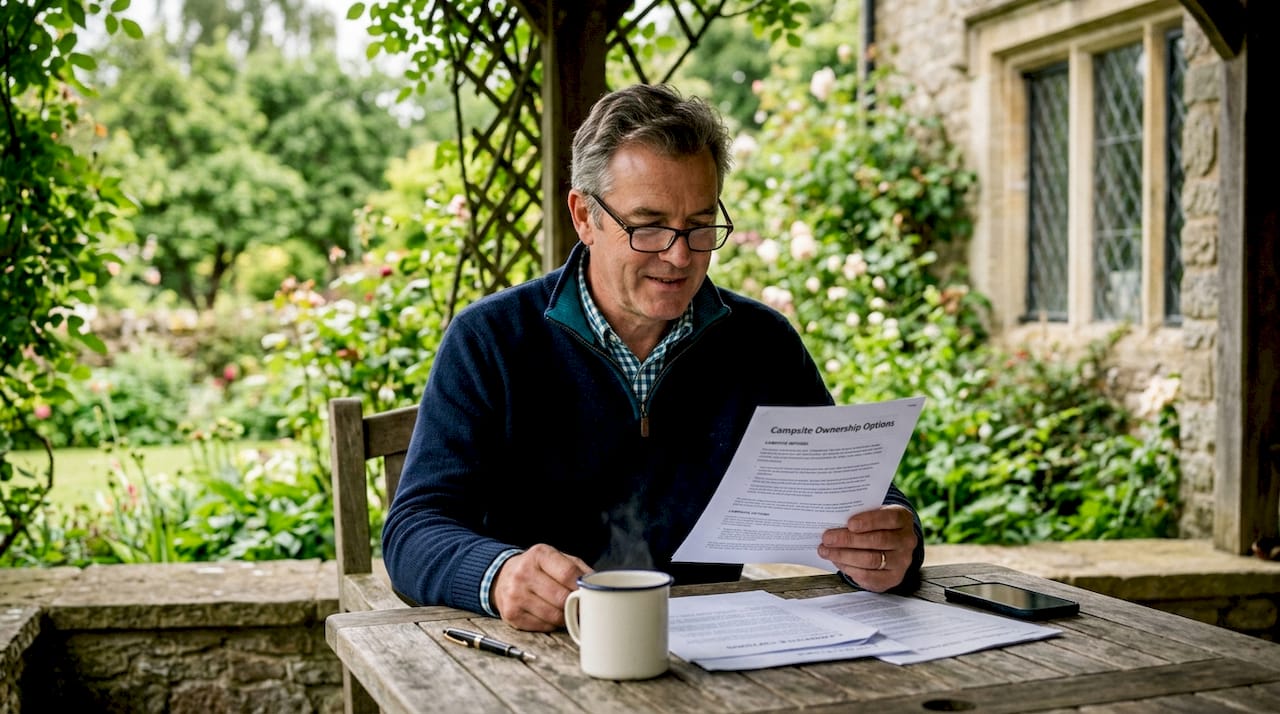
Campsite property ownership in the UK falls into four principal structures, each with distinct legal rights, financial obligations, and day-to-day implications. Getting this right from the outset shapes everything from your tax position to how freely you can sell or pass on the asset.
- Freehold (deeded) ownership. You own both the land and any structures on it outright. As the deeded owner, you carry full responsibility for property taxes, maintenance, and any Homeowner Association (HOA) fees covering shared infrastructure such as roads and drainage. The upside is genuine equity potential, particularly in well-located parks with strong resale markets.
- Leasehold ownership. You own a structure or pitch for a fixed term, but the land beneath remains with a freeholder. Ground rent is payable to the park operator, and lease terms can restrict what you build, alter, or sublet.
- Licence agreements. Common in mobile home and lodge parks, a licence gives you the right to occupy a pitch rather than any proprietary interest in the land. Mobile home owners in licence arrangements typically have little say over annual rent increases and must comply with the operator’s site rules.
- Cooperative ownership. Members collectively own or govern the park, sharing both the benefits and the governance responsibilities. Transferability is often restricted, and collective rules can limit how individual units are used or sold.
The Camping and Caravanning Club, the UK’s largest membership organisation for campers, recognises these distinctions when advising members on site selection and ownership rights. Understanding which structure applies to a given site is the single most important step before committing any capital.
What legal and planning rules affect campsite ownership?
Planning permission is the most consequential legal constraint you will face, and it varies considerably depending on the scale and type of site you intend to operate. Recreational zoning typically prevents campsite plots from being used as a primary residence, and many consents impose strict seasonal occupancy limits. A common restriction caps continuous stays at 29 days, though the precise figure depends on the local planning authority and the conditions attached to the site’s consent.
Planning reality check: Seasonal occupancy limits and recreational zoning conditions are legally enforceable. Breaching them risks penalties and loss of the site’s operating licence.
Prospective owners and operators should verify the following before proceeding:
- Planning consent status. Confirm whether the site holds full planning permission or operates under a certificate of lawful use, and check all attached conditions.
- Occupancy restrictions. Identify any maximum stay limits and whether the site is closed for part of the year.
- Permanent habitation prohibition. Recreational zoning almost universally prevents campsite plots from serving as a main address. A separate guide on the role of campsite as permanent address covers this in detail.
- Development restrictions. Check what structures, utilities, or landscaping you are permitted to add under both planning law and any HOA rules.
- Tax obligations. Freehold owners pay Council Tax or business rates depending on usage; furnished holiday letting rules under HMRC’s HS253 helpsheet may apply if the property is let commercially.
- Licence compliance. Sites operating under a site licence issued by the local authority must meet ongoing conditions covering sanitation, fire safety, and spacing between units.
Failure to monitor these obligations carries real consequences. Local authorities can suspend or revoke a site licence following a notice period, and planning enforcement action can result in costly remediation requirements.
What does running a campsite actually involve day to day?
Owning a campsite is not a passive investment. The operational demands differ significantly depending on whether you hold freehold title over an entire site, own a single pitch within a managed park, or operate a small hosted model on private land.
For owners of full campsite operations, the core responsibilities include:
- Infrastructure and facilities. Water supply, sanitation, electrical hook-ups, and waste management must meet the conditions of the site licence. The level of provision expected scales with the size and category of the site.
- Insurance. Public liability insurance is non-negotiable for any site welcoming paying guests. Employers’ liability cover is required if you take on staff. Structures, contents, and any vehicles or equipment on site need separate policies.
- Management structure. Smaller sites are typically owner-managed, which keeps costs down but demands significant personal time. Larger or amenity-rich parks increasingly use professional management companies, particularly where private unit ownership is involved.
- Maintenance fees and revenue sharing. Owners of individual pitches within a managed park often pay service charges covering grounds maintenance, shared facilities, and administration. Where units are placed into a managed rental pool, revenue sharing arrangements govern how income is split between the park operator and the individual owner.
- Financial reporting. Modern campsite ownership increasingly functions as a governed financial model. Operators managing multiple private owners need clear systems for income settlement, VAT accounting, and owner reporting.
The Camping and Caravanning Club publishes guidance on site standards that many operators use as a practical benchmark, even where formal affiliation is not sought.
Garden campsites and ‘gamping’: a flexible model for landowners
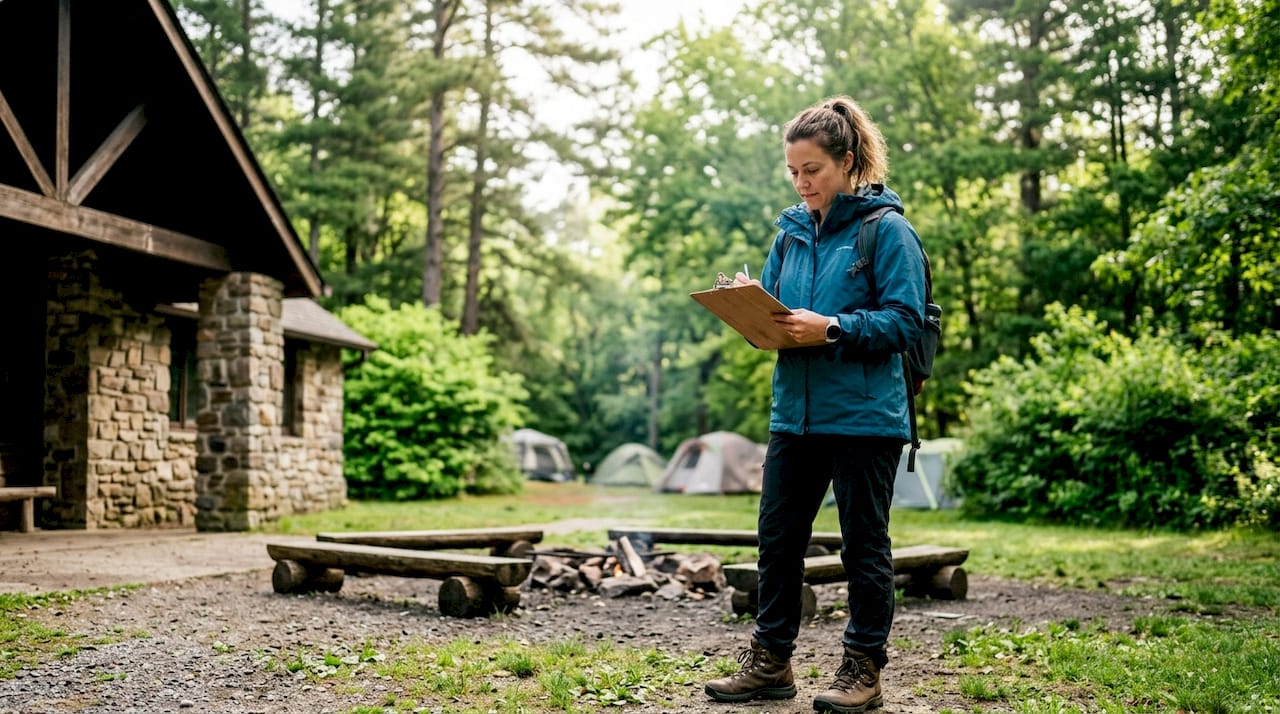
One of the most accessible entry points into campsite ownership for private landowners is the hosted garden campsite, sometimes called ‘gamping’ (a shorthand for garden camping). Rather than developing a full commercial site, garden campsites allow landowners to share private fields, orchards, or woodland with paying guests on a small scale, prioritising nature access over fixed infrastructure.
The appeal is straightforward. Setup costs are low compared with a traditional campsite, planning requirements are often lighter for small-scale seasonal use, and the model suits landowners who want to diversify income without committing to year-round operations. Guests gain access to genuinely private, often beautiful land that would otherwise be out of reach.
Key features of this model include:
- Low fixed infrastructure requirements (basic sanitation and water access are typically sufficient to start).
- Seasonal flexibility, with many hosts operating only during spring and summer.
- Community-oriented hosting, where the landowner’s personal involvement is part of the appeal.
- Potential for incremental upgrades such as glamping structures, outdoor kitchens, or shower facilities as the business grows.
- Lighter regulatory burden for very small sites, though local planning rules still apply and should be checked before opening.
Pro Tip: Before welcoming your first guests, contact your local planning authority to confirm whether your intended use requires a change of use application or falls within permitted development rights. Getting this confirmed in writing protects you from enforcement action later.
The gamping model has grown steadily across England and Wales, with platforms connecting landowners directly to guests seeking off-the-beaten-track experiences. For families in particular, the combination of privacy, nature, and simplicity makes hosted campsites a compelling alternative to busy commercial parks.
Practical advice for prospective campsite owners and landowners
Choosing the right ownership structure comes down to matching your financial goals, risk appetite, and lifestyle intentions with the legal and operational realities of each model. Here is what experienced operators consistently flag as the most important considerations.
Evaluate your goals first. Are you seeking capital appreciation, regular income, personal use, or a combination? Freehold ownership offers the strongest equity potential but the highest upfront cost and ongoing liability. A licence arrangement within a managed park reduces complexity but limits control and resale flexibility.
Do thorough legal due diligence. Commission a solicitor experienced in leisure property to review planning consents, licence conditions, and any HOA or management agreements before exchange. Hidden restrictions on subletting or development can fundamentally alter the financial case.
Plan for resale from day one. Transferability varies considerably across ownership types. Cooperative models often restrict resale to the organisation itself at the original purchase price, removing open-market value entirely. Leasehold terms with fewer than 70 years remaining can deter mortgage lenders and reduce buyer appetite.
Practical steps to follow:
- Obtain a full copy of the site licence and all planning conditions before committing.
- Confirm insurance requirements with a broker specialising in leisure and hospitality property.
- Speak to existing owners on the site about their experience of management, fee increases, and resale.
- Assess the local market for comparable sites to gauge realistic income and resale values.
- Review the management agreement carefully if your unit will enter a rental pool.
Pro Tip: Platforms such as Maxxton Owner Manager centralise owner profiles, automate revenue settlement calculations, and integrate financial reporting directly within the park management system. If you are buying into a managed park, ask whether the operator uses a governed system of this kind before signing. Transparent reporting protects your income.
Pinnacle Lifestyles, a leisure property operator, has noted that campsite ownership assets carry defensive, inflation-resistant qualities that make them attractive to families seeking long-term lifestyle security rather than purely short-term returns.
Financial implications of each ownership type
The financial picture varies sharply depending on which structure you choose, and the differences go well beyond the purchase price.
Freehold ownership carries the highest entry cost but offers the clearest path to equity growth. You pay property taxes, fund all maintenance, and meet any HOA or community fees. Those fees can escalate to cover infrastructure upgrades such as road resurfacing or septic system replacement, so budgeting conservatively is wise. The benefit is that you control the asset and can sell on the open market.
Leasehold and licence arrangements typically cost less upfront. However, ground rent and service charges are ongoing, and annual rent increases in licence-based parks can be significant, particularly where the operator holds all the negotiating power. Unlike freehold, there is no land equity to build.
Cooperative ownership sits between the two in terms of cost, but the resale restrictions mean your capital may be locked in at the original purchase price. The collective governance model can also slow decision-making on site improvements.
For all ownership types, the furnished holiday letting rules under HMRC’s guidance may offer tax advantages if the property qualifies, including capital allowances and favourable treatment of rental income. Always take specialist tax advice before purchase.
Community and HOA fees deserve particular attention. These charges cover shared infrastructure and can rise sharply when major works are required. Prospective owners should request several years of accounts and any planned capital expenditure schedules before committing. Rental income restrictions imposed by some parks can also limit your ability to offset these costs.
Advantages and disadvantages of each ownership structure
| Ownership type | Key advantages | Key disadvantages |
|---|---|---|
| Freehold (deeded) | Full control, equity potential, open-market resale | Highest cost, full liability for taxes and maintenance |
| Leasehold | Lower entry cost, shared maintenance responsibility | No land equity, lease length affects resale value |
| Licence agreement | Simplest entry, managed park amenities included | Rent increases, limited control, no proprietary interest |
| Cooperative | Community governance, shared costs | Restricted resale, collective decision-making |
| Garden campsite (hosted) | Low barrier to entry, seasonal flexibility | Light but real planning obligations, limited income scale |
Freehold ownership suits operators who want maximum control and are prepared to manage the full weight of ownership. The ability to build equity and sell freely on the open market is a genuine advantage, particularly in well-located parks where campsite amenities and community quality sustain long-term demand.
Leasehold works well for buyers who want a defined holiday asset without the complexity of full site ownership. The trade-off is that the land never becomes yours, and a shortening lease can quietly erode the property’s value.
Licence agreements are the most common arrangement for mobile home and lodge owners in managed parks. They are simple to enter but offer the least security. Operators set the rules, and rent reviews can move against you with little recourse.
Cooperative models appeal to those who value community and shared governance over individual control. The Escapees Co-Op in the US, for example, requires members to sell back to the organisation rather than on the open market, a model that prioritises access for new members over individual capital gains. UK equivalents exist in various forms.
Garden campsites offer the lowest barrier to entry and genuine lifestyle appeal, but income potential is inherently limited by scale. They suit landowners who want to share their land and earn supplementary income rather than build a primary business.
A simpler ownership path: turnkey mobile homes in Vendée, France
If the complexity of UK campsite ownership structures feels like a lot to navigate, Caravansinfrance offers a genuinely different kind of leisure property ownership. Rather than managing planning consents, ground rent negotiations, or HOA fee schedules, you simply own a ready-to-move-in mobile home at Camping Les Prairies du Lac, a four-star site in the Vendée region of western France.
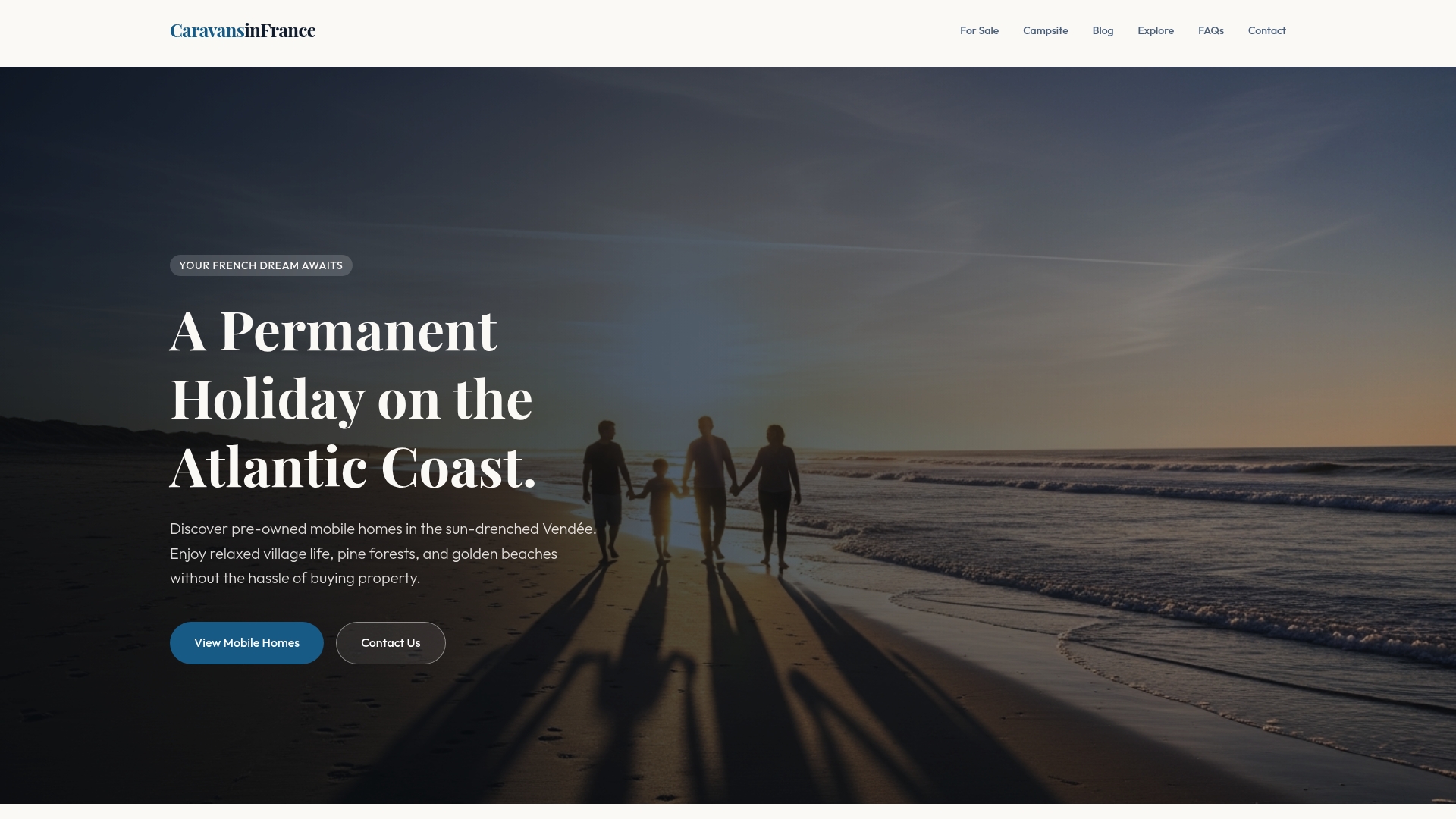
The Vendée coast is one of France’s sunniest regions, with a mild microclimate, sandy beaches, and the kind of unhurried pace that makes a holiday home feel genuinely restorative. Caravansinfrance specialises in pre-owned mobile homes on this site, with a buying process designed to be transparent from the first conversation. No hidden fees, no property taxes, no conveyancing complexity.
What you get instead:
- A fully furnished, ready-to-use home with immediate access on completion.
- Heated pools, community activities, and a welcoming family-friendly atmosphere on site.
- A coastal setting within easy reach of the Atlantic, local markets, and village life.
- Clear, upfront pricing with no surprises after the sale.
Browse the current available homes in Vendée to see what is on offer, or explore the full site to get a feel for the lifestyle. For families who want a place in the sun without the weight of traditional property ownership, this is a straightforward, enjoyable alternative.
Key takeaways
Freehold campsite ownership offers the strongest control and equity potential but carries the highest cost and legal responsibility; licence agreements are the simplest entry point but offer the least security and no land equity.
| Point | Details |
|---|---|
| Ownership type determines control | Freehold gives full legal title and equity; licence agreements give only occupancy rights with no proprietary interest in the land. |
| Planning rules are legally binding | Seasonal occupancy limits and recreational zoning conditions are enforceable; breaching them risks licence revocation. |
| Hidden costs can erode returns | HOA and community fees can escalate to cover infrastructure works; always review several years of accounts before buying. |
| Resale varies by structure | Cooperative models often restrict resale to the organisation at the original price, removing open-market value entirely. |
| Caravansinfrance offers a simpler path | Pre-owned mobile homes at Camping Les Prairies du Lac provide turnkey leisure ownership with transparent pricing and no property taxes. |