Types of pre-owned holiday homes: a 2026 UK buyer's guide
Explore the diverse types of pre-owned holiday homes in the UK. Discover your ideal getaway with our 2026 buyer's guide, tailored just for you!
Types of pre-owned holiday homes: a 2026 UK buyer’s guide
The UK market for second-hand holiday homes divides into several clear categories, each with its own price point, lifestyle fit, and ownership experience. Here is a quick overview of what you will find:
- Static caravans: The most common entry point. Typically 28–40 feet long, sited permanently on a holiday park pitch, and available from around £15,000 for older models. Compact, practical, and widely available across the UK.
- Holiday lodges: Larger, timber-framed or Scandinavian-style structures with a more residential feel. Wider footprints, higher ceilings, and premium finishes make them closer to a second home than a caravan.
- Pre-owned park homes: Designed for full-time residential living rather than leisure breaks. A different legal and lifestyle category from holiday units.
- Pre-owned beach houses and coastal retreats: Freehold or leasehold properties near the coast, typically bricks-and-mortar, with higher purchase prices and full planning considerations.
- Mobile homes on European sites: Pre-owned units sited on continental holiday parks, offering a turnkey ownership experience without the complexity of traditional property purchase.
Age and condition vary widely across all categories. Units from 2015 onwards generally command higher prices and meet current park standards more comfortably than older stock.
Pros and cons of buying pre-owned static caravans and lodges
Advantages of buying pre-owned:
- Lower purchase price, often at up to half the original cost, leaving budget for transport, siting, and personal touches
- Many pre-owned units include thousands of pounds in upgrades such as premium furniture, built-in appliances, and decking already fitted
- Slower depreciation: the first owner absorbs the steepest value drop, so pre-owned units retain value more steadily afterwards
- Immediate availability, often already sited with services connected
- A lower-risk way for first-time buyers to experience the lifestyle before committing to a new model
Disadvantages to weigh up:
- No manufacturer’s warranty on most pre-owned units; repair costs fall to you from day one
- Design and fittings reflect the year of manufacture, which may feel dated compared to current models
- Damp risk is real, particularly in older stock with limited service history
- You take what is there in terms of layout and colour scheme, with little scope to customise
- Park age restrictions can limit your options (more on this below)
Static caravans vs holiday lodges at a glance:
| Factor | Pre-owned static caravan | Pre-owned holiday lodge |
|---|---|---|
| Advantages | Affordable, widely available, easy to maintain | Spacious, premium feel, strong resale appeal |
| Disadvantages | Compact layout, may feel dated | Higher purchase price, fewer units available |
| Typical cost | £15,000–£45,000+ | £40,000–£100,000 |
| Maintenance | Straightforward | More complex; larger structure |
| Availability | High across UK parks | More limited; specialist parks |
What does a pre-owned holiday home actually cost?
Entry-level static caravans aged ten years or more start around £15,000, while post-2015 models in good condition typically begin at £45,000. Holiday lodges sit higher, often from £40,000 upwards for a pre-owned unit in a desirable location.
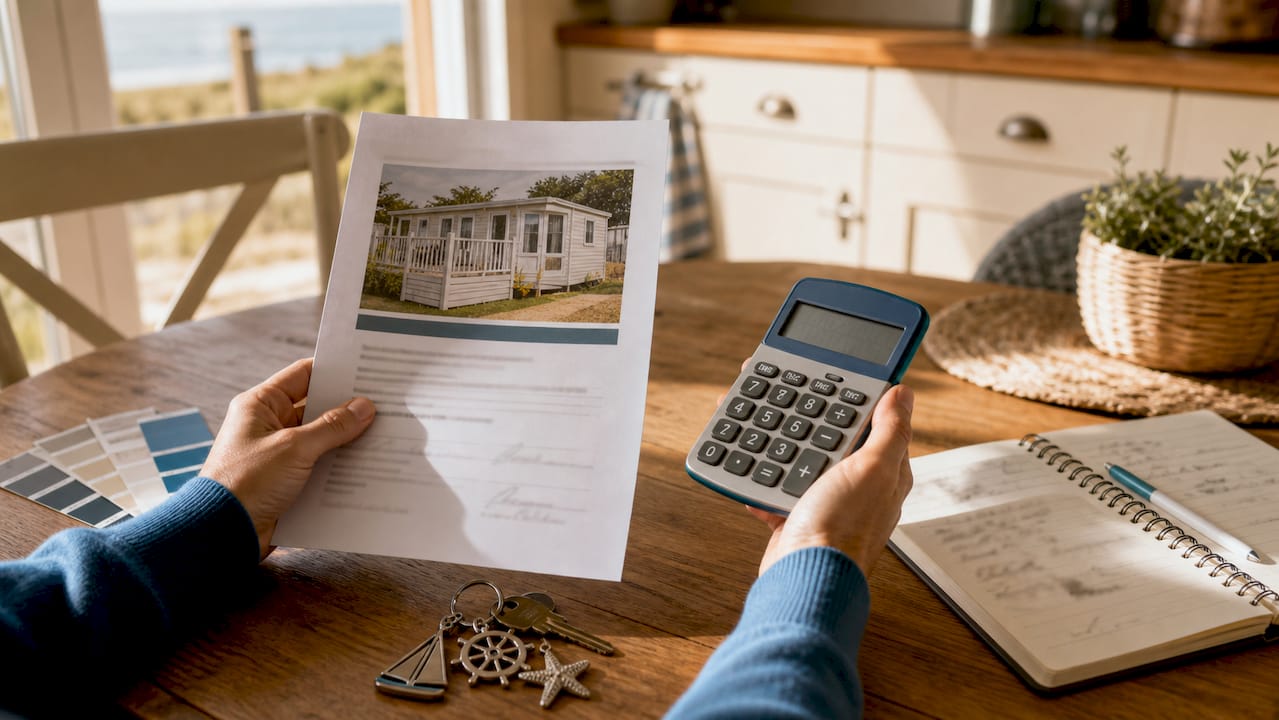
Purchase price is only part of the picture. Transport is frequently underestimated: quotes start around £950 for a standard move, rising to £4,000–£5,000 for larger or twin-unit homes. De-siting and re-siting adds a further £300–£1,200 for a single unit. Annual pitch fees, utility connections, and insurance add to your running costs from year one.
Pro Tip: Budget a contingency above the purchase price to cover transport, any remedial work, and the first year’s pitch fees without stretching yourself.
The value case for buying pre-owned is real. Sellers often include outdoor furniture, kitchen appliances, and even landscaping, extras that would cost considerably more if bought separately for a new unit.
What ownership actually feels like day to day
Holiday home ownership brings a genuine shift in how you spend your leisure time. You gain a ready base for weekends away, school holidays, and spontaneous short breaks, without the admin of booking accommodation each time. Park communities tend to be sociable, with shared facilities such as pools, play areas, and organised activities adding to the appeal.
Maintenance is the other side of that coin. Key tasks to plan for include:
- Annual habitation service covering gas safety, electrics, and damp readings
- Seasonal checks on roof seals, window seals, and external joints
- Boiler and central heating servicing, particularly before winter
- Chassis inspection every few years on older static caravans
- Cosmetic upkeep: carpets, soft furnishings, and external paintwork
A well-maintained older unit can outperform a poorly cared-for newer one. Condition and service history matter more than the year on the plate. Lodges carry a larger maintenance footprint simply because of their size, but their timber construction tends to age well when properly looked after.
How the buying and selling process works
The process for buying a used holiday home follows a clear sequence, and skipping any step can prove costly.
- View and inspect: Visit in person, check for soft floors, musty smells, staining around windows, and any signs of water ingress. Commission an independent damp survey if the service history is thin.
- Run a CRiS check: The CRiS check is the caravan equivalent of an HPI check, revealing theft records, outstanding finance, and the registered keeper. It costs around £10–£20 and is non-negotiable.
- Verify documents: Request the full habitation service history, gas and electrical safety certificates, and a written bill of sale.
- Confirm park acceptance: Get written confirmation from the destination park before exchanging any money.
- Arrange transport: Allow one to three weeks to organise a standard move once you have agreed a purchase.
When selling, resale value depends heavily on condition, age relative to the park’s limit, and the desirability of the pitch location. Well-maintained lodges in sought-after parks tend to hold value better than older static caravans approaching a park’s age threshold.
Legal and site regulations you need to know
Holiday parks enforce strict age limits on units brought onto their sites, typically 10, 15, or 20 years from the year of manufacture. Some parks assess condition rather than age alone, but written confirmation is always required. That confirmation must specify the make, model, year, and dimensions of the unit. Without it, you risk buying a home that the park will not accept.
Pitch licence agreements govern your right to keep the unit on site. Read the agreement carefully before purchase, paying attention to the notice period, annual fee structure, and any restrictions on subletting or personal use. Holiday homes must meet the BS 3632 standard if used year-round; units not meeting this standard are restricted to seasonal occupation only.
Financing options for buying pre-owned holiday homes
Most high-street mortgage lenders do not finance static caravans or holiday lodges, as these are classified as chattels rather than real property. The main routes available to UK buyers include:
- Specialist leisure finance: Several lenders offer hire purchase or personal loan products designed specifically for holiday home purchases, with terms typically ranging from three to ten years.
- Personal loans: Unsecured loans from mainstream banks can work for lower-value purchases, though interest rates are generally higher than secured lending.
- Part-exchange: Some park operators accept a trade-in of an existing unit against a pre-owned purchase, reducing the cash required upfront.
- Cash purchase: The most straightforward route and often preferred by sellers, particularly in private sales.
For buyers considering a pre-owned mobile home on a European site, the purchase process and financing landscape differ from the UK park model. Caravansinfrance offers a transparent, no-hidden-fees approach that sidesteps many of the complexities above. You can explore available homes in Vendée to see what turnkey ownership looks like in practice.
Insurance requirements for holiday homes
Standard home insurance does not cover a static caravan or holiday lodge. You will need a dedicated holiday home insurance policy that typically includes:
- Buildings and contents cover: Protects the structure and your belongings inside.
- Public liability: Covers injury or damage claims from third parties visiting your unit.
- Accidental damage: Particularly relevant for pre-owned units where fittings may be older.
- Storm and flood cover: Given that many parks sit in coastal or low-lying areas, this is worth checking carefully.
Some park operators require you to hold a minimum level of cover as a condition of your pitch licence. Always check the licence agreement before arranging a policy, and compare specialist providers rather than defaulting to a general insurer. For buyers looking at running costs in more detail, insurance sits alongside pitch fees and servicing as one of the fixed annual commitments to plan for.
If you are drawn to the idea of pre-owned holiday home ownership but want to avoid the complications of UK park age rules, CRiS checks, and transport logistics, a pre-owned mobile home in France offers a genuinely different experience. Caravansinfrance specialises in ready-to-move-in homes at Camping Les Prairies du Lac in the Vendée, with no property taxes, no hidden fees, and a simple buying process.
Browse the current selection of pre-owned homes in Vendée and see how straightforward holiday home ownership can be.
Key takeaways
Pre-owned static caravans and holiday lodges offer the most accessible routes into UK holiday home ownership, with price, park regulations, and condition being the three factors that determine whether a purchase delivers lasting value.
| Point | Details |
|---|---|
| Price range varies widely | Entry-level static caravans start around £15,000; post-2015 models and lodges begin at £45,000 and above. |
| Transport adds real cost | Moving a unit costs from £950 for a standard move, rising to £4,000–£5,000 for larger homes. |
| Park age rules are binding | Most parks enforce a 10, 15, or 20-year age limit; always get written acceptance before purchase. |
| CRiS check is non-negotiable | This check reveals theft records, outstanding finance, and keeper history for around £10–£20. |
| Condition beats age | A well-maintained older unit with a full service history outperforms a neglected newer one. |