The Unfortunate History of the Vendée: A Region Scarred by Civil War
Beneath the Vendée’s tranquil landscapes and historic châteaux lies one of the most violent chapters of the French Revolution — the War in the Vendée (1793–1796). Understanding this history deepens your connection to the land and the resilient spirit of its people.
The Vendée, a lush, bocage-filled region in western France, is known today for its tranquil landscapes, historic châteaux, and the world-renowned historical reenactment park, the Puy du Fou. However, beneath this serene exterior lies a history defined by one of the most violent and traumatic chapters of the French Revolution: the War in the Vendée (1793–1796).
The Spark of Rebellion
By 1793, the French Revolution had radicalised. The capital, Paris, was deeply invested in sweeping institutional changes, including the secularisation of the Church. For the people of the Vendée, a deeply pious, rural society, these changes were not merely political; they were an assault on their way of life. When the government introduced the Civil Constitution of the Clergy, forcing priests to swear an oath to the State rather than the Vatican, the Vendeans stood by their "refractory" priests.
The situation escalated into full-scale conflict in February 1793, when the National Convention ordered a mass conscription of 300,000 men to serve in the Revolutionary Wars. The rural Vendeans, who had felt neglected and exploited by the urban elite, refused to fight for a revolutionary cause they did not understand and could not support. They took up arms, not to overthrow the Republic initially, but to protect their homes, their faith, and their traditional social fabric.
The "Catholic and Royal Army"
The rebellion was unique because it featured an unusual alliance. Peasants, who elsewhere in France were often at odds with their noble landlords, fought side-by-side with local aristocrats in the Vendée. This was because the local lords were largely resident on their estates, maintaining a paternalistic and relatively harmonious relationship with the rural population. Together, they formed the "Catholic and Royal Army," fighting under the banner of the cross and the crown against the Republican "Blues."
The "Infernal Columns" and Brutal Repression
The Republic could not tolerate a rebellion that threatened its internal stability while it was also fighting a war against the coalition of European powers. In 1794, the Convention unleashed the infamous "Infernal Columns" (colonnes infernales). Under the command of General Turreau, these troops were given orders to turn the Vendée into a desert. This was not a standard military campaign; it was a campaign of annihilation.
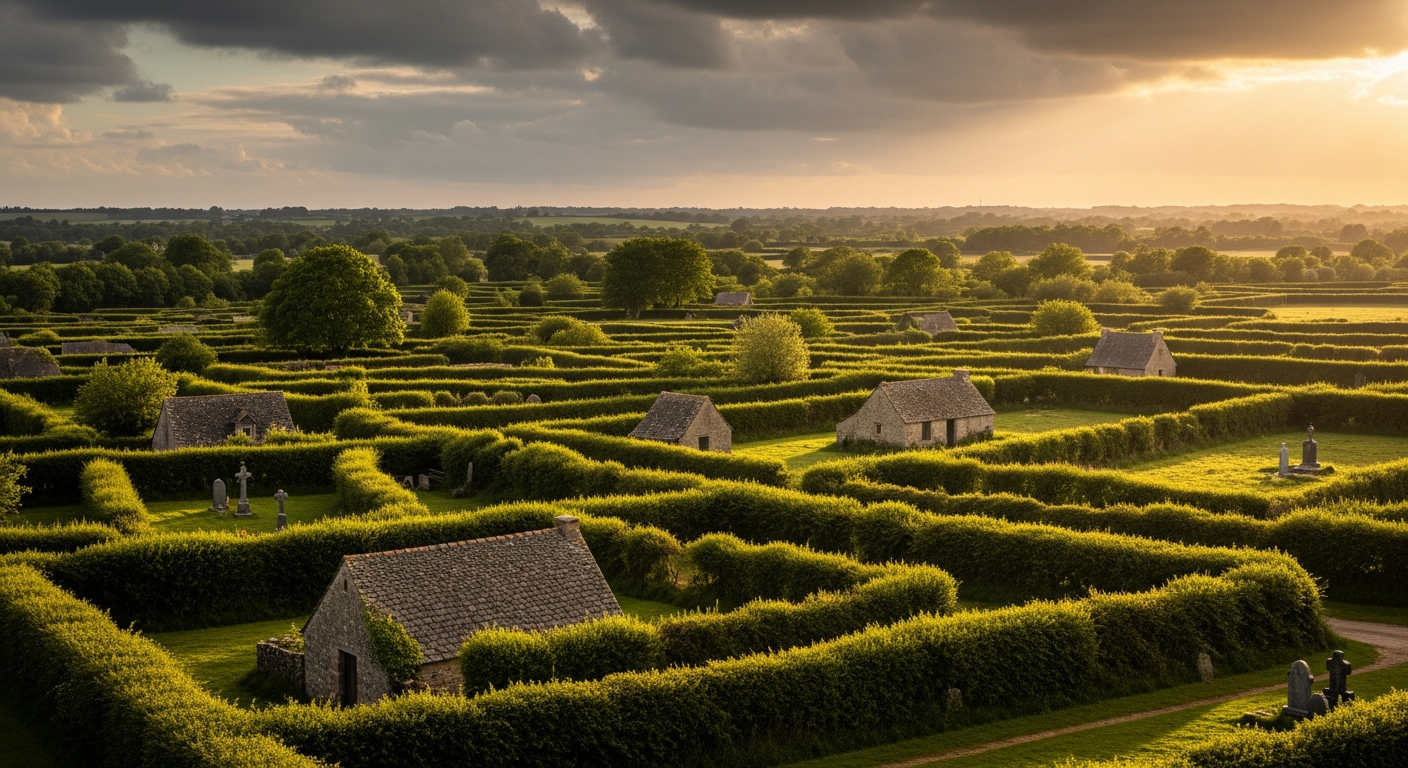
Soldiers burned villages to the ground, destroyed grain stores, slaughtered livestock, and carried out systematic executions of men, women, and children. The landscape of the bocage, with its thick hedges and sunken lanes, became a tomb for the local population. The sheer scale of the slaughter — which resulted in the deaths of approximately 200,000 people — has led some modern historians to describe this period as the first "modern genocide," a classification that continues to fuel intense historiographical debate in France today.
The Legacy and Memory
The war eventually concluded in 1796, but the trauma remained embedded in the regional identity. For over a century, the Vendée remained a stronghold of traditionalist Catholicism and royalist sentiment, largely alienated from the political currents of Paris. The "unfortunate" history of the region is not just a tale of the past; it is a vital part of the local psyche.
Today, visitors to Apremont and the wider Vendée region will find numerous memorials and quiet markers that tell this story. The memory of the war is central to local identity, commemorated not as a defeat, but as a sacrifice for values of faith and community autonomy. In the 21st century, the debate continues over how to balance the Republican narrative of progress against the Vendean narrative of martyrdom. As a local resident, understanding these events provides a deeper, albeit more somber, connection to the land and the resilient spirit of the people who live within its historic bocage.