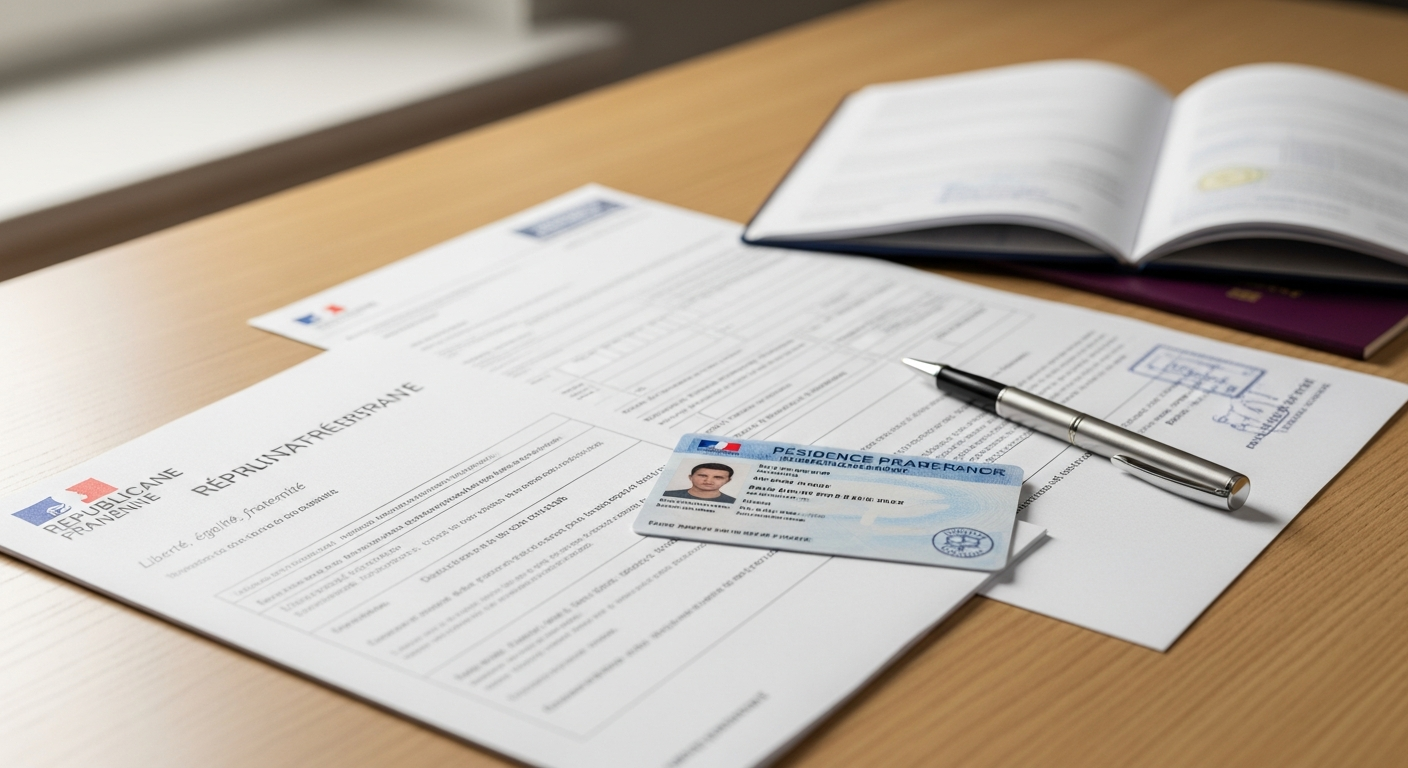
How to Convert Your VLS-TS Visa into a French Residence Permit
Moving to France on a VLS-TS visa is just the first step. Here is a practical, step-by-step guide to converting it into a Carte de Séjour before your first year is up — including the documents you need, the deadlines to hit, and how to navigate the ANEF portal.
Moving to France on a VLS-TS (Visa de Long Séjour valant Titre de Séjour) is an exciting first step. For your first year, this little sticker in your passport pulls double duty: it acts as both your entry visa and your official residence permit.
But as that first year flies by, you will face the next big administrative milestone: converting that temporary visa into a proper French residence card, known as a Carte de Séjour.
The process is entirely digital these days, but missing a deadline or a document can lead to stressful delays — and hefty fines. Here is exactly how to manage the transition smoothly.
STEP 1: THE FIRST-YEAR PREREQUISITE — VALIDATION AND OFII
Before you can even think about a Carte de Séjour, you must ensure your initial VLS-TS is legally active. Within three months of arriving in France, you must validate your visa online via the ANEF portal (Administration des Étrangers en France).
Depending on your visa type — such as a Visitor or Spouse visa — validation triggers a call-up from the OFII (Office Français de l'Immigration et de l'Intégration).
You must attend your OFII appointment, which often includes a medical screening and signing the Contrat d'Intégration Républicaine (CIR). The medical certificate and CIR certificates you receive are mandatory documents for your residency application later. Do not lose them.
STEP 2: MIND THE TWO-MONTH WINDOW
Timing is everything in French administration. You cannot apply for your Carte de Séjour too early, and applying late carries a €180 penalty fee on top of the standard card costs.
The official rule is to submit your application online between four and two months before your current VLS-TS expires. For example, if your visa expires on 30th September, your application window opens on 30th May and closes on 30th July.
Put these dates in your calendar the moment you arrive. Missing the window is one of the most common and easily avoided mistakes.
STEP 3: GATHERING YOUR DOSSIER
The exact paperwork depends on your visa status — Visitor, Student, Talent Passport, or Spouse of a French Citizen — but the core documents are the same for everyone.
Core Required Documents:
• Identity: Your current valid passport and the validated VLS-TS visa page.
• Civil Status: Your full birth certificate (and marriage certificate, if applicable), legally translated into French by a certified translator (traducteur assermenté).
• Proof of Residence (Justificatif de Domicile): A utility bill — electricity, gas, water, or landline internet — or a rental receipt (quittance de loyer) dated less than six months old.
• Photos: A valid digital ID photo code (an e-photo taken at an official booth or shop with the blue ANTS logo).
• Integration Proof: Your OFII medical certificate and CIR progress forms.
Category-Specific Requirements:
• For Visitors: Proof of continued financial self-sufficiency — bank statements or pension certificates showing a minimum of roughly €15,000 to €16,000 per year — and a signed, handwritten pledge stating you will not engage in any professional activity in France.
• For Spouses of French Citizens: Joint tax notices, shared lease agreements, and a signed declaration of ongoing communal life (communauté de vie).
Get your translations done early. Finding a certified translator (traducteur assermenté) and waiting for completed documents can take one to two weeks.
STEP 4: SUBMITTING THE APPLICATION ONLINE
The entire process is managed via the official ANEF platform. Allow around an hour for your first session.
Log in to ANEF using the credentials you created when you first validated your visa.
Select Demande de Titre de Séjour — the option to apply for or renew a residence permit. Fill out the personal detail forms, which will mirror your initial visa details.
Upload clear, legible scans or photos of all required documents into their respective slots. Poor scan quality is a common reason for delays — use good lighting and make sure all text is readable.
Submit your application and download the receipt (Confirmation de dépôt) immediately. Save it. As your file is reviewed, this document upgrades to a Récépissé or an Attestation de prolongation d'instruction, which legally protects your right to stay and travel in France while you wait — even if your original visa expires in the meantime.
STEP 5: COLLECTING YOUR CARTE DE SÉJOUR
Once the local Prefecture approves your file, you will receive a Notification de décision favorable, followed a few weeks later by an automated SMS inviting you to collect your physical card.
You will need to book a collection appointment at your local Prefecture and bring:
• Your passport • Your old visa • Proof of payment for the residence tax
The residence tax is paid via digital revenue stamps (timbres fiscaux), which you can buy online at timbres.impots.gouv.fr. The fee typically ranges from €75 (for students) to €225 (for visitors and spouses).
Your first physical card will usually be a Carte de séjour temporaire valid for one year. Keep your paperwork immaculate during this year — the next renewal often unlocks a multi-year card (Carte de séjour pluriannuelle), keeping you clear of the Prefecture for up to four years.
A NOTE FOR MOBILE HOME OWNERS IN THE VENDÉE
If you are purchasing a mobile home at Camping Les Prairies du Lac as part of your move to France, your pitch address can serve as your proof of residence for the Justificatif de Domicile — provided you have a formal rental agreement or receipts for your pitch fees. It is worth confirming this with your local Préfecture (for Vendée, that is the Préfecture de la Vendée in La Roche-sur-Yon) as requirements can vary slightly by department.
For any questions about the buying process or life at the campsite, feel free to get in touch with us — we have helped many British and Irish buyers navigate both the property purchase and the residency process, and we are always happy to share what we know.