Why invest in a holiday mobile home in 2026
Discover why invest in a holiday mobile home in 2026. Enjoy spontaneous getaways, predictable costs, and a strong sense of community.
Why invest in a holiday mobile home in 2026
A holiday mobile home delivers something most financial products cannot: a ready retreat waiting for you every time you need it, with no booking queues, no last-minute price spikes, and no suitcases crammed to the limit. The real case for owning a holiday mobile home rests on lifestyle return rather than capital growth. You are buying regular escapes, family time, and a genuine sense of belonging, not a property that will double in value.
- Spontaneous access to your own retreat, any weekend you choose
- Predictable annual costs instead of unpredictable holiday spending
- Community, shared facilities, and familiar faces season after season
- A lifestyle investment in wellbeing and quality time, not bricks and mortar
Pro Tip: Choose a location within a comfortable drive of your home. Proximity is the single biggest factor in how often you actually use your holiday mobile home, and frequent use is where the real value lies.
Lifestyle advantages of owning a holiday mobile home
Freedom is the word owners reach for most often, and it is well earned. Your home is ready whenever you are, whether that is a rainy bank holiday Friday or the first warm weekend of spring. No availability checks, no booking fees, no unpleasant surprises on arrival.
- Spontaneous trips: leave when you feel like it, without planning months ahead
- Home comforts on site: your walking boots, favourite mugs, and children’s toys stay put between visits
- Community life: neighbours become friends, park events create a social calendar, and shared pools and restaurants add a built-in social life
- Closer to nature: most sites sit in coastal, woodland, or countryside settings, making outdoor walks and fresh air a natural part of every stay
- Family traditions: returning to the same place year after year builds lasting memories that no hotel can replicate
Familiarity is part of the appeal, not a limitation. You know the best local walk, the friendliest café, and the quietest corner of the beach. That sense of belonging grows with every visit.
How the finances actually stack up
The purchase price of a holiday mobile home is typically far lower than a bricks-and-mortar second home, and the buying process is considerably simpler. There are no conveyancing chains, no stamp duty on the unit itself, and no council tax on holiday-use properties. That said, ownership does carry ongoing costs you need to budget for honestly.

| Cost category | What to expect |
|---|---|
| Annual pitch fee | Varies by park, location, and facilities; review carefully before buying |
| Utilities | Gas, electricity, and water, often metered separately on site |
| Insurance | Specialist holiday home cover; standard home insurance rarely applies |
| Maintenance | Regular upkeep to protect resale appeal and comfort |
| Letting management | Additional fees and marketing effort if you rent the unit out |
Modern holiday mobile homes offer improved thermal efficiency, with energy costs for newer units running at around £1.37 per day compared to approximately £2.65 per day for older bungalows (2020 data). That gap matters when you are calculating annual running costs.
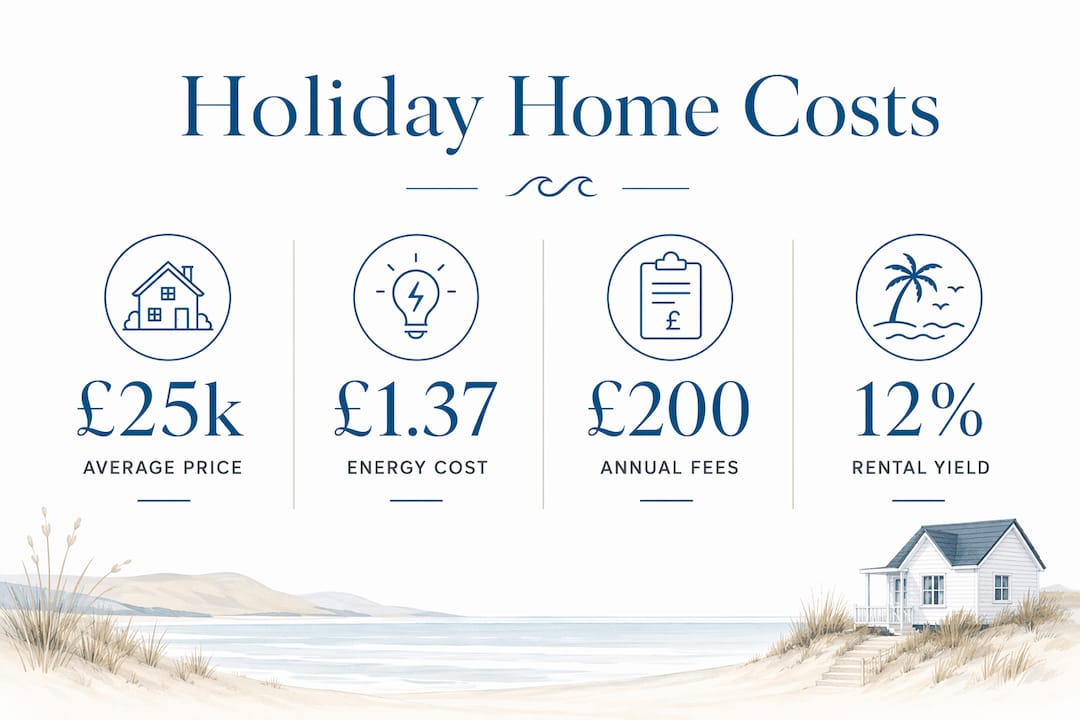
Holiday letting can offset some expenses, but it requires active management. Renting out your unit during peak weeks means giving up your own access precisely when you would most want to use it. Financial planners consistently advise treating the cost as a lifestyle investment rather than expecting the income to turn a profit. If high personal use is your goal, rental income will always be modest by design.
Legal, security, and maintenance factors to consider
Holiday mobile homes sit in a distinct legal category that catches many buyers off guard. They are not covered by the Mobile Homes Act 1983 in the same way as residential park homes. Instead, your contract is a licensing agreement, not a tenancy, and the terms of that agreement govern everything from pitch fees to eviction rights.
- Pitch fee terms: check how and when fees can be increased, and what notice the park must give
- Occupation limits: many holiday-use sites require you to vacate for a set period each year, often enforcing an 11-month maximum occupation rule
- Eviction clauses: understand the grounds on which the park can ask you to leave and what compensation, if any, applies
- Planning conditions: sites licensed for holiday use cannot legally serve as a primary residence; breaching this risks losing your pitch
- Security: gated parks with managed facilities offer a level of security that standalone second homes rarely match
- Maintenance: upkeep is generally lighter than a residential property, but neglecting it accelerates depreciation and reduces resale appeal
Key legal point: Holiday-use site licences in the UK frequently impose seasonal occupation limits. Always read the site licence and your individual pitch agreement before exchanging any money.
Do holiday mobile homes hold their value over time?
Honestly, no. A holiday mobile home is a depreciating asset, much like a car or a boat. It will not appreciate in the way a residential property might, and buying one with capital growth in mind leads to disappointment. The value lies in lifestyle, not in the resale price.
- Depreciation is expected: plan for it rather than be surprised by it
- Location helps: a well-regarded park in a desirable area preserves resale appeal better than a remote or poorly managed site
- Condition matters: a well-maintained unit sells more easily and commands a better price when the time comes to upgrade
- Newer build standards: modern models with better insulation and contemporary interiors hold their appeal longer
- Realistic expectations: owners who buy for lifestyle consistently report higher satisfaction than those who bought hoping for financial returns
Most owners who love their holiday mobile home never really focus on what it might fetch at resale. They are too busy using it.
Practical considerations before you buy
Getting this decision right comes down to honest self-assessment before you sign anything. Think about how often you will realistically visit, what your budget covers beyond the purchase price, and whether the site rules fit your plans.
Financing: traditional mortgages rarely apply to holiday mobile homes. Most buyers use personal loans, specialist leisure finance, or savings. Park home mortgage options are limited and carry different terms to residential lending, so speak to a specialist broker early.
Site rules and restrictions: read the full licence agreement, not just the headline pitch fee. Ask specifically about subletting permissions, guest policies, and any planned fee increases.
Usage frequency: proximity to your home shapes how much value you extract. A site two hours away that you visit a dozen times a year delivers far more lifestyle return than a distant one you visit twice.
Running costs versus rental income: if you plan to let the unit out, model the numbers carefully. Letting income can reduce your net annual cost, but it will not eliminate it, and it does reduce your own access during the weeks guests most want to book.
Exit planning: think about how long you intend to own the unit and what happens at the end. Some parks charge a commission on resale. Factor that into your overall cost picture from the start.
If you are drawn to the idea of a sun-warmed terrace, a heated pool on your doorstep, and a community that feels like a second home, Caravansinfrance offers pre-owned mobile homes at Camping Les Prairies du Lac in the Vendée region of France. The buying process is transparent, the running costs are clear, and there are no hidden property taxes or complex legalities to navigate. Browse the available homes in Vendée and see whether one of them could become your own place in the sun.
Key takeaways
A holiday mobile home is a lifestyle investment that rewards frequent use, honest budgeting, and realistic expectations about depreciation.
| Point | Details |
|---|---|
| Lifestyle over capital growth | Holiday mobile homes depreciate; the return comes from quality time, not resale value. |
| Proximity drives value | A site within easy driving distance maximises spontaneous use and lifestyle benefit. |
| Legal agreements, not tenancies | Contracts are licensing agreements; read pitch fee terms and occupation limits carefully. |
| Modern units run cheaper | Newer models consume about £1.37 per day in energy compared to £2.65 per day for older properties, reducing running costs. |
| Letting offsets costs, not profits | Rental income can reduce annual expenses but reduces your own access during busy periods. |