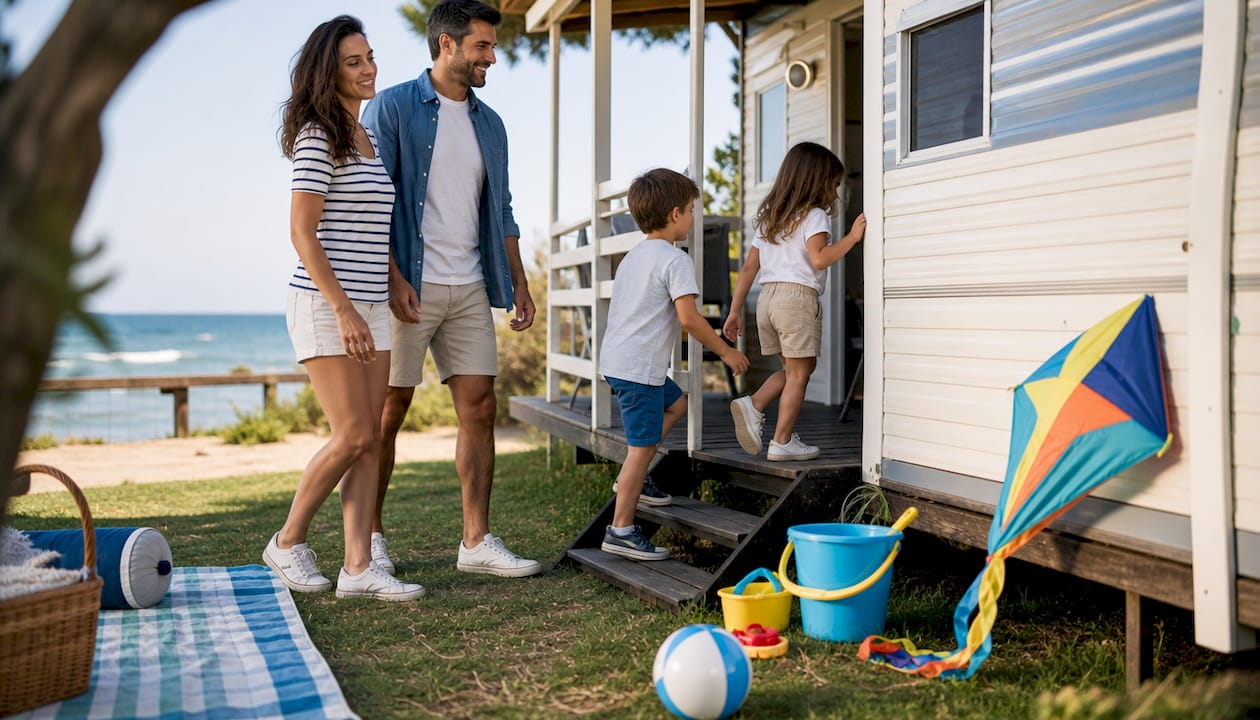
Choosing a camping mobile home for kids: 2026 guide
Discover tips for choosing camping mobile home kids will love. Ensure comfort, safety, and fun for your family holidays in 2026!
Choosing a camping mobile home for kids: 2026 guide
A family camping mobile home is defined as a static or semi-static unit positioned on a managed campsite, designed to sleep a family of four or more with fixed bedrooms, a kitchen, and a living area. Choosing camping mobile home kids means getting the layout, safety features, and amenities right from the start. Get those three things wrong and even a beautiful location feels stressful. Get them right and you have a base that works as hard as you do, so the holiday actually feels like one.
Mobile homes offer something tents and touring caravans rarely can: consistency. Fixed beds, a real kitchen, and a private terrace mean children sleep in the same spot every night and parents cook without crouching. That predictability is exactly what families with young children value most when choosing between camping options.
What family-friendly layouts work best for camping mobile homes with kids?
The layout of a family camper is the single most important decision you will make. A poor floor plan creates daily friction: children waking parents at 6 AM, no space to retreat, and dining tables that double as beds. A good one keeps everyone comfortable and sane.
Bunkhouse configurations place the parents’ bedroom at the front of the unit and children’s bunks at the rear. This separation gives adults a genuine retreat after bedtime and lets children settle without disturbing the whole family. Bunkhouse units typically span 24–32 feet and provide distinct sleeping zones without requiring any furniture conversion.
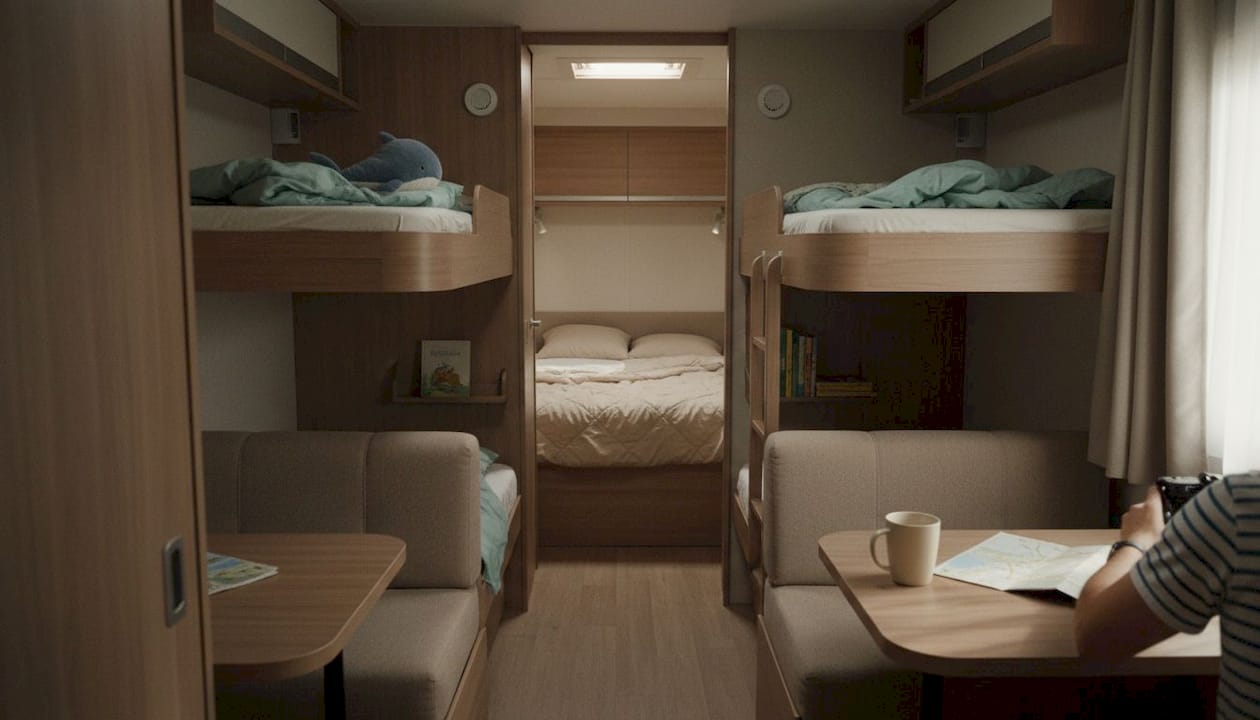
For families of five or more, a three-bedroom floor plan that comfortably sleeps six to eight people is the right call. Units of at least 30 square metres avoid the daily chore of converting a sofa into a bed, which sounds minor but becomes exhausting by day three. Families of six or more also benefit from multiple bathrooms to prevent morning bottlenecks that can derail the whole day.
| Layout type | Bedrooms | Sleeps | Best for |
|---|---|---|---|
| Bunkhouse | 2 | 4–6 | Families with 1–2 children |
| Three-bedroom standard | 3 | 6–8 | Families of 5 or more |
| Open-plan with bunks | 2 | 4–5 | Younger children, shorter trips |
| Premium large format | 3+ | 8+ | Extended families or older kids |
Pro Tip: Book a unit with a separate children’s bedroom that has its own door. Even a thin partition wall makes a meaningful difference to sleep quality for everyone.
Which safety features should parents prioritise in a mobile home for kids?
Safety is non-negotiable, and it deserves a proper audit before you book or buy. The good news is that modern mobile homes have improved significantly, but older stock still circulates on many sites.
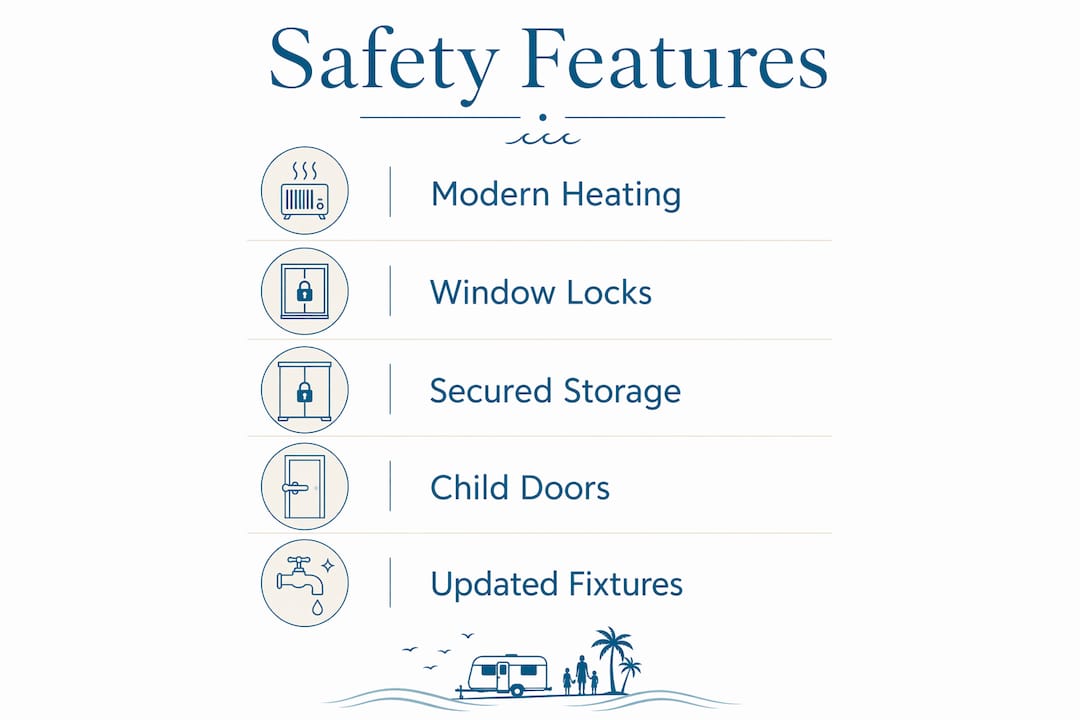
Modern heating systems with touch-safe surfaces are the first thing to check. Exposed electric bar heaters or uncovered gas appliances pose a real burn risk to toddlers and must be avoided entirely. Reversible air conditioning units with child-lock settings are the gold standard for year-round temperature control.
Child safety checks before renting or purchasing a mobile home should cover access points, sharp corners, and storage of hazardous items. Steps into the unit deserve particular attention: steep or narrow steps without a handrail are a common cause of minor injuries for young children. Locks on external doors and windows that children cannot operate independently add another layer of security.
Critical safety checklist before booking:
- Heating system: confirm touch-safe surfaces and no exposed elements
- Steps: check for handrails and a gentle gradient
- Door locks: verify children cannot open external doors unaided
- Corner guards: look for rounded furniture edges in living areas
- Storage: confirm cleaning products and sharp items are in locked or high cupboards
- Smoke and carbon monoxide detectors: check they are present and functional
- Window restrictors: confirm windows cannot be opened wide enough for a child to fall through
Pro Tip: Ask the site manager directly whether the unit has been updated in the last five years. Newer fixtures make a significant difference to both safety and comfort.
What amenities make family camping in a mobile home genuinely convenient?
Amenities separate a comfortable family holiday from a logistical ordeal. The right features reduce the number of decisions you make each day, which matters enormously when you are managing children’s routines away from home.
A fully equipped kitchen with a dishwasher, fridge-freezer, and hob is the foundation. Families who cook in their mobile home spend considerably less than those relying on campsite restaurants for every meal. A dishwasher in particular is underrated: it removes one of the most tedious evening tasks after a full day outdoors.
Premium mobile homes offer newer fixtures, additional floor space, and outdoor furniture that reduce family frustration as children grow. The gap between comfort and premium tiers is real. A covered terrace with outdoor dining furniture extends your usable living space significantly, especially during warm evenings when children want to eat outside.
Key amenities to prioritise:
- Reversible air conditioning and heating for year-round comfort
- Covered private terrace with outdoor table and chairs
- Dishwasher and fridge-freezer in the kitchen
- On-site laundry facilities within easy walking distance
- Good mobile signal or Wi-Fi for navigation and emergencies
- Outdoor storage for bikes, buggies, and wet kit
Access to on-site laundry is one of those features parents only appreciate once they are living without it. A week with two young children generates a surprising volume of washing, and hand-washing in a small sink is nobody’s idea of a holiday.
How to choose the best campsite location for families with kids?
Site placement within a campsite affects your holiday as much as the mobile home itself. A well-chosen pitch keeps children safe, parents rested, and the whole family closer to the things that matter.
-
Book early for preferred placement. The best family pitches, those near pools and playgrounds but away from late-night entertainment areas, go first. Booking mobile homes in quieter zones away from entertainment noise balances restfulness with easy access to facilities. Sites that fill up in july and august often allocate pitches on a first-come basis.
-
Prioritise proximity to the pool and playground. Short distances matter when you are carrying towels, inflatables, and a toddler. A pitch within two minutes’ walk of the pool means children can head back for a rest without a major expedition.
-
Look for natural shade and open space. Pitches with tree cover keep the mobile home cooler during hot afternoons. Open grass nearby gives children room to run without crossing roads or car parks.
-
Check the path to laundry facilities. Laundry blocks on the far side of a large site become a genuine inconvenience by mid-week. Ask for a pitch within reasonable walking distance.
-
Assess traffic flow around the pitch. Pitches on internal site roads see regular vehicle movement. A pitch set back from the main route gives children a safer area to play immediately outside the unit.
What are the practical steps to prepare for your first family mobile home trip?
Preparation makes the difference between a trip that builds confidence and one that puts you off for years. The good news is that the learning curve is short if you approach it sensibly.
-
Start with a short trip close to home. Trips of no more than two nights within three hours of home let you test routines and logistics without the pressure of a long journey. You can always go home if something is missing or not working.
-
Pack for the children’s sleep environment first. Blackout curtains create a dark, quiet space that improves nap quality significantly on bright summer afternoons. Portable blackout blinds that attach with suction cups are a reliable solution when the mobile home does not have them fitted.
-
Bring familiar comfort items. A child’s own pillow, a favourite soft toy, and a familiar bedtime story routine signal to young children that sleep time is the same regardless of location.
-
Involve children in camp chores. Giving children roles in camp tasks, such as setting the outdoor table or sorting the recycling, increases their engagement and sense of ownership. It also reduces the amount of time they spend demanding entertainment.
-
Pack a small first-aid kit and know the site’s medical contact. Minor scrapes and insect bites are inevitable. Having plasters, antiseptic cream, and antihistamine within reach avoids unnecessary stress.
Pro Tip: Drive to the campsite with a full playlist of audiobooks or podcasts the children enjoy. A calm arrival sets the tone for the whole trip far better than a stressed one.
Key takeaways
Choosing the right family camping mobile home comes down to three non-negotiable factors: a layout with separate sleeping zones, verified safety features, and amenities that reduce daily effort for parents.
| Point | Details |
|---|---|
| Prioritise bunkhouse layouts | Separate sleeping zones for parents and children protect sleep routines and family harmony. |
| Check safety before booking | Verify touch-safe heating, handrails, door locks, and smoke detectors before committing. |
| Three bedrooms for larger families | Families of five or more need at least 30 square metres and three bedrooms to avoid daily furniture conversion. |
| Book early for the best pitch | Quiet pitches near pools and playgrounds go first; early booking secures the most family-friendly locations. |
| Start with short trips | Two-night trips within three hours of home let families test routines without added pressure. |
What I have learned from family mobile home trips
After spending time at campsites across France with children of different ages, the thing that surprises parents most is how quickly the mobile home becomes home. Within 24 hours, children know where their beds are, where the snacks live, and which way to walk to the pool. That familiarity is genuinely powerful.
The layout choice I would never compromise on is the separate children’s bedroom with a closing door. I have seen families in open-plan units where the adults were effectively trapped in silence from 7 PM onwards, unable to have a conversation or read without waking a light sleeper. A proper door changes everything.
My honest observation on safety is that parents tend to check the obvious things and miss the steps. The entry steps on older mobile homes are often steep and narrow, and a child running back from the pool in wet feet is a real risk. Walk the approach to the unit before the children do.
The outdoor space matters more than most parents anticipate when booking. Children who have a patch of grass to kick a ball on, or a terrace to eat breakfast at, are calmer and more content. The Vendée region in France does this particularly well, with sites that balance open space with excellent facilities. If you are looking at family mobile home ownership rather than rental, the lifestyle on a well-managed site is genuinely worth exploring through resources like the campsite life blog.
— Ludo
Family mobile homes in France worth considering
Caravansinfrance specialises in pre-owned mobile homes at Camping Les Prairies du Lac in the Vendée, a four-star site with heated pools, playgrounds, and a coastal microclimate that suits families with children of all ages. The homes are ready to use from day one, with no hidden fees or complex legalities to navigate.
The available family mobile homes include spacious layouts with multiple bedrooms, covered terraces, and fully equipped kitchens. Caravansinfrance also lists larger family units suited to families of five or more, with the kind of space and amenities that make a week feel genuinely restful. Browse the current listings and find a home that fits your family’s size, budget, and holiday style.
FAQ
What size mobile home do I need for a family of five?
A three-bedroom mobile home of at least 30 square metres is the right choice for a family of five. This avoids relying on convertible sleeping spaces and gives everyone a fixed bed.
Are mobile homes safe for toddlers?
Modern mobile homes with touch-safe heating, window restrictors, and secured storage are safe for toddlers. Always check entry steps, door locks, and smoke detectors before your first night.
How early should I book a family pitch at a campsite?
Book as early as possible, ideally six to twelve months ahead for july and august. The best family pitches near pools and playgrounds in quieter zones are allocated on a first-come basis.
What is the best layout for camping with kids?
The bunkhouse layout, with a parents’ bedroom at the front and children’s bunks at the rear, is the most effective design for maintaining sleep routines and family privacy.
How do I help young children sleep in a mobile home?
Bring portable blackout curtains and maintain your usual bedtime routine. A familiar comfort item and a consistent wind-down process signal to young children that sleep time is the same wherever they are.