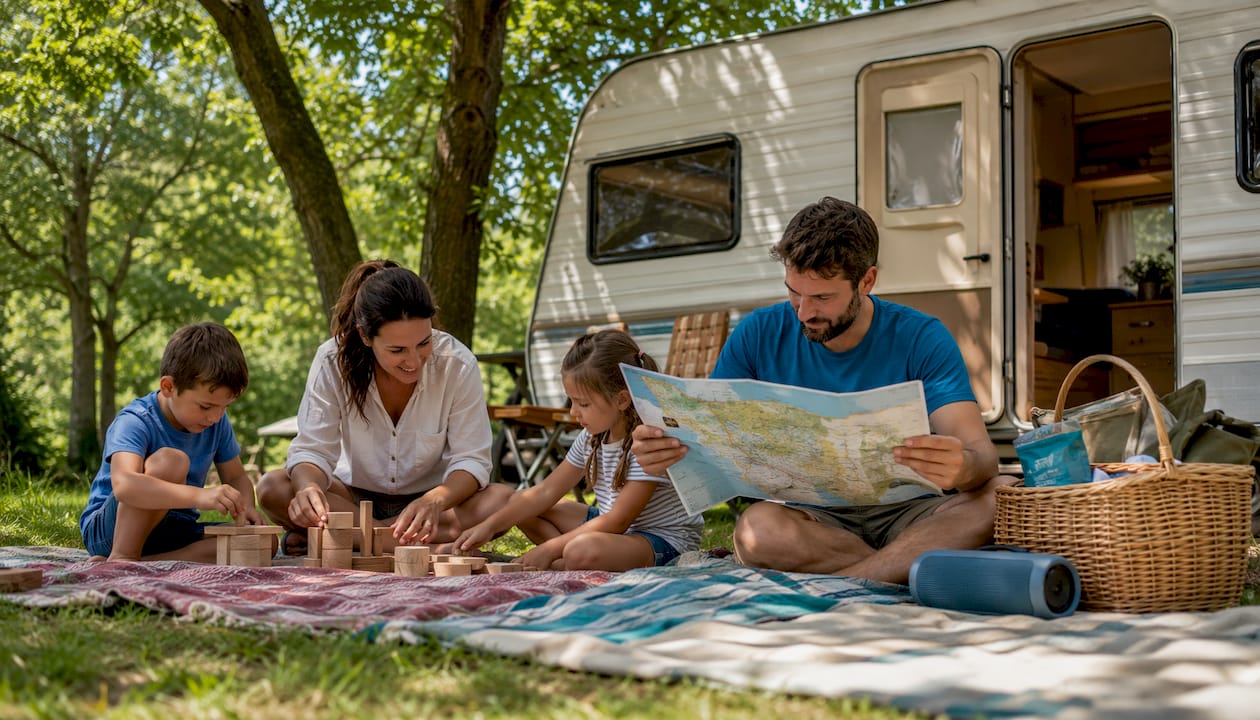
Choosing a camping mobile home for kids: 2026 guide
Discover expert tips on choosing a camping mobile home for kids in 2026. Prioritize space, safety, and amenities for a perfect family getaway.
Choosing a camping mobile home for kids: 2026 guide
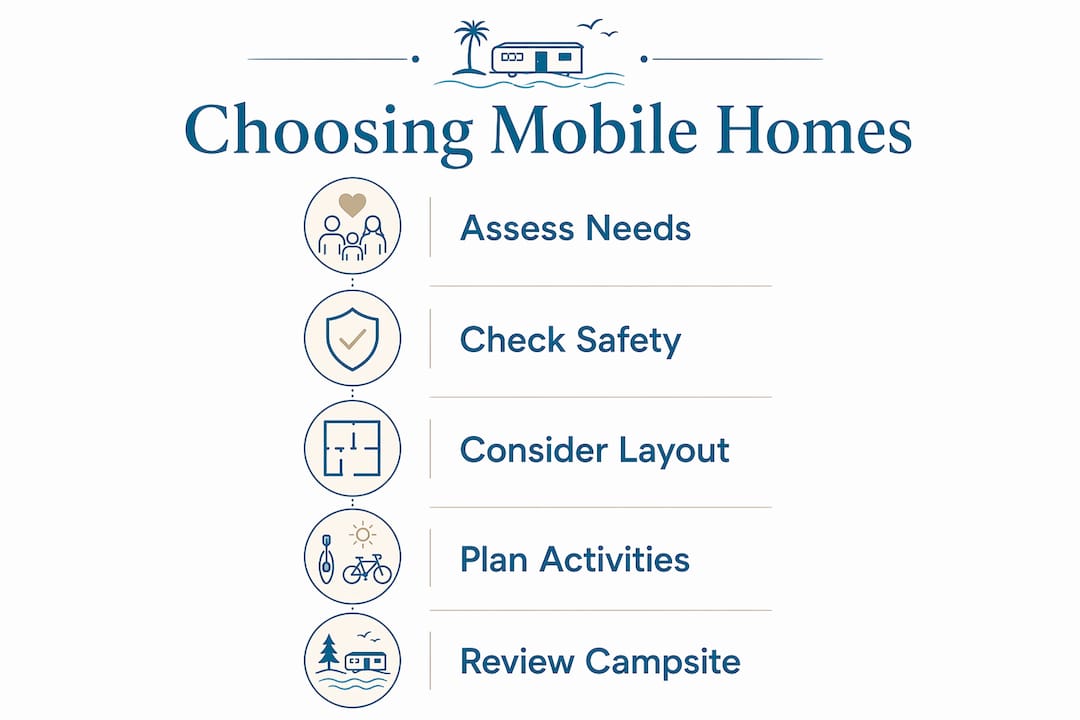
The right mobile home for a family camping holiday is not simply the biggest or the most expensive one. It is the one that fits your children’s ages, your daily routines, and the way your family actually spends its time. Space, safety features, bathroom access, and campsite location all matter far more than a glossy brochure suggests.
Here is what to look for at a glance:
- Space and layout: Separate sleeping areas for children of different ages, with enough floor space for travel cots if you have a baby or toddler
- Safety features: A gate on the decking area to contain small children and prevent falls
- Bathrooms: Separate toilet and shower rooms, ideally with an en-suite for parents, to ease morning routines
- Amenities: A dishwasher and air conditioning are worth prioritising for longer stays, or when travelling with babies
- Accommodation tier: Comfort units suit younger families on shorter breaks; premium mobile homes suit families with older children or those staying a week or more
- Campsite position: Proximity to pools and playgrounds is convenient, but pitches close to activity areas can be noisy at night
How to plan and prepare your family camping trip
Good preparation is what separates a relaxed family holiday from a stressful one. Getting the logistics right before you leave means you can focus on the fun once you arrive.
Packing checklist for families with children
Pack in categories so nothing gets forgotten:
- Clothing: Layers for cooler evenings, waterproofs, swimwear, and a spare set of clothes per child per day for younger ones
- Sleep: Sleeping bags or familiar bedding, a travel cot with fitted sheet for babies, a nightlight for toddlers
- Health and safety: First aid kit, children’s paracetamol and antihistamine, sun cream (SPF 50 for children), insect repellent, any prescription medicines
- Entertainment: Card games, colouring books, a tablet loaded with downloaded films for wet afternoons, scooters or bikes if the site permits them
- Kitchen: Reusable water bottles, snack boxes, a small cool bag for day trips
Family-friendly meal ideas for mobile home camping
Barbecues are the easiest evening meal at a campsite. Hot dogs, chicken skewers, and corn on the cob are reliable crowd-pleasers with children. For lunches, sandwiches and pasta salads travel well on day trips. Microwave rice is a useful shortcut that saves on washing up, particularly if your unit does not have a dishwasher.
Pro Tip: Pack a small laminated list of each child’s food preferences and any allergies. It sounds obvious at home, but when you are tired after a long travel day, having it to hand saves arguments at the cooker.
Booking the right campsite
- Check that the site has a children’s pool or splash area, not just an adult pool
- Look at the site map before booking and ask which pitches are quieter at night
- Confirm whether the mobile home has a decking gate if you have a toddler
- Read recent reviews specifically from families with children of similar ages to yours
- Book early. Campsite location within a park matters, and the best-positioned units sell out quickly during school holidays
What child-friendly features should you look for in a mobile home?
The difference between a comfortable family stay and a frustrating one often comes down to a handful of specific features. These are the ones that genuinely matter when you are travelling with children.
- Decking gate: A gate on the decking area is one of the most useful safety features for families with toddlers. It creates a contained outdoor space where small children can play without the risk of falling down steps or wandering off. Premium and ultimate tier mobile homes are far more likely to include one than budget units.
- Separate bathroom and toilet: Having the shower room and toilet in two separate rooms is far more practical than it sounds, particularly during the morning rush with multiple children. Many families find this single layout detail reduces daily friction considerably.
- Bunk beds with a defined children’s area: Bunk beds separated from the main living space let you settle children for the night while adults still have somewhere to sit and relax. A mobile home where the only separation is a curtain makes this much harder.
- Air conditioning: For summer holidays, air conditioning is worth paying for. A hot mobile home at bedtime makes settling children to sleep genuinely difficult.
- Dishwasher: Families with babies and toddlers go through a remarkable number of bottles, plates, and cups each day. A dishwasher in the unit removes one of the most tedious daily chores.
- Outdoor play areas on site: A playground within easy walking distance of your pitch gives children somewhere to burn off energy before meals and before bed.
- Flex space: Some larger mobile homes include a secondary seating area or a room that doubles as a play space, homework corner, or quiet retreat. This kind of flexibility transforms a mobile home from a place to sleep into a genuine family base.
Where are the best family-friendly campsites in the UK?
The UK has a strong selection of family campsites, and the best ones combine well-maintained facilities with enough space for children to roam freely.
- Cornwall: Sites like Hendra Holiday Park and Pentewan Sands offer clubhouses, swimming pools, and direct beach access. Cornwall’s mild summers and long coastline make it one of the most popular family camping destinations in England.
- Devon: Ladram Bay Holiday Park and Crealy Meadows both have strong children’s facilities, including pools and organised activities. Devon also benefits from proximity to Dartmoor for families who want a mix of beach and countryside.
- Dorset: South Lychett Manor Caravan and Camping Park sits in a quieter, more rural setting, which suits families who want to avoid the busiest holiday parks.
- Wales: The Gower Peninsula and Pembrokeshire offer some of the most scenic family camping in Britain, with Blue Flag beaches and relatively uncrowded sites compared to the South West of England.
- Yorkshire: For families who prefer inland camping, the Yorkshire Dales and North York Moors have well-run sites with easy access to cycling trails and walking routes suited to children.
When comparing sites, check the park layout carefully. A pitch close to the pool is convenient during the day but can mean noise until late evening. Families with young children who need an early bedtime often do better on a slightly quieter pitch a short walk from the main facilities.
Pro Tip: Ask the campsite directly which pitches are furthest from the entertainment area. Most sites will tell you honestly, and the quieter spots are rarely the ones shown in the marketing photos.
How to choose the right mobile home layout for your family
Layout is the single most important factor when selecting a mobile home for a family camping trip. The number of bedrooms on a listing tells you far less than the actual floor plan.
- Bedroom count versus usable space: A mobile home listed as sleeping six may technically accommodate six people, but functional floor space matters far more than the maximum occupancy figure. Pull-out sofas and fold-down beds count towards capacity but are rarely suitable for young children.
- Separate children’s sleeping area: The ideal layout puts children’s bunks or twin beds in a room that can be closed off from the main living area. This lets you put children to bed at 7:30 PM without the whole family going dark and silent.
- Two toilets: For a family of four or more, a single toilet creates a genuine bottleneck every morning. Many premium mobile homes include two separate toilet rooms, which makes a noticeable difference to the daily routine.
- En-suite for parents: A private bathroom attached to the master bedroom means parents can shower without queuing behind children, and it gives toddlers a closer bathroom at night.
- Floor space for a travel cot: If you have a baby, check that the bedroom has enough clear floor space to set up a travel cot alongside the bed. Some compact units simply do not have room.
- Large-family configurations: For extended families or two families travelling together, some sites offer supersized units with spacious layouts or more, or two mobile homes arranged on a shared pitch with an adjoining terrace. These configurations work well for groups of eight or more.
Planning your camping trip around your children’s ages
Age shapes almost every decision on a family camping holiday, from the type of mobile home you need to the activities you plan and the campsite you choose.
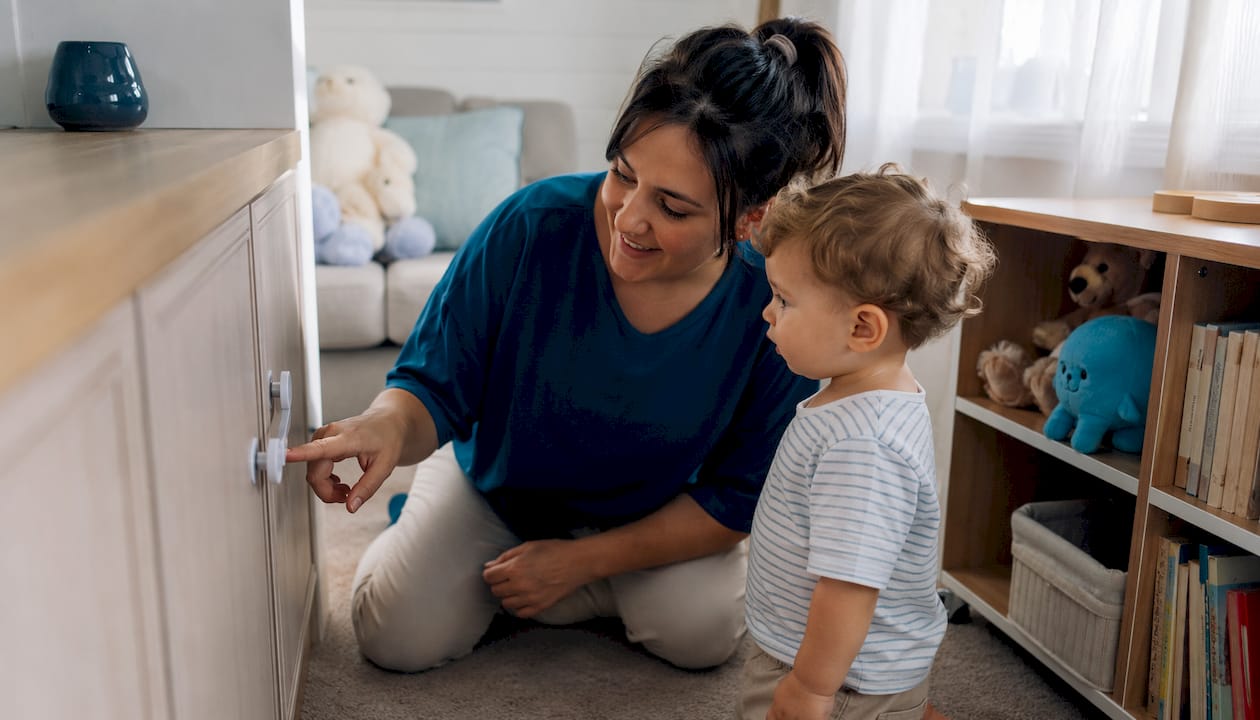
Babies and toddlers (0–3 years) need the most logistical support. Prioritise a mobile home with a private bathroom close to the master bedroom, enough floor space for a travel cot, and a decking gate to contain outdoor play safely. Keep the trip short, ideally no more than a week, and choose a site close to home to reduce travel time. Shade, quiet surroundings, and a reliable nap space matter more than on-site entertainment at this age.
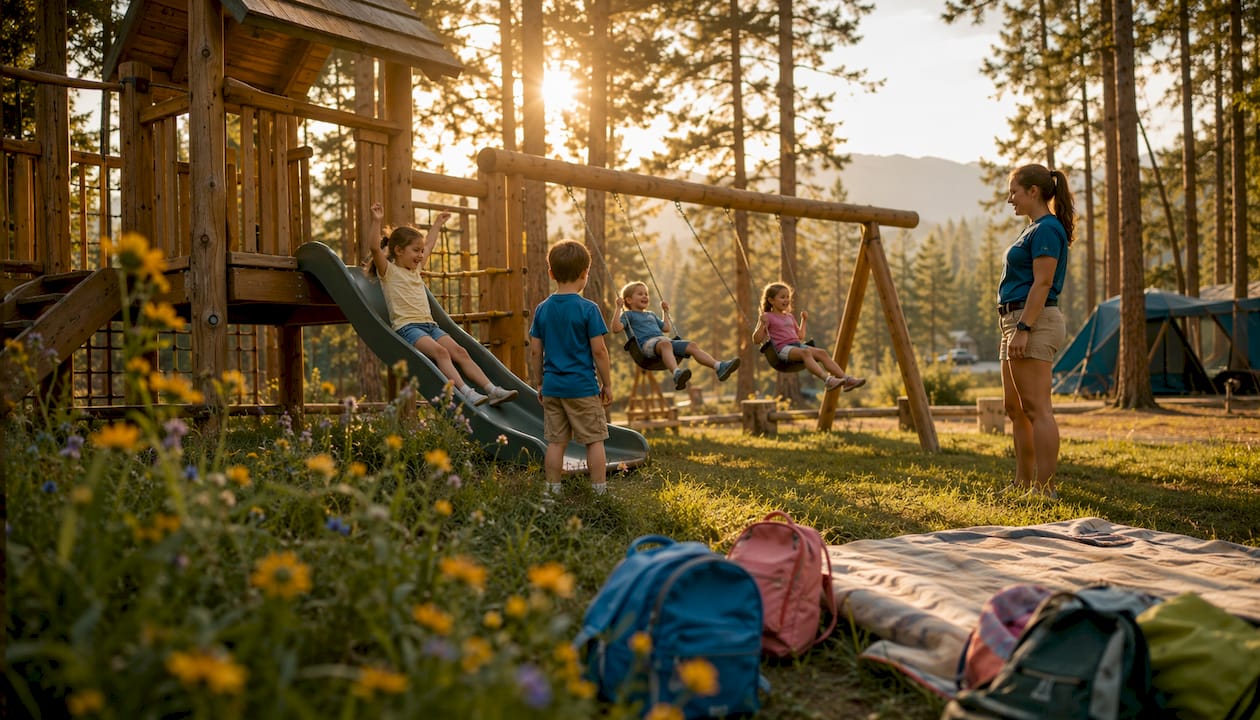
Young children (4–8 years) are the age group that gets the most from a well-chosen campsite. They benefit from playgrounds, a children’s pool, organised activities, and open space to run around. A comfort-tier mobile home is often perfectly adequate for this age group, particularly if the family plans to spend most of the day outdoors. Bunk beds are a genuine treat rather than a compromise at this stage.
Older children and teenagers (9 and above) value privacy and space. A premium mobile home with a larger decking area, a flat-screen television, and separate sleeping rooms makes a real difference on longer trips. Families with teens often find that the extra investment in a premium unit pays back in fewer arguments and more relaxed evenings. Sites with bike hire, water sports, or evening entertainment programmes suit this age group well.
Insurance and health precautions for family camping trips
Travel insurance is not optional when camping with children. A standard policy may not cover cancellation due to a child’s illness, so look specifically for a family policy that includes cancellation cover, medical expenses abroad if you are travelling to France or elsewhere in Europe, and cover for activities like cycling or swimming.
For health, pack a well-stocked first aid kit before you leave. Children’s paracetamol, antihistamine tablets or liquid, antiseptic wipes, plasters in various sizes, and a digital thermometer cover the most common campsite incidents. If any child has a known allergy, carry an antihistamine and confirm with your GP whether an adrenaline auto-injector is appropriate. Sun protection is particularly important on campsites where children spend long hours outdoors. SPF 50 cream, reapplied every two hours, is the standard recommendation for children’s skin.
If you are travelling to France, a European Health Insurance Card (EHIC) or its UK replacement, the Global Health Insurance Card (GHIC), gives access to state-provided healthcare at the same cost as local residents. Apply for one before you travel; it is free and takes only a few minutes online.
Thinking about owning your own family mobile home?
If you find yourself returning to the same campsite year after year, ownership starts to make more sense than renting. Caravansinfrance specialises in pre-owned mobile homes at Camping Les Prairies du Lac in the Vendée region of France, a four-star site with a heated pool, playgrounds, and a warm coastal microclimate that suits families perfectly. There are no hidden fees, no property taxes, and no complex legalities. You simply choose your home, and it is ready to use.
Browse the available family mobile homes at Camping Les Prairies du Lac, or read about life on the campsite to get a feel for what a season in the Vendée actually looks like for families.
Key takeaways
Choosing the right mobile home for a family camping holiday comes down to layout, safety features, and campsite position, not simply the accommodation tier or price.
| Point | Details |
|---|---|
| Prioritise layout over capacity | Functional floor space and separate sleeping areas matter more than the maximum occupancy figure. |
| Decking gates are a safety essential | A gated decking area contains toddlers safely and removes a constant supervision burden outdoors. |
| Match the tier to your family’s stage | Comfort units suit younger families on shorter trips; premium units suit older children and longer stays. |
| Campsite position affects sleep | Pitches near pools and restaurants are convenient but noisy; ask for quieter options when booking. |
| Insurance and health prep travel with you | A family travel policy with cancellation cover and a GHIC card are both worth sorting before departure. |