Mobile home insurance basics: a family guide
Discover mobile home insurance basics for families. Learn key protections to safeguard your home and belongings with the right coverage.
Mobile home insurance basics: a family guide
What is mobile home insurance, and what does it cover?
Mobile home insurance is a specialised policy designed to protect your manufactured or mobile home, your belongings, and your family’s financial wellbeing against a wide range of risks. Unlike a standard home insurance policy, it accounts for the unique construction, siting, and vulnerability of mobile and manufactured homes. For families, understanding this distinction is the first step to getting genuinely useful cover.
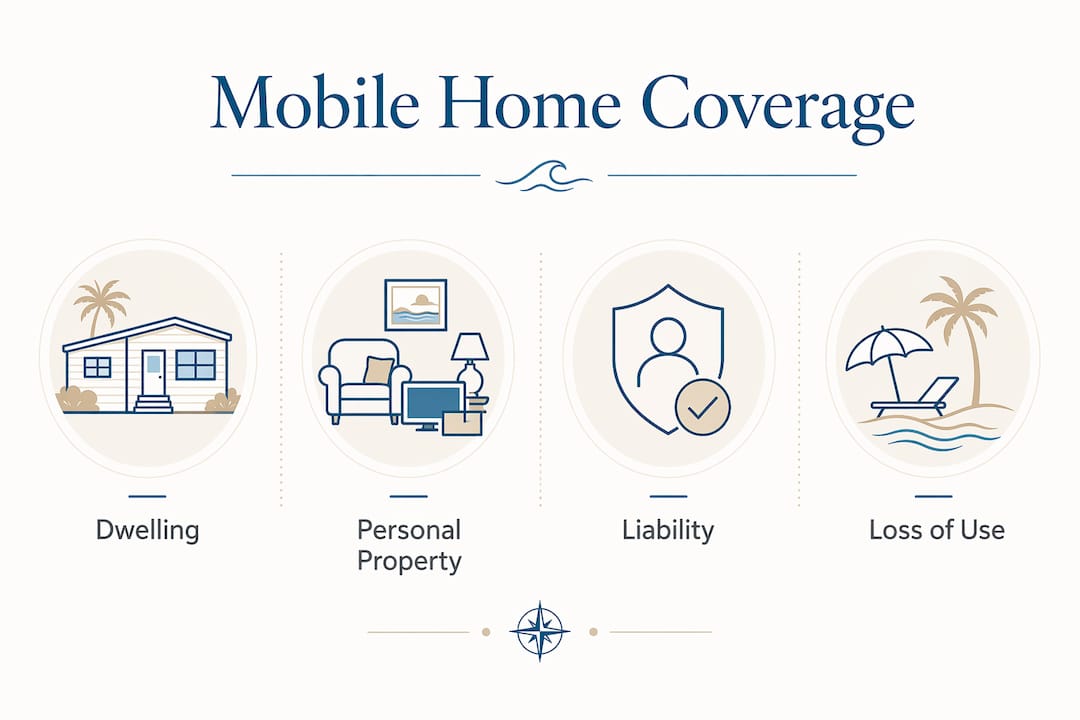
A typical family mobile home policy includes four core protections:
- Dwelling coverage: Pays to repair or rebuild the physical structure of your home, including attached features like decks, patios, and storage sheds, after a covered event such as fire, wind, or hail.
- Personal property coverage: Protects your furniture, appliances, clothing, and other belongings if they are damaged, destroyed, or stolen.
- Personal liability coverage: Covers you if someone is injured on your property or their belongings are damaged due to your negligence, helping to protect your family’s assets.
- Loss of use coverage: Pays for temporary accommodation and extra living costs if your home becomes uninhabitable after a covered loss.
Insurers such as Intasure specialise in mobile home policies tailored to these needs, making it far easier for families to find cover that actually fits their situation.
What does each coverage component actually protect?
Each of the four core areas works differently, and knowing the detail helps you avoid nasty surprises at claim time.
Dwelling coverage applies to the home’s structure and any permanently attached additions. The key decision here is whether your policy pays on an actual cash value (ACV) basis or a replacement cost basis. ACV deducts depreciation, so an older home may receive a payout well below what it costs to rebuild. Replacement cost coverage pays the full cost to repair or replace with comparable materials, without depreciation deductions, giving your family far greater protection after a total loss.
Personal property coverage extends to belongings inside the home and, depending on the policy, items temporarily removed from it. Check whether your policy uses named perils (covering only risks explicitly listed) or open perils. Open perils policies cover all risks except those expressly excluded, which simplifies the claims process considerably.
Personal liability coverage does not pay for injuries to you or members of your household. It covers third-party claims, so if a visitor trips on your steps and sues, your policy responds. The standard limit included may not be enough to protect all your assets, so it is worth reviewing whether a higher limit makes sense for your family.
Loss of use coverage covers costs you would not normally have, such as hotel stays or restaurant meals, while your home is being repaired. Keep receipts for everything during this period.
Pro Tip: Ask your insurer specifically whether your policy pays replacement cost or actual cash value for both the structure and your personal belongings. These can differ within the same policy, and the gap in a claim payout can be considerable.
Why does mobile home insurance matter so much for families?
The short answer: without it, a single storm or accident could leave your family with nothing. Mobile homes face particular exposure to severe weather, and their construction means repair costs can escalate quickly.

Lenders almost universally require active insurance as a condition of financing a mobile home. If you have a mortgage or loan on your home, your lender will typically insist on proof of cover before releasing funds, and will require you to maintain it throughout the loan term. Many mobile home communities and parks also require residents to hold valid insurance as a condition of their pitch agreement.
Beyond lender and community requirements, the practical case for cover is straightforward:
- Your mobile home is likely one of your family’s most valuable assets, and replacing it without insurance would be financially devastating.
- Personal liability exposure is real: a guest’s injury on your property could result in a legal claim running into thousands of pounds.
- Temporary accommodation costs add up fast if your home is uninhabitable for weeks or months after a fire or flood.
Families considering a purchase should review insurance requirements early. The pre-owned mobile home buying checklist from Caravansinfrance covers insurance considerations alongside other key steps in the buying process.
How much does mobile home insurance cost, and how do you choose wisely?
Premiums vary based on several factors, and understanding them helps you find affordable cover without sacrificing protection.
- Home age and condition: Older homes typically cost more to insure because they may not meet current construction standards.
- Location: Proximity to flood plains, coastal areas, or regions prone to high winds raises premiums.
- Home size and value: Larger or higher-value homes attract higher dwelling coverage costs.
- Claims history: A history of previous claims can increase your premium at renewal.
- Deductible level: Choosing a higher deductible lowers your premium but increases what you pay out of pocket when you claim.
The choice between actual cash value and replacement cost cover has a direct impact on both your premium and your payout. Replacement cost policies cost more upfront but experts recommend them strongly, particularly for families who could not absorb the financial gap that depreciation creates after a major loss.
Pro Tip: Before finalising any policy, ask specifically about endorsements for transport or transit cover if you ever plan to move your home, and confirm that your anchoring system meets the insurer’s requirements. Both gaps can leave you unprotected at critical moments.
Work with a broker or insurer who has genuine experience with mobile and manufactured homes. A general home insurance specialist may not understand the specific risks involved.
What do mobile home policies typically exclude?
Knowing what your policy does not cover is just as important as knowing what it does. Several common exclusions catch families off guard.
- Flood damage: Standard mobile home policies do not cover flooding. Families in flood-prone areas should arrange a separate flood policy. The UK’s Flood Re scheme may be relevant depending on your location and circumstances.
- Earthquake damage: Earthquake cover is excluded from most standard policies and requires a separate arrangement.
- Transit damage: Most mobile home policies exclude coverage while the home is being moved. A trip endorsement or transit rider is needed to cover the home and its contents during transport.
- Wear and tear: Gradual deterioration, rot, or maintenance-related damage is not covered under any standard policy.
- Pest damage: Damage caused by insects or rodents is typically excluded.
Optional add-ons worth considering include personal injury cover, identity fraud protection, and cover for outbuildings or garden equipment not included in the standard policy. Read the exclusions section of any policy carefully before signing, and ask your insurer to clarify anything that is not clear.
Expert tips to get the right cover for your family
Getting the right policy takes a little more care with mobile homes than with standard properties. These practical steps make a real difference.
- Choose a policy designed for mobile homes: A standard homeowners policy (in the UK context, a standard buildings and contents policy) is often unsuitable. A specialised HO-7 form policy, widely used in the US and referenced by UK specialist insurers, is tailored to the construction and risks of manufactured homes. Confirm your policy is specifically designed for mobile or manufactured homes.
- Verify your anchoring system: Insurers may void windstorm coverage if your home’s anchoring or tie-down system does not meet their underwriting standards. Have this checked before your policy is issued.
- Choose replacement cost where you can afford it: The extra premium is usually worth it for families who rely on their home as their primary residence.
- Consult a licensed specialist: A broker with experience in mobile and manufactured home policies will spot gaps that a generalist might miss.
- Document everything: Photograph your home’s condition, keep receipts for major belongings, and store copies of your policy documents securely off-site or in cloud storage.
Intasure is one of the better-known UK specialist insurers in this space, offering policies specifically designed for park and mobile homes. Caravansinfrance also provides guidance on insurance considerations for families purchasing mobile homes in France, where requirements and options differ from the UK market.
Pro Tip: Create a home inventory before your policy starts. A simple video walkthrough of each room, saved to cloud storage, can speed up a personal property claim significantly and reduce disputes over what you owned.
How quickly can you arrange mobile home insurance?
Cover can usually be arranged within a single day. Most specialist insurers and brokers offer online quotes that take around 15–20 minutes to complete, and many can issue policy documents the same day. If you are purchasing a mobile home and need cover in place before completion or before moving onto a site, contact an insurer as early as possible in the buying process. Some lenders require proof of insurance before releasing funds, so leaving it to the last minute creates unnecessary pressure.
How to file a mobile home insurance claim
Contact your insurer as soon as possible after a loss. Most insurers have a 24-hour claims line. When you call, have your policy number ready and be prepared to describe what happened, when it occurred, and the extent of the damage.
Your insurer will assign a claims handler and, for significant structural damage, arrange for a loss adjuster to visit and assess the home. Document the damage thoroughly with photographs before carrying out any temporary repairs, but do make those temporary repairs if they are needed to prevent further loss. Keep all receipts for emergency work or temporary accommodation. For mobile homes, the claims process may also involve confirming that anchoring systems were properly maintained, particularly for windstorm claims, so having that documentation ready helps move things along.
How does mobile home insurance differ from standard home insurance?
Standard buildings and contents insurance is designed for traditionally constructed homes with permanent foundations. Mobile home insurance accounts for the fact that your home is factory-built, may be sited on a pitch rather than owned land, and faces specific risks around transport, anchoring, and weather exposure.
A standard policy is likely to be unsuitable and could result in a claim being denied. Mobile home policies price and underwrite differently, often factoring in the age of the home, the quality of its anchoring, and whether it sits in a park or on private land. The liability section also reflects the community living context that many mobile home families experience.
Are there legal requirements for mobile home insurance in the UK?
Mobile home insurance is not compulsory under UK law in the way that motor insurance is. However, the practical requirements are almost as binding. If your home is financed, your lender will require cover as a loan condition. If you live on a licensed park, the site licence conditions or your pitch agreement will almost certainly require you to hold valid insurance and provide proof on request.
The Mobile Homes Act 1983 governs the rights of park home residents in England and Wales, and while it does not mandate insurance directly, it underpins the pitch agreements that typically do. Scotland and Northern Ireland have their own equivalent legislation. Families should read their pitch agreement carefully, as the insurance requirements written into it are legally enforceable.
Key takeaways
A mobile home insurance policy gives families protection across four core areas: the structure, belongings, liability, and temporary living costs, and choosing replacement cost cover over actual cash value is the single most impactful decision you can make.
| Point | Details |
|---|---|
| Four core coverages | Every family mobile home policy should include dwelling, personal property, liability, and loss of use cover. |
| Replacement cost matters | Replacement cost cover pays full rebuild costs without depreciation; actual cash value can leave a significant shortfall. |
| Transit is not covered by default | Moving your home requires a specific trip endorsement; standard policies exclude transit damage. |
| Lenders and parks require cover | Financing and pitch agreements almost always mandate active insurance, even though UK law does not. |
| Specialist policies only | A standard buildings and contents policy is unsuitable; always use a policy designed specifically for mobile or manufactured homes. |
Thinking about owning a mobile home in France? Caravansinfrance offers a range of ready-to-move-in pre-owned homes at the four-star Camping Les Prairies du Lac in the Vendée, with a transparent buying process and no hidden fees. Browse available homes in Vendée or explore the campsite and community to see what life there looks like.