Why invest in a holiday mobile home in 2026
Discover why investing in a holiday mobile home in 2026 offers hassle-free access to vacations. Enjoy holidays on your terms!
Why invest in a holiday mobile home in 2026
A holiday mobile home is defined as a static leisure unit sited on a licensed holiday park, used primarily for personal recreation rather than permanent residence. The decision to invest in a holiday mobile home sits firmly in the lifestyle category. You are not buying a buy-to-let flat or a capital growth asset. You are buying reliable, affordable access to holidays you will actually take, on your own terms, without booking fees or availability headaches. Over 50% of British residents planned UK or European staycations in 2025, and that appetite for accessible, repeatable holidays is exactly what mobile home ownership serves.
Why invest in a holiday mobile home: the core case
The strongest argument for owning a holiday mobile home is not financial return. It is the elimination of the friction that stops most families from taking enough holidays. You own the space. You leave your belongings there. You go when you want, for as long as you want, without paying nightly rates or competing for availability during school holidays.
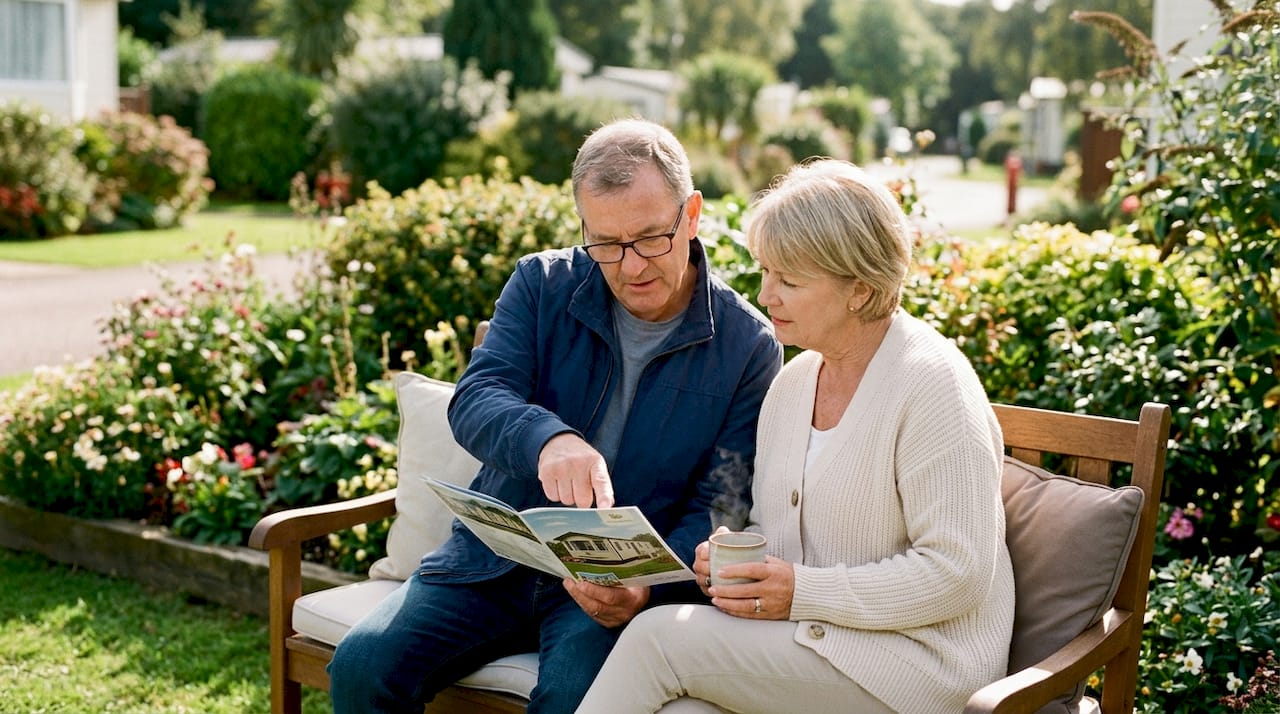
Holiday mobile homes are lifestyle investments, and the industry is clear on this point. Value derives from saved accommodation costs and the quality of experiences you build over years, not from resale profit. That framing matters. Buyers who approach ownership expecting capital appreciation are frequently disappointed. Buyers who approach it as a recurring lifestyle benefit, measured in warm evenings, family gatherings, and stress-free short breaks, consistently find it worthwhile.
The industry term for this category is “static caravan” or “holiday lodge,” though “holiday mobile home” is the phrase most buyers search for. Both terms describe the same asset: a furnished, fixed-pitch leisure unit on a managed park.
What are the main financial benefits of owning a holiday mobile home?
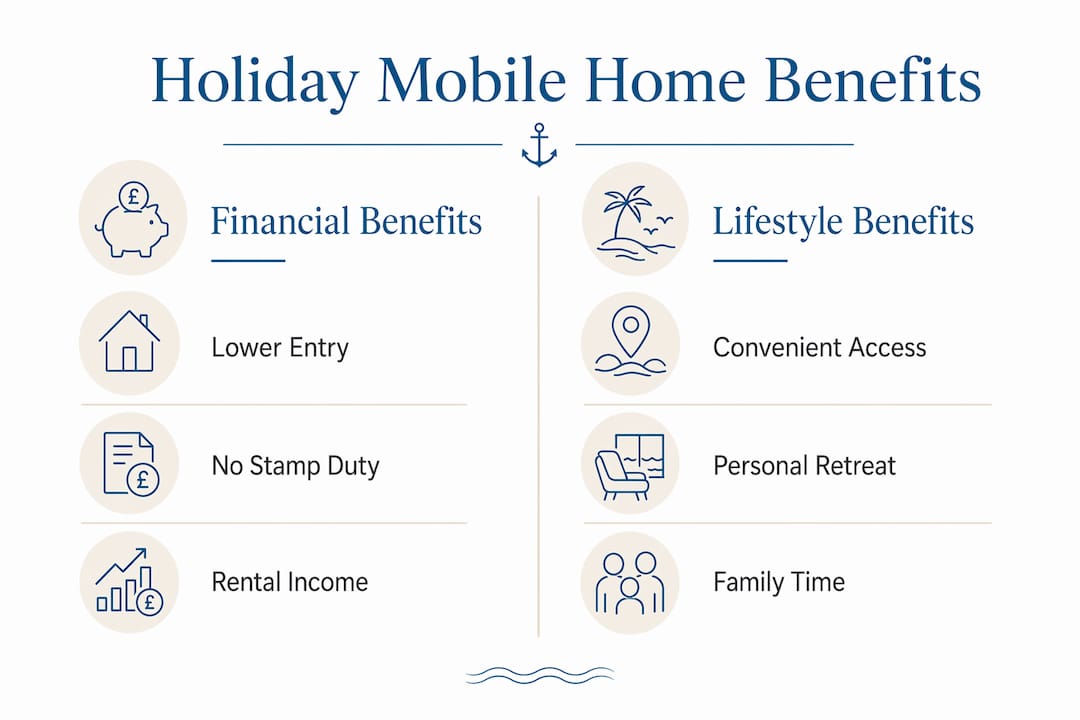
Mobile home ownership carries significantly lower entry costs than traditional real estate. There is no stamp duty, no council tax, and no expensive structural maintenance of the kind that comes with a brick-and-mortar property. That removes three of the largest hidden costs that catch first-time property buyers off guard.
Purchase price and ongoing fees
Entry prices for pre-owned holiday mobile homes vary widely by location, age, and specification. Caravansinfrance lists pre-owned units in the Vendée region of France at prices that reflect genuine value rather than inflated coastal property premiums. Annual site fees, utilities, and insurance are the main recurring costs. These are predictable and budgetable, unlike the unpredictable repair bills that come with older bricks-and-mortar holiday cottages.
Here is a simplified cost comparison to frame the decision:
| Cost category | Traditional holiday cottage | Holiday mobile home |
|---|---|---|
| Purchase entry cost | High, plus stamp duty | Lower, no stamp duty |
| Annual site/maintenance fees | Variable, often high | Fixed annual pitch fee |
| Council tax | Yes | No |
| Structural repairs | Owner’s full responsibility | Minimal structural risk |
| Booking flexibility | Rental market dependent | Immediate, owner-controlled |
The table shows that the mobile home’s financial advantage is not just the purchase price. It is the removal of several cost layers that erode the value of traditional holiday property ownership.
Pro Tip: Calculate how much you currently spend on holiday accommodation per year, including travel, booking fees, and last-minute upgrades. Compare that figure against the annual cost of ownership. Most families find the break-even point arrives within a few years of regular use.
Renting out your mobile home when you are not using it can offset annual fees. Renting out a mobile home can offset costs but requires active management and compliance with park rules. That income is useful, but treat it as a bonus rather than a financial cornerstone.
How does holiday mobile home ownership improve your lifestyle?
The lifestyle benefits of owning a holiday mobile home are concrete and repeatable. Owning a holiday mobile home reduces holiday planning stress and allows you to leave personal belongings on site, which makes frequent short breaks genuinely easy rather than logistically exhausting.
The practical lifestyle advantages include:
- Spontaneous trips. You can leave on a Friday evening without booking anything. The home is ready when you arrive.
- Familiar surroundings. Your own bedding, your own kitchen setup, your children’s favourite toys already there. That familiarity makes every visit feel restorative rather than effortful.
- Family traditions. Returning to the same place year after year builds a shared history. Children remember the park, the pool, the walk to the beach. Those memories compound over time.
- Community. Holiday parks develop genuine social communities. Neighbours become friends. The life on the campsite at a well-run park has a warmth that no hotel corridor replicates.
- Wellbeing. Regular, low-effort breaks reduce stress more effectively than one annual fortnight. Ownership makes those regular breaks possible.
“The true return on a holiday mobile home is measured in wellbeing, availability, and the savings you accumulate over years of not paying nightly rates. It is not measured in resale profit.”
That shift in perspective is what separates satisfied owners from disappointed ones. When you buy a holiday mobile home, you are buying time and ease, not a financial instrument.
What are the practical realities and challenges of ownership?
Honest ownership requires understanding the challenges as clearly as the benefits. The main ones are depreciation, site agreements, relocation costs, and rental management.
- Depreciation. Most holiday mobile homes depreciate in monetary value over time. Owners who accept this from the outset and measure return in lifestyle terms remain satisfied. Owners who expect to sell at a profit are often let down.
- Licence agreements and park rules. You own the unit but not the land. Your pitch is governed by a licence agreement with the park operator. Read it carefully before buying. Rules cover subletting, alterations, and the park’s right to ask you to upgrade or move your unit after a set number of years.
- Relocation costs. Moving a static caravan is expensive. Relocation costs typically run between £5,000 and £15,000, which is why most owners stay put for the duration of their licence. That cost also explains why mobile home park occupancy rates remain very stable over time.
- Rental management. Turning your mobile home into a rental venture changes the nature of ownership. Renting out a holiday home shifts it from a passive lifestyle asset to an active small business, with tax, insurance, and management implications. Expenses are generally not tax deductible unless the property is primarily held to produce rental income.
- Annual fees commitment. Site fees are due every year, whether you use the home or not. Budget for them as a fixed cost, not an optional one.
Pro Tip: Before signing a pitch licence, ask the park operator for the average licence length and the policy on unit replacement. Knowing the timeline helps you plan the total cost of ownership accurately.
Financial planning experts recommend that holiday property purchases stay below 20–30% of net worth, including all carrying costs. That threshold keeps ownership enjoyable rather than financially stressful.
How can you get the most from your holiday mobile home?
Getting strong value from a holiday mobile home comes down to location choice, usage frequency, and a clear plan for personal versus rental use.
- Choose a location with genuine appeal. The Vendée region of France, where Caravansinfrance operates, offers a warm coastal microclimate, sandy beaches, and attractions like Puy du Fou, one of Europe’s most acclaimed theme parks. Strong local appeal means you will actually use the home, and it supports rental demand if you choose to let it out.
- Use it frequently. The more breaks you take, the lower your effective cost per visit. Aim for a usage pattern that makes the annual fees feel proportionate.
- Balance personal use with letting. If you rent out the unit, block out the weeks you want for yourself first. Rental income is useful, but losing your own peak-season access defeats the purpose of ownership.
- Maintain the property well. A well-kept mobile home retains its comfort and appeal far longer. Annual checks on seals, heating, and appliances prevent small issues from becoming expensive ones.
- Build community connections. Regulars at a park get more from it. You learn the best local spots, build friendships, and create the kind of holiday routine that makes every visit feel like coming home.
The European camping and mobile home sector is actively de-seasonalising to attract year-round visitors, targeting corporate, sports, and events markets alongside traditional summer holidaymakers. That trend improves the rental potential and the amenity quality of well-run parks, which benefits owners directly.
Key takeaways
A holiday mobile home delivers its best return as a lifestyle asset, not a financial one. Owners who measure value in holidays taken, stress avoided, and family memories built consistently find ownership worthwhile.
| Point | Details |
|---|---|
| Lifestyle asset, not capital growth | Expect depreciation; measure return in wellbeing and saved accommodation costs. |
| Lower entry costs than property | No stamp duty, council tax, or structural maintenance bills reduce the total cost of ownership. |
| Spontaneous access is the core benefit | Leaving belongings on site and arriving without booking makes frequent short breaks genuinely easy. |
| Rental income offsets fees | Letting the home covers annual site fees but shifts ownership into active business management. |
| Location and usage frequency matter most | Choose a place you love and use it often to make the annual costs feel proportionate. |
What I have learned about holiday mobile home ownership after years of watching buyers
People consistently underestimate how much the ease of a holiday mobile home changes their actual holiday behaviour. I have watched buyers who previously took one or two holidays a year start taking five or six short breaks once they own a pitch. The friction of booking, packing from scratch, and paying nightly rates was the barrier all along, not the desire to travel.
The buyers who struggle are those who treat the purchase as a financial hedge. They watch the resale market, worry about depreciation, and end up using the home less because every visit feels like it needs to justify itself financially. That mindset turns a pleasure into a burden.
My honest view is this: if you would genuinely use a holiday base at least four or five times a year, and if the annual costs sit comfortably within your budget, ownership makes clear sense. The staycation trend is not a passing phase. The appetite for reliable, familiar, affordable holidays close to home or in a favourite European location is structural. A well-chosen mobile home in a place like the Vendée, with its warm summers, local culture, and family-friendly parks, delivers that reliably year after year.
The families I see getting the most from ownership are not the ones who bought the most expensive unit. They are the ones who chose the right location, committed to using it regularly, and stopped measuring it against the property market.
— Ludo
Holiday mobile homes for sale in the Vendée with Caravansinfrance
Caravansinfrance specialises in pre-owned mobile homes at Camping Les Prairies du Lac in the Vendée region of France. Every home is ready to move into, with no hidden fees, no property taxes, and no complex legal process to navigate.
The Vendée offers warm summers, Atlantic beaches, and a relaxed pace of life that keeps owners coming back season after season. Caravansinfrance makes the buying process straightforward, with transparent pricing and expert guidance at every step. Browse the current mobile homes for sale to find a unit that fits your lifestyle and budget. If you want to see the full range of available properties, the complete listings give you a clear picture of what is available right now.
FAQ
What is a holiday mobile home investment?
A holiday mobile home investment is the purchase of a static leisure unit on a licensed holiday park, used primarily for personal holidays rather than permanent living. It is a lifestyle asset, not a capital growth vehicle.
Do holiday mobile homes go up in value?
Most holiday mobile homes depreciate over time rather than appreciating. Owners measure return through saved accommodation costs and lifestyle benefits, not resale profit.
Can I rent out my holiday mobile home?
Yes, but renting out a mobile home requires active management and compliance with your park’s licence agreement. It effectively turns ownership into a small business, with tax and insurance implications.
What ongoing costs should I budget for?
Annual site fees, utilities, insurance, and routine maintenance are the main recurring costs. These are predictable and fixed, which makes budgeting straightforward compared to traditional property ownership.
Is a holiday mobile home a good investment for families?
For families who holiday regularly, ownership reduces per-trip costs, removes booking stress, and builds lasting traditions around a familiar place. Financial planning guidance recommends keeping the total purchase cost below 20–30% of net worth to keep it enjoyable rather than financially pressured.