
Mobile home ownership vs holiday rental: 2026 UK guide
Explore mobile home ownership vs holiday rental in 2026. Discover the benefits of each option for your travel style and budget.
Mobile home ownership vs holiday rental: 2026 UK guide
Ownership wins on consistency and personalisation; holiday rental wins on flexibility and zero upfront cost. The right choice depends on how often you plan to visit, how much capital you can commit, and whether you want a fixed base or the freedom to go wherever the mood takes you. Mobile home ownership means purchasing a unit sited on a licensed park, paying annual pitch fees, and accepting the responsibilities that come with a fixed asset. Holiday rental means paying per stay, with no maintenance burden and no long-term financial commitment.
Here is a quick comparison to frame the decision:
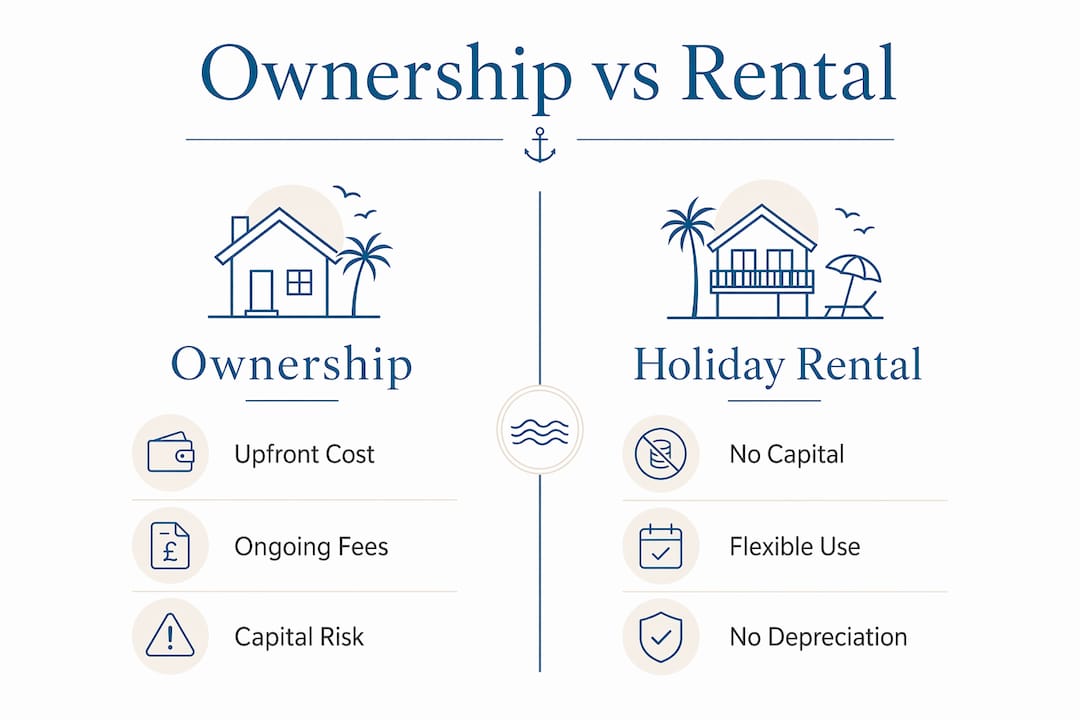
- Upfront cost: Ownership requires £30,000–£100,000+ to purchase; rental requires nothing beyond the booking fee.
- Ongoing fees: Owners pay annual pitch fees of £3,000–£8,000 plus insurance and maintenance; renters pay only per trip.
- Flexibility: Rental lets you choose different locations and dates freely; ownership ties you to one park and its rules.
- Commitment: Ownership is a medium-to-long-term financial decision; rental carries no ongoing obligation.
- Asset value: Mobile homes depreciate over time rather than building equity like bricks-and-mortar property.
Pro Tip: The single most useful question to ask yourself is how many weeks per year you genuinely expect to use a holiday base. If the honest answer is fewer than four or five weeks, the maths of ownership rarely stacks up against simply renting.
What the law actually says about mobile home ownership and holiday rentals
The legal distinction between residential and holiday mobile homes is sharper than most buyers realise. A residential mobile home is a permanent primary dwelling, governed by the Mobile Homes Act 1983, which gives occupiers strong security of tenure and the right to sell their home on the pitch. A holiday mobile home, by contrast, is sited on a park licensed solely for leisure use. Occupiers hold a licence agreement with the park operator rather than any form of tenancy, and that agreement can be terminated if the park closes or if the owner breaches site rules.

Site licensing and planning permission
Holiday parks operate under a site licence issued by the local authority under the Caravan Sites and Control of Development Act 1960. That licence sets conditions covering everything from pitch density to fire safety. Planning permission for holiday use typically restricts occupation to a set number of weeks per year, often 10 or 11 months, and prohibits use as a primary residence. Owners who ignore that restriction risk enforcement action from the local authority.
Council tax, stamp duty, and tax changes
Holiday mobile homes used purely for leisure are generally exempt from council tax and stamp duty, provided they are not used as a main home. The UK government abolished the Furnished Holiday Lettings tax regime in april 2025, removing the preferential tax treatment that had previously made letting a holiday home more attractive. Owners who had relied on FHL rules to offset mortgage interest or claim capital allowances now face a less favourable tax position.
Key legal points for owners and renters to understand:
- Holiday park licences are granted to the park operator, not the individual owner; your rights flow from the pitch licence agreement you sign with the park.
- The Mobile Homes Act 2013 strengthened protections for residential park home owners but does not extend to holiday home occupiers.
- Disputes between holiday home owners and park operators can be referred to the First-tier Tribunal (Property Chamber) in England.
- Holiday rental guests hold no ownership rights and no ongoing contractual relationship with the park beyond the booking period.
- The Consumer Rights Act 2015 applies to holiday rental contracts, giving guests protections against unfair terms.
- Park operators must comply with site licence conditions set by the local authority; the Competition and Markets Authority has previously reviewed practices in the park homes sector.
How the finances compare: costs, fees, and investment potential
The financial gap between owning and renting a holiday mobile home is wider than most people expect when they first look at purchase prices. Buying a unit is only the beginning.
What ownership actually costs
Purchase prices for a new or quality pre-owned static caravan range from £30,000 to well over £100,000 depending on size, specification, and park location. On top of that, annual pitch fees run from £3,000 to £8,000, covering ground rent, utilities connections, and park maintenance. Add buildings and contents insurance, annual gas and electrical safety checks, and periodic refurbishment, and total annual running costs can be substantial before you set foot inside.
Depreciation and capital risk
Mobile homes are classed as personal property rather than real estate, which has two practical consequences. First, they depreciate like vehicles, losing value steadily over time rather than tracking the property market. Second, financing options are limited; lenders typically offer chattel loans at higher interest rates than residential mortgages, and many buyers fund purchases outright. Unlike a villa or a flat, a mobile home is unlikely to return your original investment when you sell.
The FHL abolition and its effect on rental income
Owners who had planned to offset costs through letting income face a changed picture following the abolition of the Furnished Holiday Lettings regime in 2025. Previously, FHL status allowed owners to claim capital allowances and treat rental profits more favourably for pension purposes. Those advantages are gone. Parks also typically restrict subletting to their own managed rental fleets, taking commissions of up to 30%, which means independent letting on open platforms is rarely permitted.
Pro Tip: Before buying, ask the park for a written breakdown of all pitch fees, service charges, and any planned increases for the next three years. Parks can raise fees annually, and a modest-looking pitch fee today can look very different in five years.
| Financial element | Ownership | Holiday rental |
|---|---|---|
| Upfront cost | Requires substantial capital outlay | — |
| Annual pitch fees | Ongoing charges apply | Not applicable |
| Insurance | Required by owner | Covered by park or booking platform |
| Maintenance | Owner’s responsibility | Park’s responsibility |
| Depreciation | Yes, significant | No asset held |
| Capital growth potential | Very limited | Not applicable |
| Rental income possible | Yes, but park-restricted | Not applicable |
| Tax position (2026) | FHL regime abolished | Standard income rules apply |
Pros and cons of owning versus renting a holiday mobile home
Neither option is objectively better. Each suits a different type of person with different priorities.
The case for ownership
Owning a holiday mobile home gives you a consistent base that is yours to personalise. You can leave personal belongings, furnish it to your taste, and arrive without packing everything from scratch. For families who return to the same area year after year, that familiarity has real value. There is also the potential for rental income, even if park restrictions limit how much you can earn. Owners-only parks offer a quieter, more community-focused atmosphere, which many buyers find preferable to the busier environment of a commercial rental park.
The downsides of ownership
- High upfront capital requirement locks money into a depreciating asset.
- Annual pitch fees, insurance, and maintenance create a fixed cost base whether you visit or not.
- Park rules govern everything from exterior décor to pet policies, limiting your freedom.
- Relocating the unit costs £5,000–£15,000 and is often structurally impractical, tying you to one location.
- Resale can be slow, and parks sometimes have the right of first refusal on any sale.
The case for holiday rental
Renting gives you complete flexibility. You can try a camping mobile home versus a villa holiday, switch regions, or upgrade to a larger property for a special occasion, all without any long-term financial exposure. There is no maintenance to arrange, no insurance to purchase, and no pitch fee landing in your inbox each spring. For those who holiday in different places each year, or who want to compare a mobile home versus a villa rental in France before committing, renting is the obvious starting point.
The downsides of renting
- Peak-season availability can be tight, especially for popular parks in July and August.
- You cannot personalise the space or leave belongings between visits.
- Costs per week are higher than the equivalent pro-rated ownership cost for frequent visitors.
- There is no asset at the end of the arrangement, however many years you rent.
How to decide between owning and renting a holiday mobile home
The decision comes down to four factors: frequency of use, location preference, budget, and how much flexibility you need.
Frequency of use is the most telling variable. Ownership starts to make financial sense only when you use the property regularly across the season. If you plan to visit for six weeks or more per year, and always to the same area, the annual running costs begin to look more reasonable spread across those visits. Fewer than that, and renting typically costs less overall.
Location preference matters because ownership locks you in. If you have found a park and a region you love and want to return to reliably, ownership delivers that certainty. If you are still exploring, or if your family’s holiday preferences shift from year to year, renting preserves your options.
Budget and financial risk are straightforward. Ownership requires capital, ongoing fees, and tolerance for depreciation. Renting requires none of those. If tying up £50,000 or more in a depreciating asset would create financial strain, renting is the more prudent path.
Park type shapes the experience significantly. Owners-only parks are quieter and community-oriented; commercial rental parks are busier and more transient. Choosing the wrong park type is one of the most common sources of disappointment for new owners.
Use this checklist before making a decision:
- Do you have a clear favourite location you want to return to every year?
- Can you comfortably afford the purchase price plus five years of pitch fees without financial pressure?
- Are you prepared to accept park rules on subletting, décor, and use?
- Have you read the full site licence agreement, including clauses on resale and fee increases?
- Do you have a realistic exit strategy if you want to sell in five to ten years?
- Would renting for two or three seasons first give you the confidence to commit?
Pro Tip: Visit any park you are considering buying on as a renter first. A weekend stay tells you far more about the atmosphere, management quality, and community than any brochure.
What industry research and experts say about holiday home ownership
The most consistent message from industry professionals is that mobile home ownership should be treated as a lifestyle choice, not a capital investment. The numbers rarely support buying on the basis of financial return alone, and owners who approach it that way tend to end up disappointed.
The 10-year rule and its impact on exit planning
One of the least-discussed risks in holiday home ownership is the so-called “10-year rule,” an unofficial but widespread park policy that prohibits older units from being rented out through the park’s managed fleet. Once your unit reaches a certain age, the park may require you to upgrade to a newer model or accept that rental income stops. This affects not just income but also resale value, since a unit that cannot be rented is harder to sell at a good price. Planning your exit strategy before you buy, rather than after, is the advice that experienced owners consistently give.
Contractual complexity in rental income schemes
Owners who enter into rental income arrangements with their park often discover the terms are less favourable than the initial sales pitch suggested. Parks typically restrict subletting to their own managed fleet and take commissions of up to 30%, leaving owners with a fraction of the gross rental income. Independent letting on platforms such as Airbnb is prohibited on most parks. The site licence agreement is the document that governs all of this, and many buyers sign it without reading it carefully.
Key risks that owners and prospective buyers should understand:
- Pitch fee increases: Parks can raise annual fees, and there is limited regulatory protection for holiday home owners compared to residential park home residents under the Mobile Homes Act 1983.
- Park closure risk: If the park operator loses its site licence or closes, owners may have little recourse and face the cost of removing their unit.
- Relocation costs: Moving a unit to a new park costs £5,000–£15,000, and many older units are not structurally fit for a second move.
- Resale restrictions: Some parks hold the right of first refusal on any sale, which can depress the price you achieve.
- Upgrade pressure: Parks may require owners to replace units after a set number of years to maintain the park’s visual standards.
Pro Tip: Read the site licence agreement from start to finish before signing anything. Pay particular attention to clauses covering resale rights, fee review mechanisms, subletting permissions, and what happens if the park changes ownership.
Key takeaways
Mobile home ownership suits frequent visitors who want a fixed, personalised base and can absorb ongoing costs; holiday rental suits those who prioritise flexibility, variety, and zero financial commitment.
| Point | Details |
|---|---|
| Upfront cost gap | Ownership requires £30,000–£100,000+; holiday rental requires no capital outlay at all. |
| Annual running costs | Pitch fees alone run £3,000–£8,000 per year, before insurance and maintenance. |
| Legal rights | Holiday home owners hold a park licence, not a tenancy; rights are weaker than residential occupiers. |
| Depreciation risk | Mobile homes depreciate like vehicles, with limited resale value and no capital growth. |
| Caravansinfrance option | Pre-owned mobile homes in Vendée, France, offer a turnkey ownership route with transparent costs and no property taxes. |
The choice nobody talks about honestly
Most articles about holiday home ownership versus renting focus on the headline numbers: purchase price, pitch fees, and potential rental income. What they rarely address is the emotional weight of the decision, and how often buyers underestimate it.
Ownership changes your relationship with a holiday. You stop browsing for new destinations and start returning to the same place, season after season. For some people, that is exactly what they want: a known quantity, a community of familiar faces, the comfort of a space that feels like a second home. For others, the novelty of different places is half the pleasure of a holiday, and ownership quietly removes that.
The financial case for ownership is genuinely weak when you run the numbers honestly. A unit bought for £60,000, with pitch fees of £5,000 a year and modest maintenance costs, will represent a significant spend across a decade before depreciation is factored in. If you use it for four weeks a year, that is an expensive four weeks. Renting the same quality of accommodation for those four weeks would cost much less overall.
Where ownership does make sense is when the lifestyle genuinely fits: you visit often, you love the specific location, you want the community, and you have made peace with the fact that this is spending money on a lifestyle rather than building an asset. The mistake is buying with the expectation of financial return, then discovering the park’s subletting rules, the FHL abolition, and the 10-year rule in that order.
My honest advice: rent first, for at least two full seasons. Visit in different weather, at different times of year, and on different types of park. Only then will you know whether ownership is a lifestyle you genuinely want, or just an idea that looked appealing in a brochure.
A different kind of holiday home ownership: Caravansinfrance
If the UK ownership model feels complicated, France offers a genuinely simpler alternative. Caravansinfrance specialises in pre-owned mobile homes at Camping Les Prairies du Lac in the Vendée, a four-star site with a heated pool, community activities, and the kind of warm Atlantic microclimate that makes long summer stays feel effortless.
The buying process is transparent and straightforward. There are no property taxes, no stamp duty, and no hidden legal fees of the kind that complicate traditional real estate purchases. You buy a ready-to-move-in home, and you start using it. The site is managed by a friendly, family-oriented team, so the community atmosphere is a world away from the high-turnover commercial parks that frustrate so many UK owners.
Browse the available mobile homes in Vendée to see current listings with full details and pricing, or explore the campsite facilities to get a feel for the location before you visit. For anyone weighing up holiday home ownership versus renting, this is the kind of turnkey option worth considering alongside the UK alternatives.