
Mobile home resale process explained: UK guide 2026
Navigate the mobile home resale process explained in this UK guide. Learn key steps, from legal classification to essential documents!
Mobile home resale process explained: UK guide 2026
Selling a mobile home in the UK follows a clear, step-by-step process, but the exact path depends on one foundational question: is your home personal property or real property? Personal property homes sit on leased land and transfer ownership much like a vehicle. Real property homes are permanently affixed to land you own and close through a deed transfer, similar to a traditional house sale. Getting this classification right from the start shapes every document you need, every form you file, and every timeline you set with a buyer.
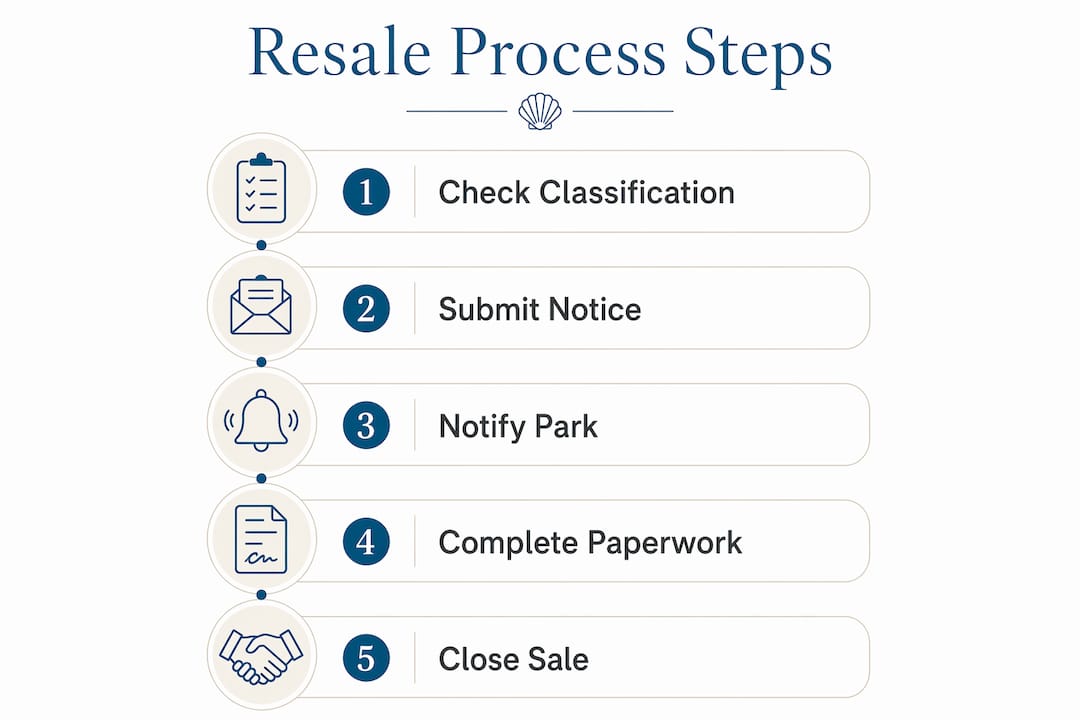
Here is what the process looks like at a glance:
- Confirm legal classification (personal property or real property)
- Gather core documents: original certificate of title or deed, bill of sale, proof of paid lot rent or property taxes
- Notify the park owner using the Notice of Proposed Sale form, as required under the Mobile Homes Act 2013
- Value and price the home based on condition, age, and lot rent levels
- Market with clear, honest listings that state legal status and lease terms
- Screen buyers and, where applicable, obtain park approval
- Complete title transfer at the DVLA (personal property) or through a solicitor/title company (real property)
Missing paperwork or skipping park notifications are the two most common reasons sales stall for weeks. Starting with the right documents and notifying the park early keeps the process on track.
What are the legal requirements for selling a mobile home in the UK?
The Mobile Homes Act 2013 is the primary legislation governing resale of park homes in England. Under it, you must submit the official Notice of Proposed Sale form to your site owner before the sale can proceed. Skipping this step does not just cause delays. It can invalidate the pitch agreement transfer entirely, leaving the buyer without legal standing on the site.

Pro Tip: Verify your home’s ownership classification before you do anything else. Misclassifying a mobile home as real property when it is personal property causes failed title searches and can block buyer financing at the worst possible moment.
Beyond the notice, you will need to gather these documents:
- Original certificate of title or deed: the foundational document proving ownership; without it, you cannot legally transfer the home
- Bill of sale: records the agreed price, the home’s make, model, year, and serial number, and the names of both parties
- Proof of paid lot rent or property taxes: buyers and their solicitors will request this; unpaid charges can block the transfer
- Lease agreement: buyers and any lender they use will want to review the terms before committing
- Lien release documentation: if a chattel loan or mortgage is outstanding, contact your lender immediately to request a payoff figure and begin the lien release process, which can take 2–4 weeks
For homes classified as real property, a solicitor or title company handles the deed transfer and county recording. For personal property, the title endorsement goes through the relevant motor vehicle authority. The legal distinction between chattel and real property also determines which loan types your buyer can access, so confirming it early protects both sides of the transaction.
How do you price a mobile home for resale?
Pricing a mobile home is not the same as pricing a traditional house, and treating it like one is the most common mistake sellers make. Age, condition, roof type, floor integrity, and the park’s lot rent all affect value in ways that automated valuation tools rarely capture accurately.
The single biggest split in pricing is whether land is included:
- Home only (personal property): value is driven by condition, age, and the park’s monthly lot rent. A high lot rent shrinks the buyer pool because buyers calculate their total monthly outgoing, not just the purchase price. Lot rent levels and expected increases significantly affect what buyers will pay.
- Home with owned land (real property): formal appraisal by a qualified surveyor is advisable. Buyers can access conventional mortgages and FHA-equivalent financing, which broadens the pool and supports a higher asking price.
Practical pricing steps:
- Research recent sales of comparable homes in nearby parks or on similar plots
- Ask the park office what the current lot rent will be for a new resident
- Factor in any outstanding service charges or site fees that the buyer will inherit
- Be honest about the home’s age and condition; overpricing relative to lot rent costs you weeks of wasted viewings
Setting a realistic price from the outset, grounded in actual comparable sales rather than sentiment, is what separates a sale that completes in weeks from one that drags on for months. You can find useful context on mobile home resale value factors that apply across markets, including how park reputation and amenities influence buyer perception.

How should you market your mobile home to attract the right buyers?
A well-written listing does two things: it attracts serious buyers and it filters out those who will waste your time. The key is specificity. Vague listings generate enquiries from people who cannot actually buy; clear listings noting legal status and lot fee terms reduce unqualified interest and shorten the time to sale.
Your listing should include:
- Legal classification: state clearly whether the home is personal property or real property, and whether land is included
- Lot rent figure: give the current monthly amount and note any known review dates
- Home specification: year, make, size, number of bedrooms and bathrooms, and any recent upgrades
- Park rules summary: pet policy, age restrictions, occupancy limits — anything a buyer needs to know before viewing
- High-quality photographs: good natural light, tidy rooms, and exterior shots that show the plot and surroundings honestly
List on platforms that specialise in park homes and manufactured housing, as well as local property portals. When enquiries come in, respond promptly and ask qualifying questions early: how does the buyer plan to finance the purchase, and are they aware of the park approval process? A buyer who cannot get park approval cannot complete, regardless of the price agreed.
Pro Tip: State any known defects in the listing. It feels counterintuitive, but transparency about condition saves you from 20 calls that go nowhere and builds trust with the buyers who do proceed.
What do you need to know when selling on a park or leasehold site?
Selling a park home adds a layer to the process that catches many sellers off guard: the park manager’s approval. Under the Mobile Homes Act 2013, the site owner must be notified of the proposed sale, and in practice most parks also require the incoming buyer to meet their tenancy criteria before the transfer can complete.
Key considerations for park-based sales:
- Notify management early: call the park office before you list and ask exactly what they require from a buyer. Some parks have mandatory upgrade conditions (skirting, steps, exterior condition) that must be met before a transfer is approved.
- Buyer screening: parks typically run credit checks, background checks, and income verification. This process usually takes 5–15 business days, so factor it into any completion date you agree with a buyer.
- Lot rent arrears: any unpaid lot rent must be cleared before the transfer proceeds. Confirm your balance with the park office at the start of the process.
- Park refusal rights: a park can reject a buyer who does not meet reasonable screening criteria, but cannot unreasonably block a legitimate sale. If you believe a refusal is unreasonable, seek legal advice promptly.
Many sales on managed sites fail not because of price disagreements but because the seller ignored park requirements until the buyer was already committed. Early, open communication with park management is the single most effective way to prevent a deal collapsing at the final stage. For a detailed walkthrough of selling in a park setting, the procedural steps translate well across markets.
How do you prepare your mobile home and paperwork before listing?
Getting your documentation in order before you list is not just good practice. It is what separates a sale that completes cleanly from one that stalls for weeks while paperwork catches up. Buyers who are ready to move quickly will not wait for a seller who is still hunting for the original title.
Documents to gather and organise:
- Original certificate of title or deed (for double-wide homes, check whether two separate titles are required)
- Bill of sale template, ready to complete with buyer details
- Tax receipts or council tax records confirming payments are up to date
- Lease agreement and any park rules documentation
- Recent inspection reports or service records for major systems
- Lien release confirmation or payoff statement from your lender
On the physical side, condition matters more than sellers often expect. A deep clean, fresh neutral paint, repaired floor soft spots, and tidy exterior skirting all make a measurable difference to first impressions. The five areas that most affect buyer confidence are roofing, electrics, sub-flooring, heating, and plumbing. Address any obvious issues in these areas before viewings begin.
Creating a single digital folder containing all documents makes sharing with buyers, solicitors, and park managers straightforward. It also signals to buyers that you are organised and the sale is likely to proceed smoothly, which can be a quiet but real advantage in negotiations. A pre-owned mobile home buying checklist gives a useful buyer-side perspective on what purchasers are looking for when they review a seller’s paperwork.
UK mobile home resale: what sellers need to know in 2026
The legal framework for mobile home resale in the UK has remained anchored to the Mobile Homes Act 2013, but 2026 brings sharper scrutiny of compliance, particularly around the Notice of Proposed Sale and pitch agreement transfers. Properly handling this form is legally mandated. Omitting it is a frequent cause of failed sales on managed sites, and it cannot be retrospectively corrected once a buyer has committed.
Pro Tip: Contact your local council or Citizens Advice early in the process if you are unsure whether your home qualifies as a park home under the Act. The classification affects your rights, your obligations, and the forms you need to submit.
A few practical updates worth noting for 2026:
- Lien releases from institutional lenders typically take 2–4 weeks after payoff confirmation. Initiating this at the point you decide to sell, not when a buyer appears, prevents the most common closing delay.
- Buyers using chattel loans may need several weeks to complete financing. Cash buyers can often close within a few weeks. Knowing your buyer’s financing position before you accept an offer lets you set a realistic completion date.
- For homes on owned land that may qualify as real property, an affidavit of affixture filed with the relevant authority converts the title from vehicle to real property status, unlocking conventional mortgage financing for buyers.
- Transparency about lot rent increases is increasingly important to buyers. Lot rent stability and affordability are among the first things a buyer’s adviser will scrutinise, and any history of above-inflation increases will affect the price a buyer is willing to pay.
The sellers who complete fastest in the current market are those who treat documentation and park communication as the first priority, not an afterthought. Price matters, but a clean paper trail and a cooperative park manager are what actually get a sale across the line.
Thinking about your next move after the sale?
If selling your mobile home opens the door to something new, Caravansinfrance offers a warm and straightforward alternative to the complexity of traditional property ownership. Pre-owned mobile homes at Camping Les Prairies du Lac in the Vendée region of France come ready to enjoy, with heated pools, community activities, and the kind of easy coastal lifestyle that makes the whole process feel worthwhile.

No property chain, no hidden fees, and no drawn-out legal process. Just a place in the sun, ready when you are.
Key takeaways
The mobile home resale process in the UK requires confirming legal classification, submitting the Notice of Proposed Sale, gathering complete documentation, and coordinating with park management before any sale can complete.
| Point | Details |
|---|---|
| Confirm legal classification first | Whether the home is personal property or real property determines your paperwork, buyer financing options, and closing process. |
| Submit the Notice of Proposed Sale | This form is legally required under the Mobile Homes Act 2013; omitting it can invalidate the pitch agreement transfer. |
| Start lien releases immediately | Lienholders typically take 2–4 weeks to release claims; initiate this as soon as you decide to sell. |
| Engage the park manager early | Buyer screening on managed sites usually takes multiple business days; factor this into your agreed completion date. |
| Price around lot rent reality | Lot rent levels and expected increases significantly affect buyer decisions and resale value perception. |
Recommended
- Mobile home resale value in France: 2026 guide for UK buyers | Caravans in France
- Pre-owned mobile home buying checklist: 10 key steps | Caravans in France
- Mobile home running costs: a first buyer’s guide | Caravans in France
- Pre-owned mobile home buying checklist: your complete guide | Caravans in France