Mobile home utilities setup in France: 2026 expat guide
Discover essential steps for mobile home utilities setup in France. Ensure a smooth transition with our 2026 expat guide on connecting services.
Mobile home utilities setup in France: 2026 expat guide
Setting up utilities for a mobile home in France requires the right documents, the correct administrative permissions, and a clear sequence for connecting electricity, gas, water, and internet. Before any provider will activate a service, you will need a valid passport or residency card, proof of address (a rental contract or existing utility bill), and your French bank account details, known as a RIB. French bank details are critical for almost every utility contract, so arrange these before you contact any supplier.
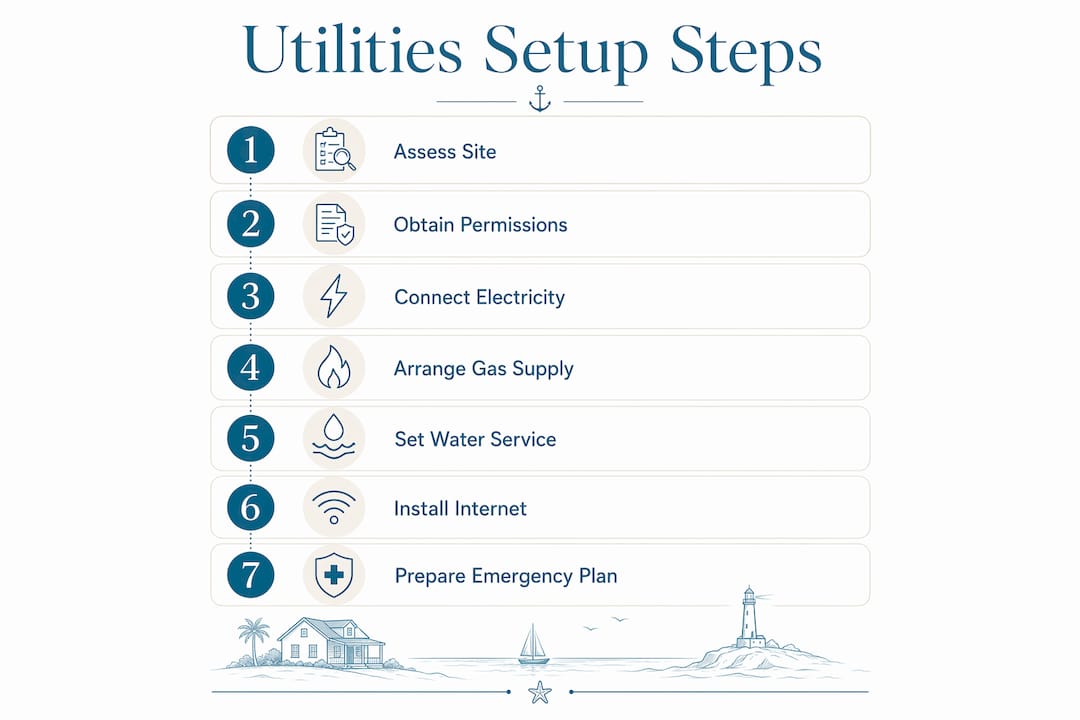
Here is the core sequence to follow:
- Permissions first: Check your local urban plan (PLU) at the town hall (mairie) and obtain any required administrative authorisation before requesting connections.
- Electricity: Open an account with EDF or another registered supplier; Enedis manages the physical network connection.
- Gas: Contact Engie for mains gas where available, or arrange bottled propane for sites without a mains supply.
- Water: Register directly with your local water utility through the mairie.
- Internet and phone: Orange is the dominant network owner; no-contract plans suit seasonal stays well.
One thing many expats overlook: a mobile home must retain its mobility to keep its legal status. Once it is permanently fixed to the ground, it is reclassified as a light leisure dwelling, which triggers a different set of permit and utility connection rules entirely.
How do you set up electricity for a mobile home in France?
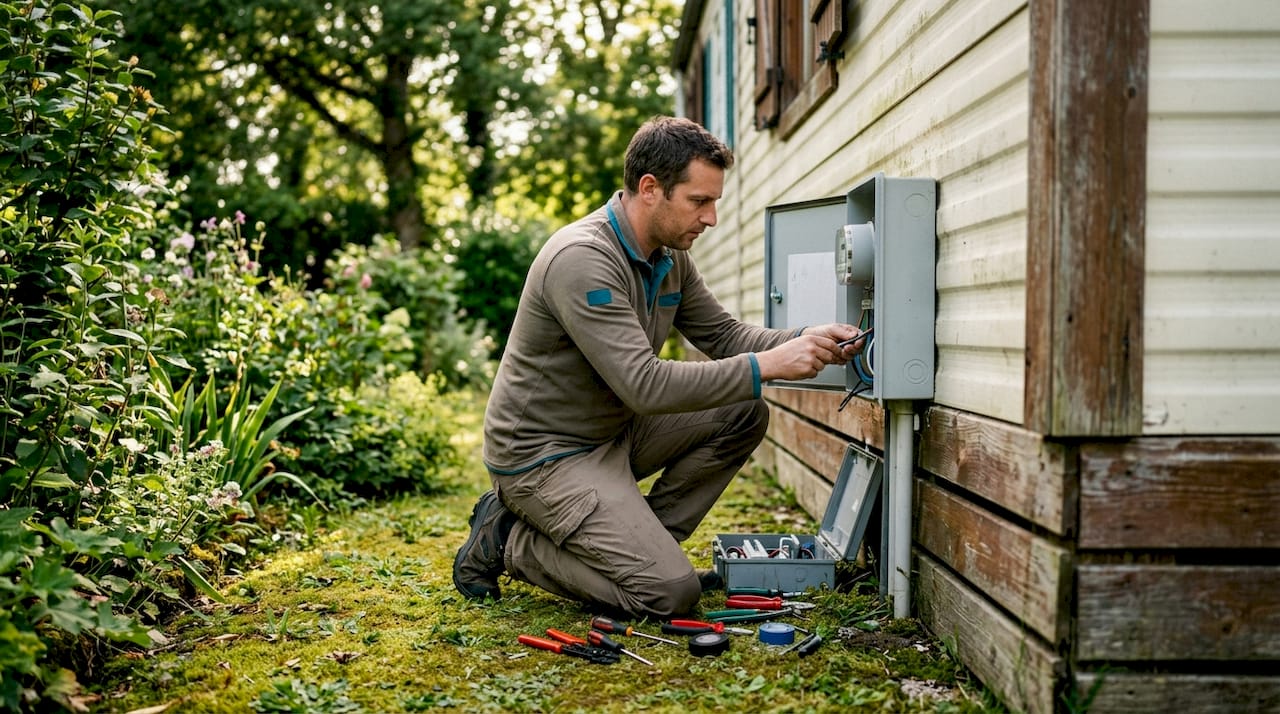
Electricity is usually the first utility you will connect, and the process is more straightforward than it sounds. France’s electricity network is managed by Enedis, which handles the physical connection to the grid. You choose a commercial supplier separately. EDF remains the default choice for many expats because it offers English-speaking customer support and a well-established online account portal.
To open an account, you will need:
- Passport or EU residency card
- Proof of address (rental contract, campsite pitch agreement, or existing utility bill)
- Your RIB (French bank account details)
- The property’s electricity meter reference number (PDL number), which your campsite or site manager can provide
Electrical installations for mobile homes must comply with French standards, and a certificate of compliance is mandatory before electricity can be activated. Your campsite or site manager will usually coordinate this, but if you are on private land, you will need a qualified electrician to issue the certificate. The circuit breaker fitted must also be adapted to mobile home requirements and meet French safety norms, so do not assume a standard domestic breaker will pass inspection.
Billing is monthly or bi-monthly, with meter readings submitted online or by post. EDF’s website and app are available in English, and their telephone support line can connect you with an English-speaking adviser. For seasonal use, you can request a lower-tariff contract or reduce your subscribed power level during months when the home is unoccupied, which cuts your standing charge.
How to set up gas services, including bottled gas and propane
Mains gas is not available at every campsite or rural plot in France, so many mobile home owners rely on bottled propane rather than a piped supply. Both options are legal and widely used; the choice depends entirely on what your site offers.
Mains gas: If your campsite or plot has a mains connection, Engie is the principal supplier to contact. You will need the same core documents as for electricity: passport, proof of address, and RIB. Engie offers English-language support and online account management. Billing is typically monthly, with an option for a fixed monthly payment based on estimated consumption.
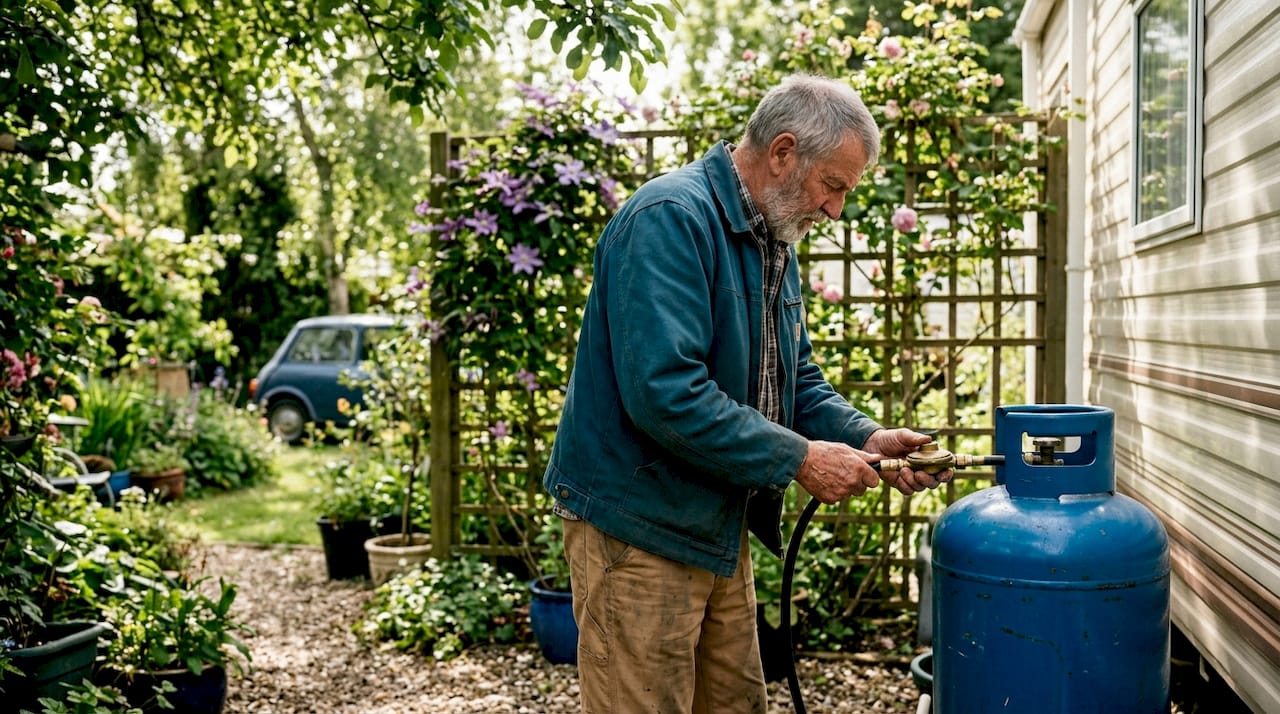
Bottled gas and propane: Where mains gas is unavailable, bottled propane is the practical solution. Suppliers such as Butagaz and Primagaz deliver to campsites and private plots across France. Safe installation requires a certified gas engineer to fit the regulator and check all connections; this is not a job to attempt yourself. Bottles must be stored upright in a ventilated external cabinet, away from ignition sources.
Key points for gas setup:
- Confirm with your site manager whether mains gas is available before contacting a supplier
- Budget for an initial connection fee if mains gas requires new pipework to your pitch
- For bottled gas, agree a delivery schedule with your supplier at the start of the season
- Have your boiler and gas appliances serviced by an approved professional before each winter season
- Seasonal contracts with Engie allow you to suspend supply during months you are away, reducing standing charges
Pro Tip: If you use bottled propane, keep a spare cylinder on site. Running out mid-winter in rural France, when the next delivery could be days away, is a situation worth avoiding.
Registering for water supply and understanding your bill
Water supply in France is managed locally, which means the process varies slightly depending on your commune. Your first step is always the mairie, which will direct you to the relevant water utility for your area. On a managed campsite, the site operator typically handles the main connection and bills you for water as part of your pitch charges, so check your pitch agreement before contacting anyone separately.
If you are on private land or a residential holiday park where individual metering applies, the registration process works like this:
- Visit or contact the mairie to identify your local water utility provider
- Submit your passport, proof of address, and RIB to open an account
- Request a meter reading on the day your account opens to establish a baseline
- Confirm whether your property connects to the mains sewage system (tout-à-l’égout) or requires a certified individual sanitation system (fosse toutes eaux)
Bills are typically issued quarterly, based on actual meter readings. Potable water in France meets EU standards, so tap water is safe to drink throughout the country. For seasonal or second-home use, water consumption naturally fluctuates, and some local utilities offer a reduced standing charge tariff for properties that are unoccupied for extended periods. Ask your utility directly, as this is not always advertised.
Sanitation is the part most owners underestimate. If your plot is not connected to the mains sewer, installing a compliant individual system is a legal requirement, and the local authority will inspect it. Skipping this step can block your utility connection entirely.
Setting up internet and phone services for your mobile home in France
Reliable internet is no longer a luxury, even for a seasonal stay. The good news is that fibre broadband covers over 92.6% of French households (ARCEP, 2025), and no-contract plans start from around €22 per month, making it genuinely practical to connect a mobile home without committing to a long-term contract.
Your options, matched to how often you visit:
- No-contract fibre (from €22/month): Best if you stay five or more months per year. Providers including Orange, RED by SFR, Sosh, and B&You offer self-install kits. Activation typically takes one to two weeks.
- 5G Home Box (€26–€45/month): Plug-in and you are online within minutes. No engineer visit, no fixed line needed. Cancel when you leave, restart when you return. All major operators offer this, including Orange.
- WiFi dongle or SIM (from €20/month): Ideal for short visits of a few weeks. Buy a French SIM, insert it into a pocket hotspot, and connect your devices. No IBAN required for prepaid options.
- Satellite (€24–€45/month): The right choice for remote rural plots where fibre and 4G coverage are limited. Providers including Starlink and Nordnet deliver speeds of 100–250 Mb/s, enough for streaming and video calls.
No French broadband provider currently offers a true “pause” on subscriptions, but no-contract 5G boxes and WiFi dongles give you the same practical flexibility: cancel freely and restart when you return.
Orange is the network owner across France and the provider most expats find easiest to deal with, partly because its customer service is available in English and partly because it operates in every zone, including rural areas where other providers have limited reach. For a phone landline, you will need to set up your connection through Orange first, even if you subsequently choose a different broadband supplier.
Pro Tip: Before subscribing to any plan, check coverage at your exact address using the provider’s online eligibility tool. Signal quality in rural areas varies considerably, even between properties a few hundred metres apart.
What are the legal and administrative requirements for connecting utilities?
This is where mobile home ownership in France differs most sharply from buying a house, and where expats most often run into unexpected delays. The key principle is straightforward: connecting a mobile home on private land to public utility networks requires prior authorisation from the local town hall. Without it, permanent connections cannot legally be made.
Before you approach any utility provider, work through this checklist:
- Consult the PLU: The local urban plan (Plan Local d’Urbanisme) determines whether your plot permits a mobile home installation. Non-buildable zones generally prohibit permanent placement.
- Confirm your home’s legal status: A mobile home must retain its means of mobility (wheels, tow hitch) to remain classified as a recreational mobile home. Connections to utilities must be easily detachable so the home can be moved.
- Check the three-month rule: Parking a mobile home on private land for more than three months per year (consecutive or otherwise) requires the mayor’s authorisation.
- Avoid permanent fixing: If the home is placed on fixed foundations or blocks embedded in the ground, it loses its mobile status and becomes a light leisure dwelling subject to building permit requirements.
- Campsite and residential holiday park placements: These offer the most legally straightforward route. Your pitch contract with the site operator governs utility access, and the site itself holds the necessary permits.
One practical point worth knowing: no building permit is required for a recreational mobile home as long as it retains its mobile status. It is not treated as a second residence for tax purposes, so you will not pay residence tax even with an electrical connection. You will, however, pay the tourist tax (taxe de séjour) for your stays.
Pro Tip: Always request written confirmation from the mairie before committing to any utility connection work on private land. Verbal assurances are not sufficient if a dispute arises later.
How to plan for utility disruptions and emergencies
Mobile homes are more exposed to utility disruptions than permanent buildings, particularly during storms, cold snaps, and the end of the tourist season when site infrastructure may be partially shut down. A little preparation goes a long way.
Electricity outages are the most common disruption. Keep a battery-powered torch and a portable power bank charged at all times. If you rely on an electric boiler or heating system, a small portable gas heater provides a useful backup for short outages. Register your address with Enedis’s outage notification service so you receive alerts by text when planned maintenance affects your area.
For gas, the main risk is running out of bottled propane unexpectedly, particularly in winter. Maintain at least one full spare cylinder on site and note your supplier’s emergency delivery number. Before leaving at the end of the season, turn off the gas supply at the bottle valve and have your boiler serviced by a certified professional. This single step prevents the majority of gas-related problems the following spring.
Water supply interruptions are less frequent but can occur during drought periods or infrastructure works. Keep a supply of bottled drinking water sufficient for a few days. If your home uses an individual sanitation system, have it emptied and inspected annually to avoid blockages that could affect your water connection.
For internet, a mobile data SIM as a backup means you are never completely offline, even if your primary broadband connection fails. Most French mobile networks maintain good coverage across campsites and residential holiday parks.
Energy efficiency and alternative energy options for mobile homes
Mobile homes are lighter and less insulated than permanent buildings, which means heating and cooling costs can be higher relative to the floor area. A few targeted measures make a meaningful difference.
Insulation is the starting point. Check the skirting panels around the base of your home and replace any that are damaged or missing. Draught-proofing around doors and windows is inexpensive and reduces heat loss considerably during the Vendée winters. Double-glazed windows, now standard on most modern mobile homes, help retain warmth without any additional work on your part.
Solar panels are increasingly popular on mobile home pitches, particularly in southern and western France where sunshine hours are high. A small photovoltaic system can offset a meaningful portion of your electricity consumption, especially if you use the home primarily in summer. Check with your site operator before installing panels, as some campsites have restrictions on roof-mounted equipment.
For heating, a wood-burning stove or pellet burner offers an efficient and atmospheric alternative to electric panel heaters. Both require a certified flue installation and annual servicing, but running costs are generally lower than electric heating. Heat pump systems are another option for owners who use their homes year-round; modern air-to-air units work effectively even in mild winter temperatures.
Water heating accounts for a significant share of energy use in any home. A solar water heater or a heat pump water heater reduces this cost substantially. If you are on a time-of-use electricity tariff such as EDF’s Heures Creuses option, programming your water heater to run during off-peak hours (typically overnight) cuts your electricity bill without any change to your daily routine.
Key takeaways
Setting up utilities for a mobile home in France requires administrative permissions before any provider connection, with documents, legal status, and provider choice all shaping how smoothly the process goes.
| Point | Details |
|---|---|
| Documents needed | Passport, proof of address, and a French RIB are required to open any utility account. |
| Legal status matters | A mobile home must remain movable; permanent fixing triggers building permit requirements and different utility rules. |
| Electricity and gas providers | EDF handles electricity accounts; Engie covers mains gas; bottled propane suits sites without a mains supply. |
| Internet flexibility | Fibre covers 92.6% of French households; no-contract plans from €22/month suit seasonal mobile home use. |
| Town hall approval first | Connecting to public networks on private land requires prior authorisation from the mairie before any work begins. |
Skip the paperwork: mobile homes at Camping Les Prairies du Lac
If the prospect of coordinating permits, providers, and compliance checks feels like a lot to manage from the UK, there is a simpler path. Caravansinfrance offers ready-to-enjoy mobile homes at Camping Les Prairies du Lac in the Vendée, a four-star site where utilities are already connected and the administrative groundwork is done for you. Electricity, water, and site services come as part of the pitch arrangement, so you can focus on warm evenings by the pool rather than chasing paperwork.
Browse the current mobile homes for sale and see what life on the Vendée coast actually looks like. No hidden fees, no property taxes, and no utility setup headaches from day one.