
Mobile home depreciation explained for UK buyers in France
Discover how mobile home depreciation works in France. Get insights on value retention and make informed buying choices today.
Mobile home depreciation explained for UK buyers in France
Mobile homes lose value in a predictable pattern, and understanding that curve before you buy is the single most useful thing you can do. Most of the decline happens early, much like a new car leaving the forecourt. After that initial drop, the rate of loss slows considerably, and the right choices around location, condition, and ownership structure can flatten the curve further still.
Table of Contents
- How mobile home depreciation works: rates and timelines
- What drives how fast a mobile home loses value?
- Should you think of a mobile home as a lifestyle asset?
- Practical ways to protect your mobile home’s value
- Owned land versus leased land: what it means for depreciation
- Tax implications of mobile home depreciation in the UK
- Your place in the sun starts here with Caravansinfrance
- Key takeaways
How mobile home depreciation works: rates and timelines
Depreciation in manufactured homes describes the reduction in a home’s market value over time. The steepest drop comes in the first year, when a home loses 10–20% of its value simply by moving from “new” to “used.” After that, the annual decline settles to roughly 3–5% per year. Homes tend to depreciate more slowly as they age, after the initial steep losses have been absorbed.
This pattern mirrors vehicle depreciation rather than traditional property appreciation, and the reason is classification. When a mobile home sits on leased land, it is treated as personal property rather than real estate. Without land value underneath it, the structure simply ages.
Key depreciation facts at a glance:
- First year: 10–20% value loss as the home transitions from new to used
- Years 2 onwards: approximately 3–5% annual decline
- After 15 years: depreciation rate typically slows
- Leased land: accelerates value loss; no land appreciation to offset the structure’s ageing
- Owned land: can support overall value growth as land prices rise
For buyers considering a pre-owned leisure home in a French camping, this timeline is actually good news. The previous owner has already absorbed that painful first-year drop.
What drives how fast a mobile home loses value?
Three factors consistently determine the speed and depth of depreciation: land ownership status, physical condition, and local market demand.
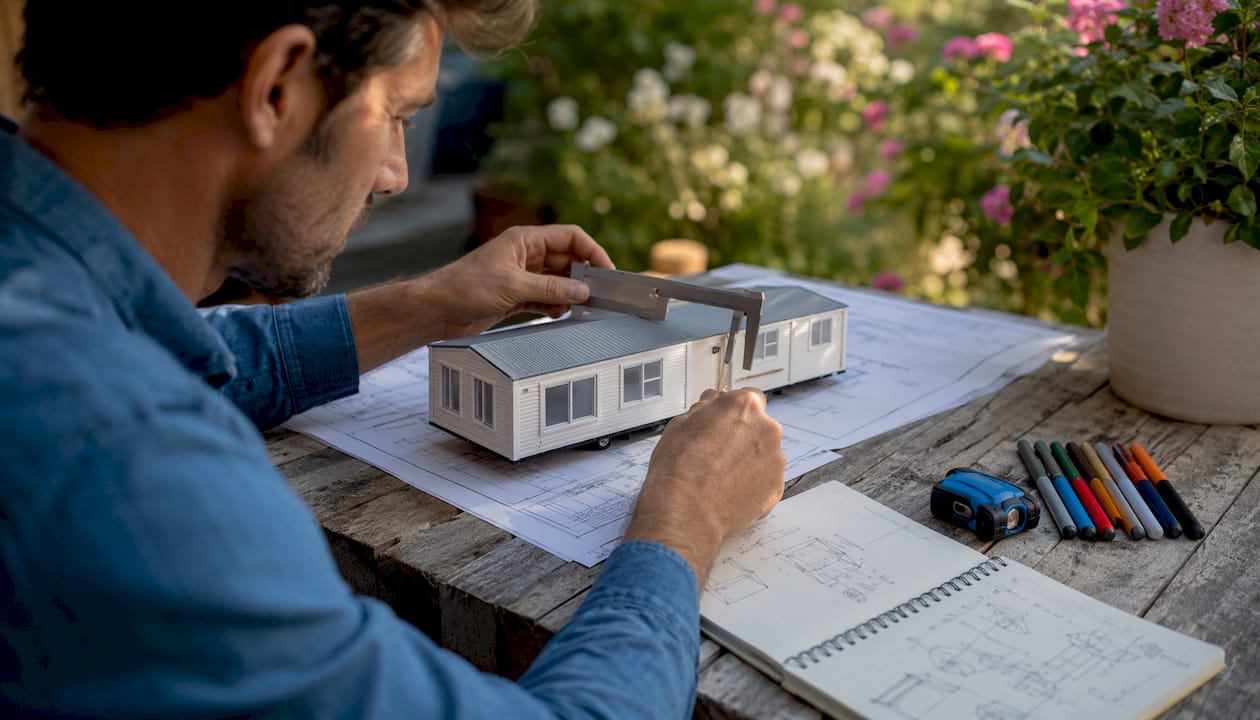
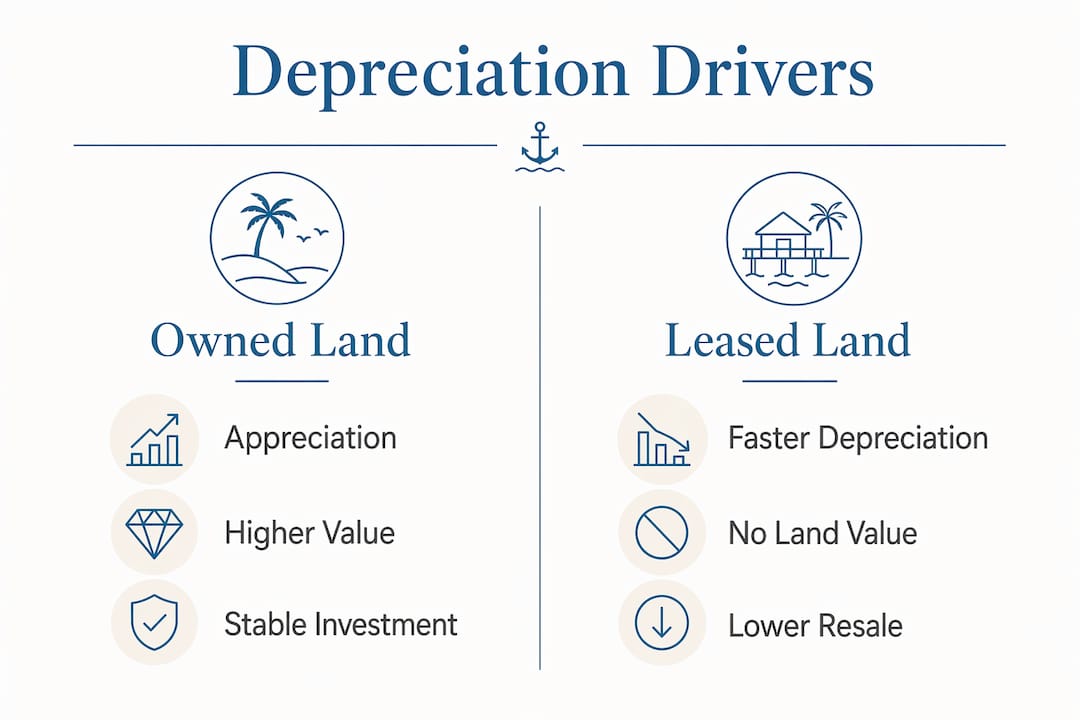
Land ownership is the most powerful lever. A home on leased land has no land value to offset the structure’s natural ageing. Homes on leased land depreciate faster, while those on owned land can benefit from rising land prices over time. In a French camping setting, the land belongs to the campsite operator, so buyers should factor this into their expectations from the outset.
Physical condition is the factor you control most directly. Neglect accelerates depreciation beyond what age alone would cause. Roof condition, insulation, kitchen fittings, and flooring all influence how a buyer perceives value. A well-maintained home in a desirable park holds its value noticeably better than a neglected one nearby.
Market demand shapes the floor beneath any home’s value. Declining areas with oversupply push depreciation faster, while parks in high-demand regions with strong amenities tend to support better resale prices. For UK buyers looking at the Vendée, the region’s consistent popularity as a holiday destination provides a more stable demand backdrop than many inland alternatives.
Additional factors worth knowing:
- Park management quality and community reputation
- Proximity to amenities such as pools, restaurants, and beaches
- Age of the home and compliance with modern construction standards
- Clarity of ownership paperwork and title documentation
Pro Tip: Regular maintenance is the most cost-effective way to slow depreciation. Addressing a minor roof seal or replacing worn flooring costs far less than the value it protects at resale.
Should you think of a mobile home as a lifestyle asset?
The honest answer is: yes, primarily. A mobile home in a French camping is not the same purchase as a buy-to-let flat in Manchester. The financial case rests on lifestyle access rather than capital growth, and buyers who reframe depreciation as a trade-off for genuine leisure value tend to feel far more satisfied with their purchase.
Think about what you are actually buying: warm summer evenings by a heated pool, a familiar base in the French countryside, and the freedom of having your own space rather than booking accommodation year after year. Those benefits do not appear on a depreciation schedule, but they are real.
Lifestyle advantages that sit outside the financial calculation:
- Immediate access to a holiday base without annual booking costs
- A sense of community with like-minded owners at the same site
- The ability to personalise your space over time
- Predictable, fixed costs compared to the uncertainty of rental prices
- The simple pleasure of a place that feels like yours
For a deeper look at how the financial and lifestyle cases stack up, the investment versus lifestyle value question is worth reading before you commit.
Practical ways to protect your mobile home’s value
Buying smart from the start is the most effective strategy. Savvy buyers often seek homes just past the initial depreciation curve to avoid absorbing that steep first-year loss themselves. A well-maintained home that is two or three years old typically offers better value per pound than a brand-new unit.
Choosing the right campsite matters just as much as choosing the right home. Well-managed parks with desirable amenities support better value retention. A site with a heated pool, active management, and a strong community reputation will attract more buyers at resale than a poorly run alternative. Understanding what drives demand in a given market helps you assess whether a particular site is likely to hold its appeal.
Strategies to protect value during ownership:
- Keep up with routine maintenance: roof seals, insulation checks, and plumbing
- Invest in upgrades that buyers notice, such as kitchen refreshes or new flooring
- Maintain clear paperwork, including purchase documents and service records
- Avoid over-personalising in ways that narrow your future buyer pool
- Use a pre-owned buying checklist to assess condition thoroughly before purchase
Pro Tip: A tasteful, neutral interior appeals to the widest range of buyers at resale. Personal touches are lovely to live with, but bold or highly specific décor can put buyers off.
Owned land versus leased land: what it means for depreciation
This distinction shapes almost everything about how a mobile home behaves as an asset. Most new manufactured homes are classified as personal property because the buyer does not own the land beneath them. That classification means the home is financed and valued more like a vehicle than a house.
Homes on owned land may appreciate as land values rise, while homes on leased land almost always depreciate because there is no land component to offset the structure’s ageing. In a French camping context, you are buying the home only, not the pitch. That is a straightforward arrangement, and it is worth understanding clearly.
| Factor | Owned land | Leased land (camping) |
|---|---|---|
| Property classification | Real property | Personal property |
| Appreciation potential | Yes, via land value | Unlikely |
| Financing options | Broader, including mortgages | More limited |
| Resale friction | Lower | Park approval may apply |
| Depreciation rate | Slower overall | Faster without land offset |
For UK buyers in French campings, the leased-land model is standard. The key is to go in with clear expectations, price accordingly, and focus on the lifestyle return rather than capital growth. Knowing your running costs from the outset helps you plan realistically.
Tax implications of mobile home depreciation in the UK
For most UK buyers purchasing a leisure mobile home in France, the tax picture is relatively straightforward. You are buying a personal-use asset, not an investment property, so UK income tax and capital gains tax do not typically apply to the purchase itself.
If you eventually sell and make a gain, UK Capital Gains Tax could apply depending on your personal circumstances, though the annual exempt amount and the nature of the asset both influence the final position. A mobile home used purely for personal leisure is treated differently from one generating rental income. If you do rent the home out, any income received may be subject to UK income tax and potentially French tax obligations, depending on the rental arrangement and applicable tax treaties.
The home itself is not subject to UK council tax or stamp duty land tax, as it sits on French soil. French taxe foncière and taxe d’habitation rules may apply depending on the campsite’s arrangements, so it is worth confirming this with the site operator before purchase. Consulting a tax adviser familiar with both UK and French rules is the clearest way to understand your specific position.
Your place in the sun starts here with Caravansinfrance
Caravansinfrance offers pre-owned mobile homes at Camping Les Prairies du Lac in the Vendée, a four-star site with heated pools, family-friendly activities, and the kind of coastal microclimate that makes every visit feel like a proper escape. The homes are ready to move into, the buying process is transparent, and there are no hidden fees or complex legalities to navigate.

Because the homes are pre-owned, the steepest depreciation has already happened. You step in at a realistic price, with a clear picture of what you are getting and what it will cost to run. For UK buyers who want a genuine place in France without the weight of traditional property ownership, it is a genuinely simple route to something special. Browse the available homes in Vendée or take a closer look at the campsite itself to see whether it feels like the right fit for you.
Key takeaways
Mobile home depreciation is steepest in the first year, then slows significantly, and the right choices around condition, location, and ownership structure can meaningfully reduce its impact over time.
| Point | Details |
|---|---|
| Initial depreciation rate | Homes typically lose 10–20% of value in the first year, then around 3–5% annually. |
| Land ownership is decisive | Leased-land homes depreciate faster; owned-land homes can benefit from rising land values. |
| Maintenance protects value | Regular upkeep, including roof and insulation, slows depreciation beyond what age alone causes. |
| Lifestyle value is real | Leisure buyers gain access, community, and a personal base that financial metrics do not capture. |
| Caravansinfrance | Pre-owned homes at Camping Les Prairies du Lac let UK buyers enter past the steepest depreciation curve. |